Workplace Mental Health for Women: Strategies to Protect Wellbeing
 Sep, 21 2026
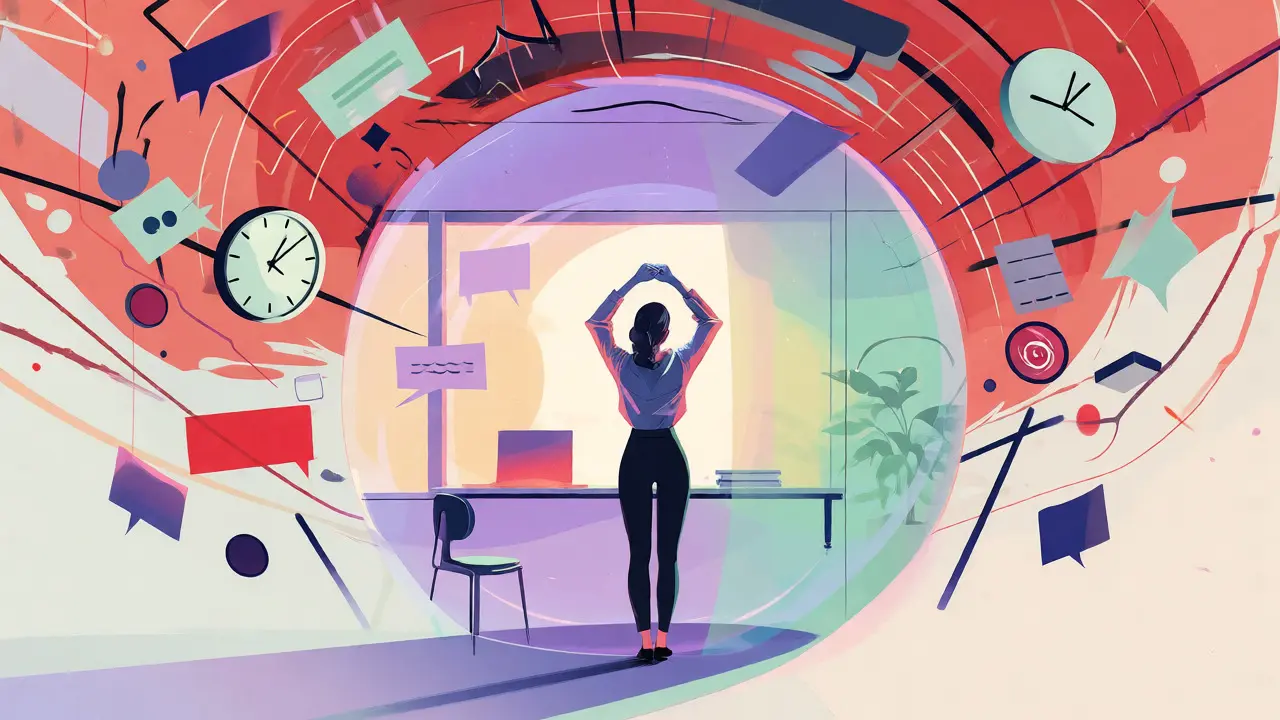
You walk into the office or log onto your laptop, and before you’ve even checked your email, you’re already managing someone else’s mood. Maybe it’s smoothing over a tense meeting, remembering to congratulate a colleague on their birthday, or simply holding space for a manager who is stressed out. If this sounds familiar, you aren’t imagining things. You are likely carrying an invisible load known as emotional labor, which disproportionately falls on women in professional settings. This isn't just about being nice; it’s a cognitive tax that drains your energy reserves before the actual work begins.
The conversation around workplace mental health has shifted from "take a bubble bath" to systemic change, but the reality for many women remains unchanged. We are often expected to be high-performing employees, nurturing team players, and flexible problem-solvers all at once. The result? A spike in anxiety, decision fatigue, and eventual burnout. But here is the good news: you don’t have to wait for HR to fix the culture. There are concrete, actionable strategies you can use right now to protect your peace, set boundaries, and sustain your wellbeing without sacrificing your career trajectory.
Understanding the Invisible Load
To solve the problem, we first need to name it accurately. Emotional labor refers to the process of managing feelings and expressions to fulfill the emotional requirements of a job. For women, this often means suppressing frustration to appear "composed," offering excessive validation to colleagues, or volunteering for social planning tasks that no one else wants to do. Research consistently shows that women perform more of this unpaid work than men, regardless of their job title.
Consider Sarah, a mid-level marketing manager in Portland. She’s excellent at her job, but she also volunteers to organize the holiday party, mentors three junior staff members, and always takes notes during meetings because "someone has to." By Friday afternoon, she’s exhausted-not because she worked more hours than her male counterparts, but because she expended significant psychological energy maintaining group harmony. This constant state of hyper-awareness keeps the nervous system in a low-grade fight-or-flight mode, leading to chronic stress.
Recognizing this pattern is the first step toward reclaiming your energy. It’s not about becoming cold or uncooperative; it’s about distinguishing between genuine empathy and obligatory performance. When you understand that your kindness is a resource, not an infinite well, you can start allocating it more intentionally.
Setting Boundaries Without Guilt
Boundaries are often misunderstood as walls. In reality, they are gates-they let some things in and keep others out. For women in the workplace, setting boundaries requires overcoming the deeply ingrained fear of being perceived as "difficult" or "unlikeable." This social penalty is real, but it’s manageable with the right framing.
Start by auditing your availability. How much of your calendar is actually dedicated to deep work versus reactive communication? If you find yourself answering Slack messages within seconds throughout the day, you’re training people to expect instant responses, which fragments your focus. Try batching your communications. Check emails and messages only at specific times-say, 9:00 AM, 1:00 PM, and 4:30 PM-and communicate this schedule to your team. Most people will adapt quickly, especially if you explain that this approach helps you deliver higher-quality work.
Another critical boundary involves saying "no" to non-promotable tasks. These are duties like planning lunches, taking minutes, or cleaning up after meetings that rarely lead to promotions but consume valuable time. Instead of automatically volunteering, try pausing before responding. A simple, "Let me check my capacity and get back to you," gives you time to assess whether this task aligns with your goals. If it doesn’t, suggest a rotation system so the burden doesn’t fall solely on you.
Navigating Office Politics and Microaggressions
Mental health suffers when you feel unseen or undermined. Microaggressions-subtle, indirect, or unintentional discrimination-can erode confidence over time. Common examples include having your ideas interrupted and then repeated by a male colleague (often called "hepeating"), being asked to smile, or facing assumptions about your commitment due to family status.
Addressing these moments requires a toolkit of responses that maintain professionalism while asserting your presence. If you’re interrupted, you might say, "I’d like to finish my thought," rather than stopping immediately. If your idea is co-opted, calmly state, "As I mentioned earlier..." This reinforces your ownership of the concept without escalating tension.
It’s also vital to identify allies. You don’t need to confront every microaggression alone. Having one trusted colleague who validates your experiences can significantly reduce feelings of isolation. Furthermore, documenting patterns matters. If interruptions happen repeatedly in leadership meetings, note the dates and contexts. Data transforms subjective feelings into objective evidence, making it easier to address issues with management constructively.
The Power of Strategic Rest
We often confuse rest with sleep, but strategic rest is different. It’s about deliberate recovery activities that replenish your mental and emotional reserves. For many women, true rest feels indulgent or lazy, yet neuroscience tells us otherwise. Your brain needs downtime to consolidate memories and process emotions. Skipping this leads to diminishing returns on productivity.
Implement micro-breaks throughout your day. Step away from your screen for five minutes every hour. Walk outside, stretch, or simply stare out the window. These short pauses reset your attention span and lower cortisol levels. Unlike scrolling through social media, which often adds information overload, these breaks allow your mind to wander freely, sparking creativity and reducing mental fatigue.
| Type of Rest | Activity Example | Primary Benefit |
|---|---|---|
| Physical Rest | Napping, stretching, yoga | Reduces muscle tension and physical exhaustion |
| Mental Rest | Daydreaming, meditation | Improves focus and reduces cognitive load |
| Emotional Rest | Talking to a friend, journaling | Processes feelings and prevents emotional suppression |
| Sensory Rest | Silence, dim lighting | Lowers stimulation and calms the nervous system |
Notice how each type addresses a different deficit. If you’re mentally drained, a nap won’t help as much as stepping into nature. If you’re emotionally suppressed, silence might feel heavy, whereas talking to a supportive friend provides relief. Tailor your rest to what your body and mind actually need, not just what’s easiest.

Building a Support System Beyond the Office
Relying solely on colleagues for support can be risky. Workplaces are competitive environments, and vulnerability can sometimes be weaponized. Therefore, cultivating a support network outside your immediate professional circle is crucial. This includes friends, family, mentors, or therapists who understand the unique pressures women face in the workforce.
Find a mentor who has navigated similar challenges. They can offer perspective on long-term career trajectories versus short-term stresses. Additionally, consider joining professional groups specifically for women in your industry. These communities provide safe spaces to share experiences, negotiate salaries, and discuss policies like parental leave or flexible working arrangements without judgment.
Don’t underestimate the value of peer support. Forming a small accountability group with two or three other women can be transformative. You can check in weekly to discuss wins, struggles, and boundary-setting successes. Knowing you’re not alone in feeling overwhelmed changes the narrative from personal failure to shared human experience.
Advocating for Structural Change
While individual strategies are powerful, systemic issues require systemic solutions. Once you’ve stabilized your own wellbeing, you can advocate for changes that benefit everyone. This might mean pushing for clearer meeting protocols, such as requiring agendas and designated note-takers to distribute the administrative load.
Push for transparency in promotion criteria. Ambiguity often disadvantages women, who may hesitate to apply for roles unless they meet 100% of the qualifications, whereas men often apply with 60%. Clear rubrics reduce bias. Furthermore, normalize conversations about workload capacity. Encourage managers to ask, "What can we drop from your plate to make room for this new priority?" instead of just adding tasks.
Remember, advocating for structural change isn’t complaining-it’s optimizing the business. Companies with better mental health outcomes see lower turnover rates and higher engagement. By framing your requests in terms of efficiency and retention, you speak the language of leadership while protecting your humanity.
How do I know if I’m experiencing burnout?
Burnout goes beyond normal tiredness. Key signs include persistent cynicism or detachment from your job, feelings of ineffectiveness or lack of accomplishment, and chronic exhaustion that doesn’t improve with rest. If you dread Mondays intensely, struggle to concentrate, or find yourself snapping at colleagues over minor issues, it’s likely burnout. Taking a vacation won’t cure it; you need to address the underlying causes, such as workload imbalance or lack of control.
Is emotional labor really a gender issue?
Yes, studies consistently show that women perform more emotional labor in mixed-gender workplaces. This includes managing interpersonal dynamics, providing emotional support, and handling administrative tasks like scheduling and social coordination. While men do engage in emotional labor, societal expectations often pressure women to be more communal and nurturing, leading to an uneven distribution of this invisible work.
How can I set boundaries with a demanding boss?
Frame boundaries around capacity and quality. Instead of saying "I can’t do that," try "I can take on this new project if we deprioritize X, or if I can have until Thursday instead of Tuesday." This shows you are willing to collaborate but highlights the trade-offs involved. Consistency is key; if you bend the rules once, the boundary dissolves. Start small and gradually increase the firmness of your limits.
What role does remote work play in mental health?
Remote work can be a double-edged sword. On one hand, it offers flexibility and eliminates commute stress. On the other, it can blur the lines between work and home, leading to overworking. To protect wellbeing, establish strict start and end times, create a dedicated workspace, and avoid checking emails after hours. Virtual water cooler chats should be scheduled, not assumed, to prevent isolation.
Should I disclose my mental health struggles to my employer?
This depends on your company culture and legal protections. In many regions, disclosing a diagnosed condition like anxiety or depression allows you to request reasonable accommodations under laws like the ADA. However, you don’t need to share details. You can simply state, "I am managing a health condition and need [specific accommodation] to perform at my best." Assess your manager’s track record for empathy before deciding how much to reveal.