Workplace Discrimination Cases: 2026 Trends for Women
 Apr, 7 2026
Imagine walking into a boardroom where you're the most qualified person in the room, but you're consistently talked over or passed over for a promotion because you're "not a culture fit." For many women in 2026, this isn't a hypothetical scenario-it's a daily reality that often ends up in a courtroom. We are seeing a massive shift in how workplace discrimination is the unfair or prejudicial treatment of people and groups based on characteristics such as race, gender, age, or sexual orientation handled. It's no longer just about blatant firing; it's about the "quiet' ways women are pushed out of the workforce.
Key Takeaways for Navigating the Modern Office
- Intersectionality is key: Discrimination often hits harder when gender overlaps with race or disability.
- The "Motherhood Penalty" persists: Pregnancy and caregiving remain primary triggers for legal action.
- Pay Transparency is the new weapon: New laws are making it harder for companies to hide gender pay gaps.
- Digital Harassment: The line between professional and personal has blurred with remote work, leading to new types of hostile environments.
The Persistence of the Glass Ceiling and the "Broken Rung"
We often talk about the Glass Ceiling as the final barrier to the top, but current data shows a more immediate problem: the "broken rung." This is the first step up to manager. If women aren't getting that first promotion at the same rate as men, they can never reach the executive level. In recent cases, we've seen women with ten years of experience stalled at mid-management while less experienced male colleagues move up. This creates a systemic bottleneck that leads to mass exodus of female talent.
When this happens, it's not always a single "smoking gun" email. Instead, it's a pattern of being denied high-visibility projects. If you're always the one taking the notes in the meeting but never the one presenting the strategy, you're experiencing a form of subtle discrimination that is increasingly being recognized in Employment Law proceedings.
The Motherhood Penalty and Caregiver Bias
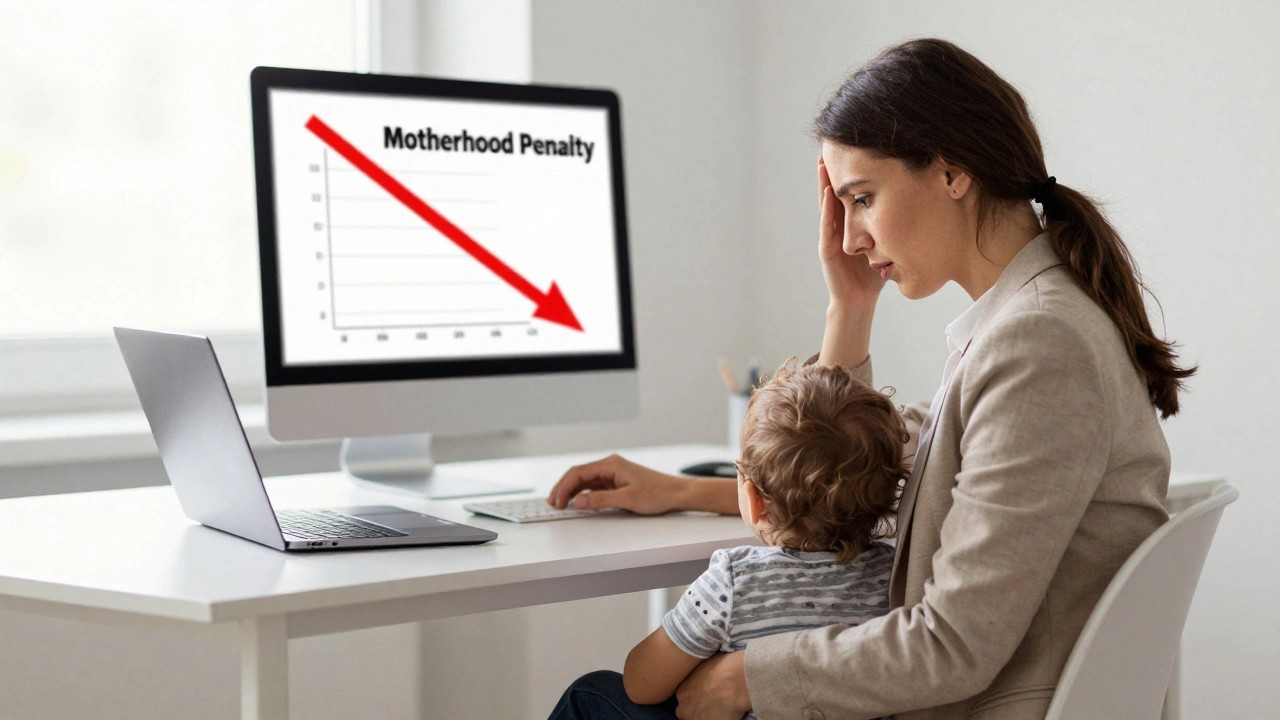
One of the most heartbreaking trends in recent court filings is the Motherhood Penalty. This is the phenomenon where working mothers are perceived as less committed or less competent than men, even when their productivity remains high. We see this most clearly in cases involving Pregnancy Discrimination, where women are sidelined immediately after announcing a pregnancy or denied the flexible work arrangements they were promised.
For instance, a recent trend in 2025 and 2026 involves "performance pipelining." A woman returns from maternity leave with a stellar record, but suddenly receives a negative performance review within three months. This creates a paper trail that allows the company to fire her for "performance issues" rather than for having a child. Lawyers are now focusing on the timing of these reviews to prove a discriminatory motive.
| Feature | Traditional Discrimination | Modern Trends (2026) |
|---|---|---|
| Primary Evidence | Explicit statements/memos | Algorithmic bias & performance patterns |
| Focus Area | Entry-level hiring/pay | Mid-level promotions ("Broken Rung") |
| Environment | Physical office harassment | Hybrid/Remote digital harassment |
| Legal Strategy | Individual lawsuits | Class action & Pay Transparency audits |
The Fight Against the Gender Pay Gap
The Gender Pay Gap is no longer a secret-it's a legal liability. With the rise of pay transparency laws across various states, employees can now see what their peers are making. This has led to a surge in lawsuits where women discover they are paid 15-20% less than men in identical roles with identical experience.
The shift is moving from "asking for a raise" to "demanding equal pay for equal work." Companies can no longer hide behind the excuse that a woman "didn't negotiate hard enough" during the hiring process. Courts are increasingly ruling that the responsibility for pay equity lies with the employer, not the employee's ability to haggle.
Intersectional Discrimination: The Double Burden
It is impossible to talk about women in the workplace without talking about Intersectionality. A white woman's experience is vastly different from that of a woman of color or a woman with a disability. Women of color often face a "double jeopardy," where they are discriminated against both for their gender and their ethnicity.
This manifests in cases where women of color are labeled as "aggressive" for the same assertive behavior that is praised as "leadership" in white men or women. We are seeing more cases now that specifically highlight how racial biases compound gender biases, leading to even lower pay and fewer promotion opportunities for Black and Latina women specifically.

Remote Work and the New Hostile Environment
You might think that working from home eliminates the "boys' club" atmosphere, but it often just moves it to Slack, Teams, and Zoom. Digital harassment-ranging from inappropriate comments in private chats to being excluded from "virtual watercooler" decisions-is a growing area of litigation. Because these interactions are logged, there is actually more evidence now than there ever was in the era of hushed office conversations.
The risk here is "out of sight, out of mind." Women who opt for remote work to balance caregiving are often unfairly labeled as less dedicated. This proximity bias is a subtle but powerful form of discrimination that prevents remote female employees from advancing, even when their output is superior to their in-office counterparts.
How to Protect Yourself and Your Colleagues
If you suspect you are being discriminated against, the most important thing you can do is document everything. Don't rely on your company's email server-keep a personal log of dates, times, and specific quotes. If a manager tells you that you're "too emotional" or "not a fit" for a role without giving specific, measurable reasons, write it down immediately.
Find allies. Discrimination thrives in isolation. When multiple women in a department report the same pattern, it stops being a "personality conflict" and starts being a systemic issue. This collective evidence is what makes class-action lawsuits successful and forces companies to actually change their culture instead of just hiring a diversity consultant for a weekend.
What constitutes a "hostile work environment" for women?
A hostile work environment occurs when unwelcome conduct-based on gender-is severe or pervasive enough to create a work atmosphere that a reasonable person would find intimidating, hostile, or abusive. This includes not just sexual harassment, but also constant belittling, exclusion from key meetings, or offensive jokes that target women.
Is it legal for an employer to pay me less because I chose a flexible schedule?
Generally, if the work being produced is the same, paying significantly less based on a flexible schedule that is approved can be a sign of discrimination, especially if men are not penalized for similar flexibility. However, laws vary by region, and "productivity-based pay" can sometimes be used as a loophole.
What should I do if I'm retaliated against for reporting discrimination?
Retaliation-such as being demoted, fired, or sidelined after filing a complaint-is illegal in many jurisdictions and is often easier to prove in court than the original discrimination. Immediately document the timeline of your report and the subsequent negative actions taken against you. Consult an employment attorney specializing in retaliation.
Can I be discriminated against for not wanting to participate in "after-hours" social events?
While it's not always a legal "case," if your career progression is tied to social events that exclude women (like "golf trips" or late-night drinks) and you are penalized for not attending, this can be used as evidence of a discriminatory culture and a "glass ceiling" effect.
How do I prove a "broken rung" in my company's promotion process?
The best way is through data. If you can show that women are promoted from entry-level to manager at a significantly lower rate than men, despite having similar performance ratings and tenure, you have a strong case for systemic discrimination.
Next Steps and Troubleshooting
If you're currently facing these issues, your first move should be a consultation with an employment lawyer. Don't go to HR first if you feel unsafe; remember that HR's primary job is to protect the company from liability, not necessarily to protect the employee. Get your legal ducks in a row first.
For those in leadership positions, the best way to fix this is to implement "blind' promotion criteria." Remove names and genders from initial review stages and use strictly metric-based KPIs for advancement. This removes the subconscious bias that often fuels these lawsuits in the first place.