Women’s Workout Guide: Choose the Best Plan for Your Fitness Goals
 Mar, 9 2026
When you start thinking about working out, it’s easy to get overwhelmed. There are so many plans out there-yoga every morning, HIIT at 5 a.m., weightlifting three times a week, Pilates, dance classes, running marathons. But here’s the truth: the best workout plan for women isn’t one-size-fits-all. It’s the one that matches your body, your life, and your goals. Not someone else’s. Not a viral TikTok trend. Yours.
What Are Your Real Fitness Goals?
Before you pick a routine, ask yourself: what are you actually trying to achieve? Most women don’t just want to "get fit." They want something specific. Maybe you want to:
- Feel stronger lifting your kids or carrying groceries
- Fit into your favorite jeans without skipping meals
- Reduce stress and sleep better
- Recover from pregnancy or surgery
- Run your first 5K without stopping
- Build muscle without bulking up
These are all different goals-and each needs a different approach. A plan built for weight loss won’t help you build endurance. A bodybuilding routine might not be ideal if you’re recovering from joint pain. The first step? Be honest with yourself. Write down one primary goal. Then, keep it simple.
Plan 1: Fat Loss & Toning
If your goal is to lose body fat and get leaner without losing muscle, you need a mix of strength training and moderate cardio. Forget starving yourself or doing endless treadmill sessions. Research from the Journal of Strength and Conditioning Research shows that women who lifted weights three times a week while walking 8,000 steps daily lost more fat and kept more muscle than those who only did cardio.
Here’s what this plan looks like:
- Strength training: 3 days a week (full-body workouts-squats, deadlifts, push-ups, rows, planks)
- Cardio: 2-3 days a week (brisk walking, cycling, or swimming-30 to 45 minutes)
- Rest or light movement: 2 days (yoga, stretching, or a walk in the park)
Pro tip: Eat enough protein. Aim for 0.7 to 1 gram per pound of body weight. That’s about 70-100g for most women. It keeps you full, preserves muscle, and helps your body burn fat more efficiently.
Plan 2: Strength & Muscle Building
Some women worry that lifting heavy will make them look bulky. That’s a myth. Most women don’t have the testosterone levels to build muscle like men do. Lifting heavy doesn’t make you big-it makes you strong, toned, and resilient.
This plan works best if you want to:
- Improve posture
- Prevent osteoporosis
- Feel confident in your skin
- Boost metabolism
Structure:
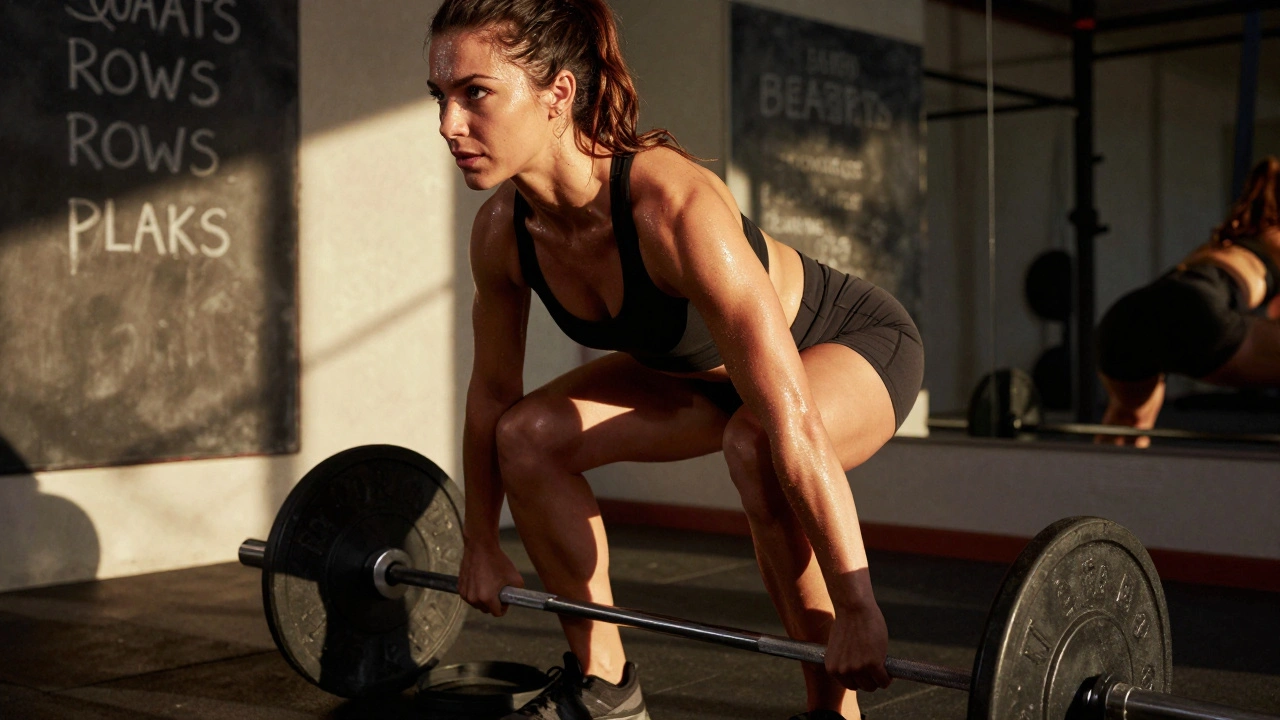
- Strength training: 4 days a week (split into upper and lower body)
- Progressive overload: Add weight or reps every 1-2 weeks
- Compound lifts: Squats, deadlifts, bench press, pull-ups, overhead press
- Cardio: 1-2 days a week (optional-keep it light)
- Rest: 1-2 full rest days
Start with weights that challenge you by the last 2-3 reps. If you can do 12 reps easily, it’s too light. If you can’t do 6, it’s too heavy. Find that sweet spot. And yes, it’s okay to be sore. That’s your body adapting.
Plan 3: Endurance & Cardio
Running, cycling, swimming, hiking-if you love moving for long periods and want to improve stamina, this is your plan. It’s perfect for women training for races, hiking trips, or just feeling more energetic all day.
Key science: A 2023 study in the British Journal of Sports Medicine found that women who trained for endurance improved heart health more than those who only did strength work, even without losing weight.
Your weekly structure:
- Cardio: 4-5 days a week (mix of steady-state and intervals)
- Long sessions: One 60-90 minute session (hike, bike ride, swim)
- Intervals: Two 20-30 minute sessions (e.g., 1 minute sprint, 2 minutes walk-repeat 8x)
- Strength: 2 days a week (focus on core and legs-squats, lunges, glute bridges)
- Recovery: 1-2 days (foam rolling, stretching, deep breathing)
Don’t skip strength. It protects your joints, improves running form, and prevents injury. A runner with weak glutes is a runner headed for knee pain.
Plan 4: Low-Impact & Mobility
If you’re recovering from injury, managing chronic pain, postpartum, or just prefer gentle movement, this is your go-to. It’s not "easy"-it’s intentional.
This plan helps with:
- Lower back pain
- Stiff hips or shoulders
- Stress and anxiety
- Balance and coordination
Weekly routine:
- Yoga or Pilates: 3-4 days a week (focus on alignment, breath, and control)
- Walking: Daily-30 minutes minimum
- Resistance bands: 2 days a week (light bands for glutes, shoulders, arms)
- Stretching: 10 minutes every day (hip flexors, hamstrings, chest)
- Rest: As needed
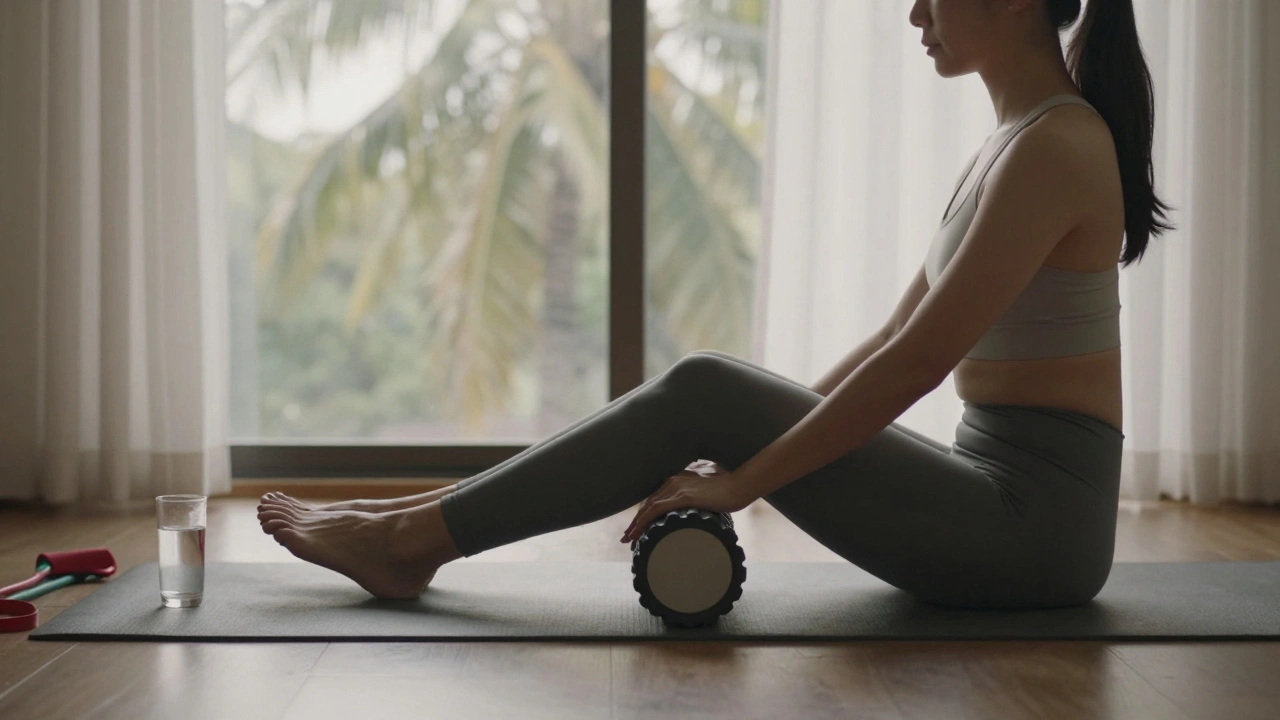
Pro tip: Use a foam roller after each session. It’s not optional. It’s essential. Rolling out tight muscles cuts down soreness and helps your body move better.
What Most Women Get Wrong
Let’s cut through the noise.
- "I need to workout every day" → Rest is when your body repairs itself. Overtraining leads to burnout, injury, and stalled progress.
- "I have to sweat to see results" → You don’t. A 20-minute walk after dinner burns calories and lowers stress. That counts.
- "I should look like Instagram influencers" → Their routines are often designed for aesthetics, not health. Yours should be about feeling good, not looking a certain way.
- "I don’t have time" → You have 20 minutes. Do 3 sets of squats, push-ups, and planks. That’s it. Consistency beats duration every time.
Also, don’t compare your start to someone else’s middle. That’s a recipe for frustration. Progress isn’t linear. Some weeks you’ll crush it. Other weeks, you’ll barely move. Both are part of the journey.
How to Stay Consistent
Plans fail when they’re too rigid. The key? Build habits, not routines.
- Start small: Just show up three times a week. That’s it.
- Track progress: Not weight. Take a photo. Note how your clothes fit. Write down how you feel after a workout.
- Make it social: Find a friend, join a local class, or follow a free YouTube channel you actually enjoy.
- Adjust as life changes: Got a new job? Had a baby? Traveling? Your workout should bend, not break.
And here’s the secret: the best workout is the one you’ll do again. If you hate running, don’t run. If you love dancing, dance. If lifting weights makes you feel powerful, lift. Your body doesn’t care about labels-it cares about movement.
What to Eat Around Your Workouts
Food isn’t the enemy. It’s fuel. And for women, timing matters more than you think.
- Before a workout: A banana with peanut butter, or Greek yogurt with berries-30-60 minutes prior.
- After a workout: Protein + carbs within 45 minutes. Think eggs and toast, chicken and rice, or a protein shake with a piece of fruit.
- Hydration: Drink water all day. Don’t wait until you’re thirsty. Aim for half your body weight in ounces (e.g., 120 lbs = 60 oz).
- Don’t restrict calories. Under-fueling leads to fatigue, hormonal imbalance, and loss of muscle.
Forget fad diets. Eat real food. Protein, vegetables, healthy fats, whole grains. That’s it.
When to See a Professional
You don’t need a personal trainer to start. But you might need one if:
- You’re recovering from an injury
- You have pelvic floor issues (common after childbirth)
- You’re post-menopausal and want to protect bone density
- You’re unsure how to lift safely
A physical therapist or certified trainer who specializes in women’s health can adjust your plan to fit your body-not the other way around. Look for someone who understands hormonal cycles, pelvic health, and age-related changes. They’re out there.
Final Thought: Your Body, Your Rules
There’s no perfect workout plan. There’s only the one that fits your life, your goals, and your energy levels. Some weeks, you’ll want to lift heavy. Other weeks, you’ll just want to walk. Both are wins. Progress isn’t about how hard you push-it’s about how consistently you show up.
Start today. Not tomorrow. Not next Monday. Today. Pick one plan. Do it for 21 days. Then reassess. You’ll be surprised how much stronger, lighter, and more alive you feel-not because you changed your body, but because you finally listened to it.
What’s the best workout for women over 40?
For women over 40, strength training is the most important. Muscle mass drops naturally with age, and lifting weights helps prevent osteoporosis, joint pain, and metabolic slowdown. Combine it with walking, mobility work, and protein-rich meals. Aim for 3 strength sessions and 2-3 walks weekly. Hormonal shifts mean recovery takes longer-so rest is just as important as movement.
Can I lose belly fat with just workouts?
No. Spot reduction doesn’t work. Belly fat comes from overall body fat, and that’s controlled mostly by diet and sleep. You can’t out-exercise a poor diet. But strength training and cardio help burn calories and improve insulin sensitivity, which supports fat loss. Pair workouts with balanced meals, stress management, and 7+ hours of sleep.
How often should I change my workout plan?
Change it every 6-8 weeks if you’re making progress. If you’re stuck, change sooner. If you’re still improving, keep going. The goal isn’t variety for variety’s sake-it’s progression. Add weight, increase reps, reduce rest time, or try a new movement. Your body adapts quickly. Keep challenging it.
Is it safe to workout during pregnancy?
Yes-if you were active before pregnancy and have no complications. Low-impact cardio, light strength training, and pelvic floor exercises are safe and beneficial. Avoid lying flat on your back after the first trimester and don’t push for max lifts. Always check with your OB-GYN first. Many women find yoga, swimming, and walking work best during pregnancy.
Do I need equipment to start?
No. You can build strength with bodyweight exercises: squats, lunges, push-ups, planks, glute bridges. Use a chair for step-ups or triceps dips. A resistance band costs less than $10 and adds variety. Once you’re ready, dumbbells or a kettlebell help, but they’re not required. Start with what you have.