Women's Flexibility and Mobility Guide: Why Stretching Isn't Enough
 Apr, 27 2026
The Core Difference Between Flexibility and Mobility
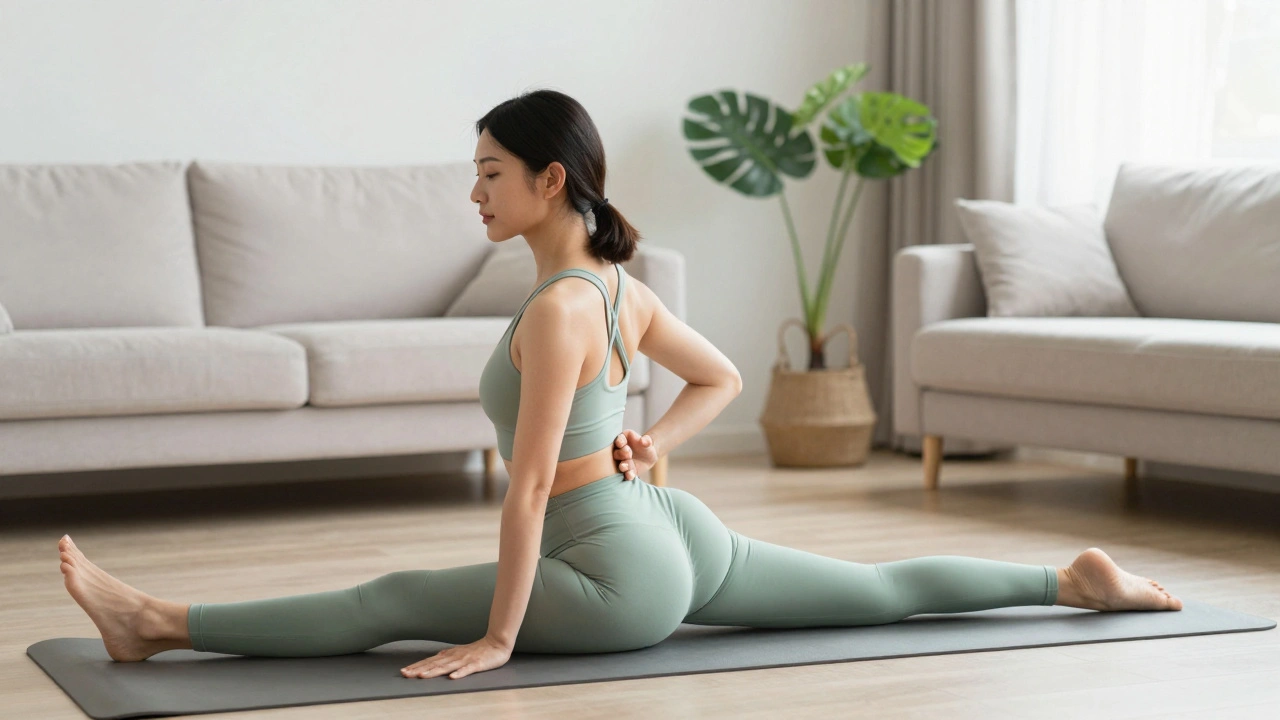
To fix the stiffness, we first have to stop using these words interchangeably. Imagine a rubber band. Flexibility is the rubber band's ability to stretch without snapping. Mobility is your ability to actually pull that rubber band and control the movement.If you have high flexibility but low mobility, you're actually at a higher risk for injury. This is common in women who are naturally 'hypermobile'-meaning their joints go beyond the normal range. Without the strength to stabilize those joints, you're essentially relying on your ligaments to hold you together, which leads to instability and chronic pain in the hips and shoulders.
| Feature | Flexibility | Mobility |
|---|---|---|
| Nature | Passive (stretching a muscle) | Active (controlling a joint) |
| Focus | Muscle length | Joint range of motion (ROM) |
| Example | Holding a hamstring stretch | A deep, controlled squat |
| Goal | Increase elasticity | Improve functional movement |
How Hormones Impact Your Movement
Your body isn't a static machine; it changes every single day. For women, the endocrine system plays a huge role in how our joints and ligaments behave. Specifically, the hormone Estrogen is a primary female sex hormone that influences the elasticity of connective tissues . During the ovulatory phase, estrogen levels peak, which can actually make your ligaments more lax. This sounds like a benefit, but it's a double-edged sword. When your ligaments are too loose, your joints lose stability, which is why some women notice a spike in ankle sprains or knee tweaks mid-cycle.Then there is the transition into perimenopause and menopause. As estrogen levels drop, collagen production slows down. This leads to stiffer tendons and a loss of cartilage in the joints. If you've noticed that you suddenly need a longer warm-up than you did five years ago, it's not just 'aging'-it's a chemical change in your connective tissue. Shifting your focus toward women's mobility training during this phase is the best way to combat the stiffness that leads to osteoporosis and joint pain.
Targeting the Three Danger Zones
Most women experience the most restriction in three specific areas: the ankles, the hips, and the thoracic spine. If these three areas are locked, your body compensates by putting pressure on your lower back and knees.The Ankle Complex
Poor ankle mobility is the hidden cause of many knee injuries. If your ankles can't flex forward (dorsiflexion), your body forces the knee to cave inward during a squat or a walk. To fix this, stop just stretching your calves and start doing weighted ankle mobilizations. Try placing your foot on a block and pushing your knee forward over your toes while keeping your heel glued to the floor. This active movement resets the joint capsule.
The Hip Girdle
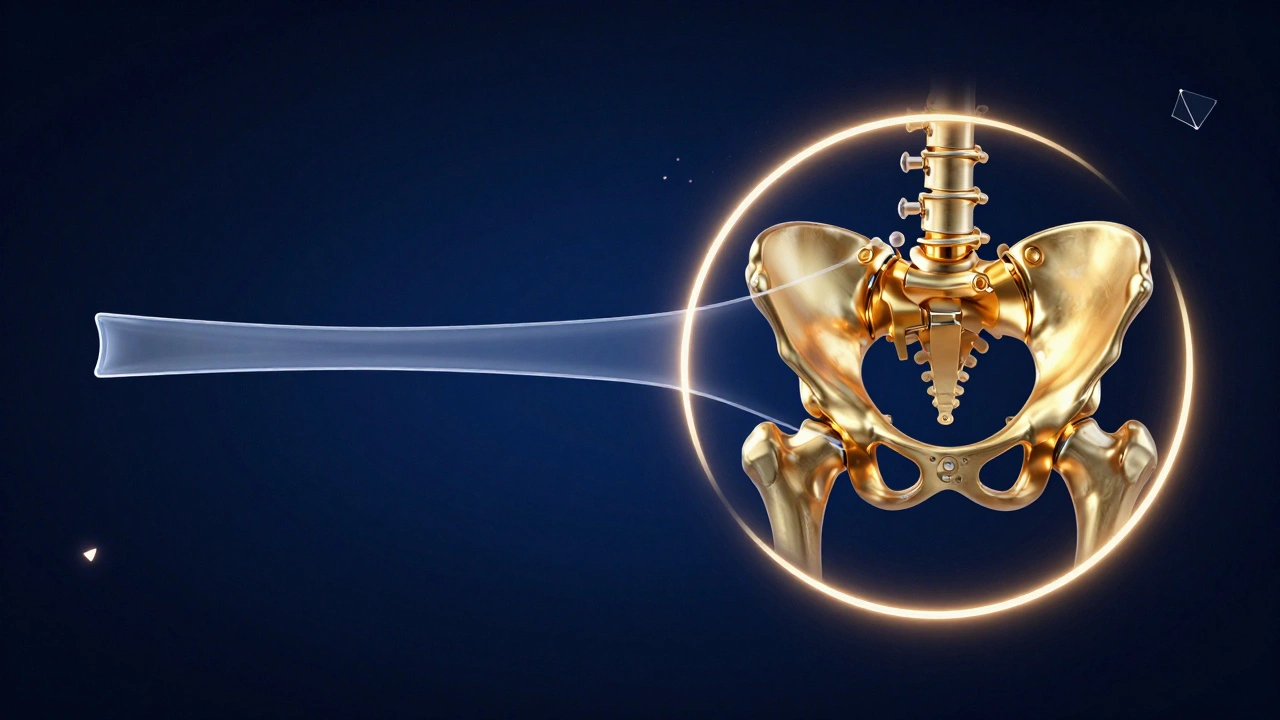
Women often carry a lot of tension in the hips, partly due to the wider pelvic structure. Many people mistake tight hips for tight hamstrings. In reality, the issue is often a lack of internal and external rotation in the hip socket. Instead of a static pigeon stretch, try controlled articular rotations (CARs). This involves moving your hip in the largest circle possible without moving your torso. It's like 'brushing your teeth' for your joints-it keeps the synovial fluid moving and the joint lubricated.
The Thoracic Spine (T-Spine)
The Thoracic Spine is the middle section of the vertebral column, from the base of the neck to the bottom of the ribcage . Because of the way many women are encouraged to maintain posture, the T-spine often becomes rigid. When your mid-back doesn't move, your lower back (lumbar spine) has to overwork to compensate, which is why so many women suffer from chronic lower back pain. Incorporate 'thread the needle' movements or foam roller extensions to unlock this area.
Building a Functional Mobility Routine
You don't need an hour of stretching. In fact, long-duration static stretching before a workout can actually decrease your power output. Instead, follow this flow: Dynamic Warm-up → Strength-Based Mobility → Passive Recovery.- Dynamic Movement (5-10 mins): Use movements that mimic your workout. If you're going for a run, do leg swings and ankle circles. If you're lifting weights, do cat-cow and arm circles. The goal is to increase blood flow and 'wake up' the nervous system.
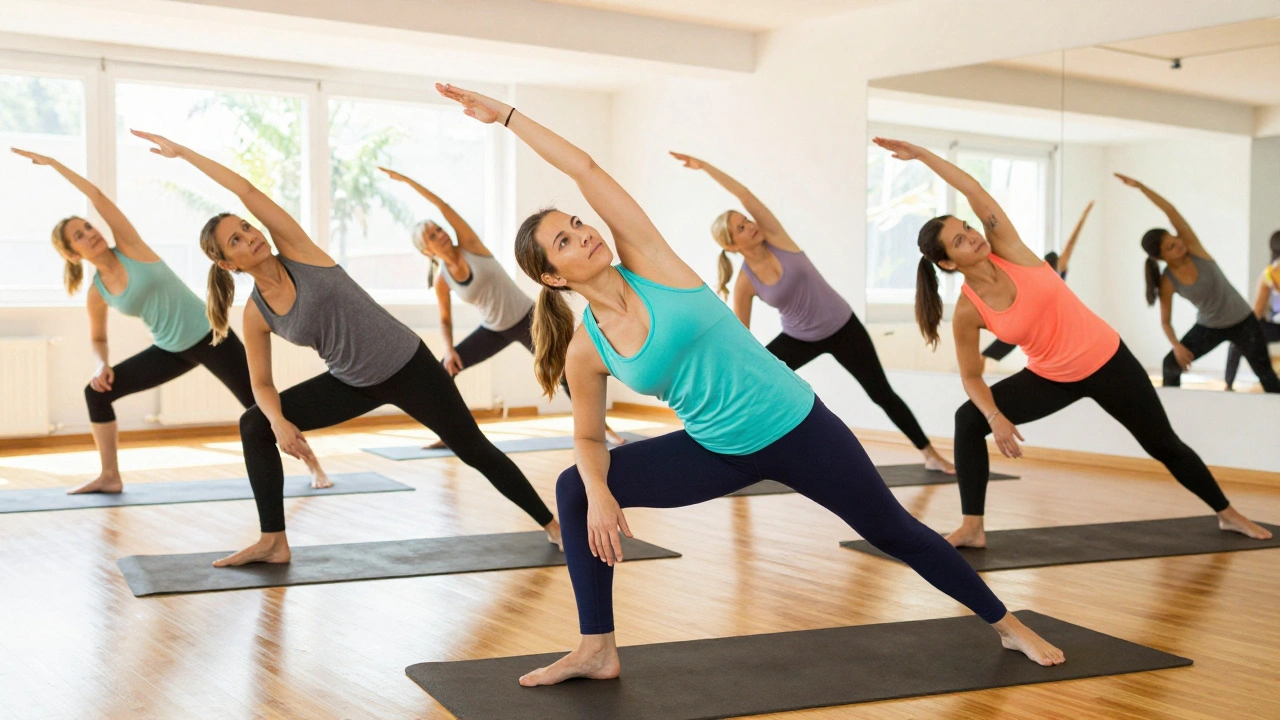
- Active Range of Motion (during workout): Incorporate movements that challenge your limits. For example, instead of a standard lung, do a 'world's greatest stretch' where you lunge forward and rotate your arm toward the ceiling. This hits the hip, the T-spine, and the ankle all at once.
- Eccentric Loading: This is a pro tip. To gain permanent mobility, you have to be strong in the new range of motion. If you stretch your hamstrings and then immediately do a slow, controlled Romanian Deadlift, you are telling your brain that it is safe to be in that stretched position. This 'locks in' the progress.
- Passive Recovery (post-workout): Now is the time for the long, relaxing stretches or a foam roller. Use this to down-regulate your nervous system and signal to your body that it's time to recover.
The Role of Connective Tissue and Hydration
Your joints aren't just bone and muscle; they are wrapped in Fascia is a band of connective tissue that surrounds and supports organs and muscles . Think of fascia as a biological spiderweb. If you don't move your body through various planes of motion, this web becomes sticky and dense. This is why you can feel tight even if you have 'strong' muscles.Hydration is the secret weapon for fascia health. Fascia is primarily made of water and collagen. When you're dehydrated, your connective tissue becomes brittle and less glide-able. If you're spending 30 minutes on mobility work but neglecting your water intake, you're fighting an uphill battle. Pair your movement with adequate electrolytes-magnesium and potassium specifically-to help your muscles relax and your joints stay lubricated.
| Tool | Primary Use | Best For... |
|---|---|---|
| Foam Roller | Myofascial Release | Breaking up tissue adhesions in quads and upper back |
| Resistance Bands | Active Tension | Adding load to a stretch to build strength in new ranges |
| Lacrosse Ball | Trigger Point Therapy | Deep knots in the glutes or soles of the feet |
| Yoga Blocks | Support/Elevation | Modifying poses for those with limited initial mobility |
Common Pitfalls to Avoid
One of the biggest mistakes women make is pushing through pain. There is a difference between 'discomfort' (the feeling of a muscle stretching) and 'pain' (a sharp, pinching, or electrical sensation). If you feel a pinch in your hip during a stretch, stop. That's often a sign of joint impingement, not muscle tightness. Pushing through a pinch can cause inflammation in the joint capsule, which actually makes you stiffer in the long run.Another trap is the 'consistency gap.' Many people do a massive mobility session once every two weeks and wonder why they still feel stiff. Mobility is a 'use it or lose it' skill. Your nervous system will only keep the range of motion it believes is necessary. Five minutes of joint circles every single morning is infinitely more effective than one ninety-minute yoga class on a Sunday. Treat your mobility like dental hygiene-a small, daily habit that prevents a massive problem later.
Can I be too flexible?
Yes. This is called joint hypermobility. If your joints move beyond the normal range without muscular support, you are at a higher risk for dislocations and ligament tears. If you are naturally hypermobile, you should focus less on stretching and more on stability and strength training to protect your joints.
Should I stretch before or after my workout?
Use dynamic mobility (circles, swings, active rotations) before your workout to prime the joints. Save static stretching (holding a pose for 30+ seconds) for after your workout to help your muscles relax and recover.
How long does it take to see results from mobility work?
You'll often feel a temporary 'release' immediately after a session. However, permanent changes in your range of motion typically take 4 to 8 weeks of consistent daily practice as your nervous system adapts to the new movement patterns.
Is mobility training the same as yoga?
Not exactly. Yoga is a holistic practice that includes mobility and flexibility, but it often emphasizes the passive side (stretching). Mobility training specifically focuses on the active control of the joint throughout its entire range of motion.
Why do my hips feel tighter during certain times of the month?
Hormonal fluctuations, particularly changes in estrogen and relaxin, affect the laxity of your ligaments. Some women feel more flexible during ovulation and stiffer during their period. Tracking your cycle can help you adjust the intensity of your mobility work.
Next Steps for Different Goals
If you're starting from scratch, don't try to fix everything at once. Pick a path based on your primary struggle:- The Office Worker: Focus on the Thoracic Spine and Hip Flexors. Spend two minutes every hour standing up and doing shoulder rolls and a quick hip stretch.
- The Athlete: Focus on Ankle Dorsiflexion and Hip Internal Rotation. Incorporate these into your active warm-up to improve your power output and prevent injury.
- The Aging Gracefully: Focus on full-body joint CARs (Controlled Articular Rotations). Focus on keeping the joints lubricated to maintain independence and ease of movement.