Women in Sports: The Fight for Pay Equity and Fair Access
 Apr, 29 2026
The Reality of the Pay Gap
When people talk about pay equity, they often point to the "revenue argument." You've probably heard it: "Men's sports make more money, so they should be paid more." But that's a circular logic trap. If you don't invest in marketing, broadcasting, and infrastructure for women, they can't generate the same revenue. It's like refusing to water a plant and then claiming it doesn't grow as fast as the one you water every day. Take the WNBA is the professional women's basketball league in the United States as an example. For years, players have dealt with salaries that barely cover rent, forcing many to play overseas in the off-season just to survive. Meanwhile, the NBA's revenue is astronomical. The real question is why the investment in the women's game hasn't matched the explosion in viewership. When the 2024 NCAA Women's Basketball tournament outpaced the men's in some viewership metrics, it proved that the demand is there; the paycheck just hasn't caught up.| Factor | Male Athletes (Typical) | Female Athletes (Typical) | Impact on Equity |
|---|---|---|---|
| Base Salary | High/Guaranteed | Low/Performance-based | Creates financial instability for women |
| Sponsorships | Global Brand Deals | Niche/Emerging Deals | Limits off-court earning potential |
| Media Coverage | Constant/Prime Time | Seasonal/Highlight-based | Reduces visibility for sponsors |
| Investment | High Infrastructure | Underfunded Facilities | Hinders long-term growth |
The Power and Pitfalls of Title IX
In the U.S., you can't talk about access to play without mentioning Title IX is a comprehensive federal law that prohibits sex-based discrimination in any school or other education program that receives federal funding. Passed in 1972, this law completely flipped the script on school athletics. It forced colleges and high schools to provide equal opportunities for girls, which led to a massive surge in female participation in sports. But Title IX isn't a magic wand. While it helped with *access* to play, it didn't automatically solve the *quality* of that access. We still see a "tiering" effect where women's teams are given the worst practice slots-like 6:00 AM or 9:00 PM-while the men's teams get the prime afternoon hours. There's also the issue of equipment. In many districts, the boys' football team gets top-of-the-line gear, while the girls' soccer team is using hand-me-downs from five years ago. Access to a field isn't the same as access to a quality experience.Breaking the Glass Ceiling in Sponsorships
For a long time, brands viewed women's sports as a "charity case" or a niche market. That's changing. Companies are finally realizing that women aren't just athletes-they are powerful influencers who drive consumer behavior. When a brand signs a deal with a female star, they aren't just buying a logo on a jersey; they are tapping into a loyal, engaged audience that feels a deep connection to the athlete's struggle for equity. However, the Gender Pay Gap is the disparity in earnings between men and women in the same or similar roles extends beyond the official salary. It shows up in the "endorsement gap." Male athletes often get massive deals for just being famous, whereas female athletes often have to prove their "marketability" or social media reach before a brand will even talk to them. We're seeing a shift where athletes are taking more control, starting their own brands or negotiating equity stakes in companies rather than just taking a flat check.
Barriers to Entry: Beyond the Money
Money is the loudest part of the conversation, but access is the foundation. In many parts of the world, the barriers aren't just financial-they're cultural. In some regions, sports are still seen as "masculine" domains. Girls are discouraged from playing contact sports or are pushed toward "feminine" activities like gymnastics or dance, even if they have a passion for rugby or boxing. This cultural gatekeeping limits the pipeline of talent. If a girl doesn't have a local league to join at age eight, she's unlikely to be a pro at age eighteen. We need more grassroots investment. This means building community centers that prioritize safety and inclusivity, and training coaches who understand how to support female athletes without relying on outdated stereotypes. When we remove these barriers, we don't just help women; we grow the entire sports economy by doubling the potential talent pool.The Path to True Equity
So, how do we actually fix this? It starts with a shift in how we value sports. We need to move away from the "revenue-first" model and toward an "investment-first" model. If leagues want women's sports to be profitable, they have to put money into the product first. This means better broadcasting contracts, consistent game schedules, and professional marketing campaigns that treat female athletes as superstars, not just "female versions" of male stars. Collective bargaining is also a huge tool. When players band together, they have the leverage to demand transparency in how revenue is tracked. We've seen this work in USWNT is the United States Women's National Team, known for their high-profile legal battle for equal pay. Their fight for equal pay wasn't just about the money; it was about the principle that a World Cup trophy is worth the same regardless of who holds it. Their victory set a precedent for other sports, proving that fighting the system actually works.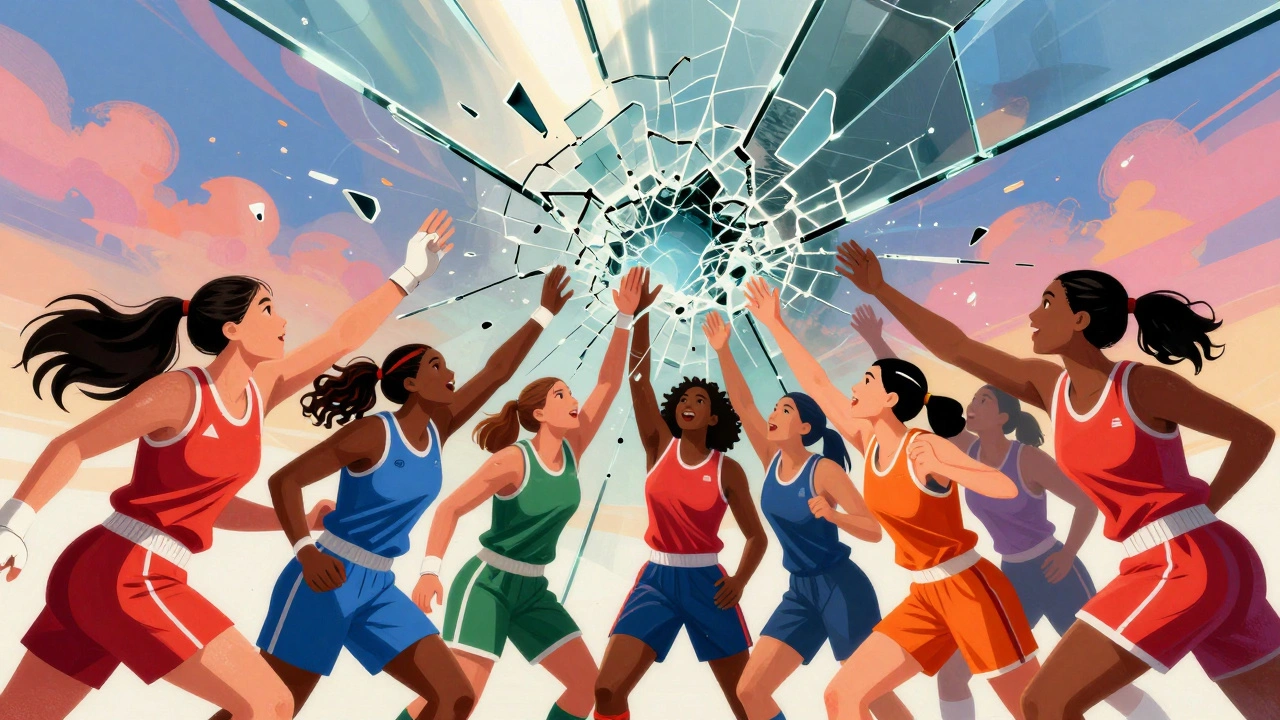
Looking Toward 2030
As we move further into the decade, the momentum is undeniable. The rise of streaming platforms is allowing women's sports to find audiences without needing a traditional network's permission. We are seeing a new generation of athletes who are outspoken and unapologetic about their value. They aren't asking for a seat at the table anymore; they are building their own tables. But we can't get complacent. True equity means that a young girl starting out in a local league in Portland or London has the same trajectory and opportunity for financial stability as any boy her age. It means that the "access to play" isn't just a checkbox for a school board to hit, but a commitment to excellence. The goal isn't to take away from men's sports, but to expand the pie so that everyone gets a fair slice.Why is there still a pay gap in sports if women's sports are growing?
The gap persists because many leagues still use legacy payment structures based on revenue generated decades ago. Even as viewership grows, the contracts and salary caps often lag behind. Additionally, historical underinvestment in marketing and infrastructure means women's sports haven't had the same "ramp-up" time that men's sports had over the last century.
Does Title IX actually guarantee equal pay?
No, Title IX focuses on educational opportunities and access to participation in school-funded programs. It ensures that girls have the right to play and have access to facilities and scholarships. However, it does not regulate professional salaries or prize money in pro leagues, which are governed by private contracts and collective bargaining agreements.
How can fans help close the pay gap?
The most direct way is by "voting with your wallet." Buying tickets to women's games, purchasing official merchandise, and tuning into broadcasts tells sponsors and networks that there is a massive market for women's sports. High viewership and attendance numbers give athletes more leverage during salary negotiations.
What is the "revenue argument" and why is it flawed?
The revenue argument claims that because men's sports generate more money, they deserve higher pay. This is flawed because it ignores the fact that men's sports have had a massive head start in investment, media promotion, and global infrastructure. When women's sports are given similar investment, their revenue growth often outpaces that of men's sports.
What are the biggest barriers for girls in grassroots sports?
Common barriers include a lack of local leagues, cultural stigmas that label certain sports as "too masculine," and a shortage of qualified coaches who are trained to support female athletes. Financial constraints on families also often mean that if a family can only afford one child to play a sport, the son is often prioritized over the daughter.