Wheel of Life for Women: How to Assess and Rebalance Your Life in One Hour
 Aug, 16 2026
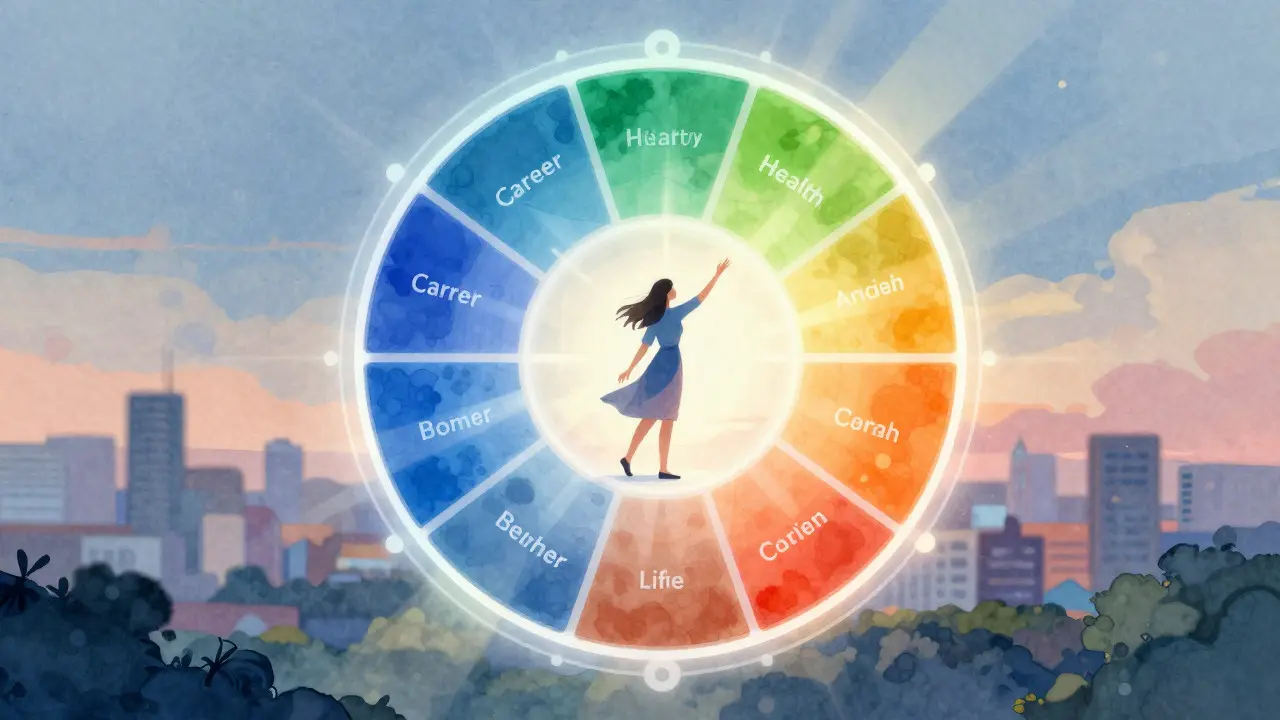
You know that feeling when you’re juggling a career, family, friendships, and health, but something just feels off? You’re doing everything “right,” yet the energy isn’t there. That’s where the Wheel of Life comes in. It is a visual self-assessment tool that helps individuals evaluate their satisfaction across key life categories to identify areas needing attention. For women specifically, this method shines because it moves beyond generic productivity metrics and looks at the holistic interplay between emotional, physical, and social needs. Most people try to fix their lives by adding more tasks to their to-do list. But what if the problem isn’t lack of action, but lack of direction? The Wheel of Life gives you a snapshot of your current reality in under an hour. No journaling marathon required. Just one focused session to see where you are standing and where you actually want to be.
Why This Tool Works Better for Women
Traditional goal-setting often favors linear progress: get the promotion, buy the house, hit the weight loss target. While those are valid goals, they don’t always capture the full picture of well-being. Women often carry the mental load of managing relationships, household dynamics, and emotional labor. The Wheel of Life acknowledges these invisible burdens by breaking life into distinct, manageable slices.
Think of it as a dashboard for your life. Instead of guessing which area is draining you, you measure it. If your score in "Relationships" is low but "Career" is high, you might be sacrificing connection for status. Recognizing this trade-off is the first step toward intentional living. It shifts the conversation from "What should I do next?" to "Where am I lacking right now?"
The Eight Core Categories
To use the Wheel of Life effectively, you need to define what matters to you. While templates vary, these eight categories cover the most critical aspects of adult life. You can adjust them to fit your specific stage of life-for example, swapping "Health" for "Parenting" if you have young children.
- Career: Job satisfaction, financial stability, professional growth.
- Health: Physical fitness, sleep quality, nutrition, mental clarity.
- Relationships: Partner, family, close friends, community ties.
- Personal Growth: Learning new skills, hobbies, spiritual practice.
- Finances: Savings, debt management, investment security.
- Fun & Recreation: Leisure time, travel, creative outlets.
- Home Environment: Cleanliness, organization, comfort of living space.
- Social Contribution: Volunteering, mentoring, giving back.
Notice how broad some of these are? That’s intentional. The goal isn’t to audit every detail but to gauge your overall satisfaction level. If your home is messy but you love the vibe, your score might still be high. Context matters more than perfection.
The One-Hour Assessment Protocol
You don’t need a weekend retreat to complete this. Set aside exactly 60 minutes. Put your phone on silent. Grab a pen and paper or open a digital template. Here is how to break down the hour so you stay focused and avoid overthinking.
- Minutes 0-10: Setup and Mindset. Draw a circle divided into eight equal sections. Label each section with one of the core categories above. Take three deep breaths. Remind yourself this is not a test; there are no wrong answers.
- Minutes 10-40: Scoring Each Sector. Rate each category from 1 to 10. A 1 means you feel completely unfulfilled or stressed in this area. A 10 means you feel fully satisfied and energized. Be honest. Don’t grade on a curve. If your career is paying the bills but making you miserable, it’s a 3, not a 7.
- Minutes 40-50: Visual Mapping. Connect the dots on the wheel based on your scores. The resulting shape will look like a spider web or an irregular polygon. Areas where the line is close to the center represent weak spots. Areas near the edge represent strengths.
- Minutes 50-60: Identification and Selection. Circle the two lowest-scoring areas. These are your priority targets. Do not try to fix all eight areas at once. Pick one primary focus and one secondary focus for the next month.
This structured approach prevents analysis paralysis. By limiting your scope to just two areas, you ensure you can actually take action rather than just observing problems.
Rebalancing Without Burnout
Once you’ve identified your weak spots, the temptation is to overhaul your entire life immediately. Resist that urge. Sustainable change happens in small increments. For each selected area, ask yourself: What is one tiny thing I can do this week to improve my score by just one point?
If "Health" is your low scorer, don’t sign up for a marathon training program. Maybe commit to drinking more water or taking a 15-minute walk after lunch. If "Relationships" is lagging, schedule one uninterrupted coffee date with a friend or partner. The key is consistency, not intensity.
It’s also crucial to distinguish between controllable and uncontrollable factors. If your low score in "Finances" is due to a global economic downturn, changing your mindset won’t fix the bank account. But if it’s due to impulse spending, a budget review will help. Knowing the difference saves you from frustration.

Making It a Habit, Not a One-Time Event
The true power of the Wheel of Life lies in its repeatability. Life changes. Seasons shift. Priorities evolve. What felt balanced in January might feel chaotic in August. Schedule a quarterly check-in with yourself. Set a calendar reminder for the first Sunday of January, April, July, and October.
When you revisit the wheel, you’ll likely notice patterns. Maybe your "Personal Growth" score dips every winter when the days get shorter. Or maybe your "Home Environment" suffers during busy project deadlines at work. These insights allow you to proactively manage your life rather than reactively putting out fires.
Over time, you build a history of your well-being. You can see trends, celebrate improvements, and catch declines early. It turns self-care from a vague concept into a measurable practice. And for many women, that structure provides a sense of control and agency that is deeply empowering.
Frequently Asked Questions
How often should I update my Wheel of Life?
Quarterly is the sweet spot for most people. Monthly can feel too frequent and lead to burnout, while annual updates miss significant shifts in your life circumstances. Three months allows enough time to implement changes and see results before reassessing.
Is the Wheel of Life suitable for single women without children?
Absolutely. In fact, it may be even more useful because you have fewer fixed obligations. You can customize categories to reflect your unique priorities, such as "Travel," "Creative Projects," or "Community Involvement." The tool adapts to your life, not the other way around.
What if all my scores are low?
This is a signal that you may be experiencing burnout or a major life transition. Don’t panic. Pick the one area that causes you the most immediate distress and address it first. Often, improving one core area (like Health or Sleep) creates a ripple effect that improves others naturally.
Do I need to share my Wheel of Life with anyone?
No, it is primarily a private introspection tool. However, sharing it with a trusted partner, coach, or friend can add accountability. Sometimes, hearing your own priorities spoken aloud helps solidify your commitment to change. But never feel pressured to share if you prefer privacy.
Can I use digital apps instead of paper?
Yes. Many apps offer interactive Wheel of Life templates. The benefit of paper is that it forces slower, more deliberate thinking. Digital tools are great for tracking historical data and visualizing trends over time. Choose whichever format makes you most comfortable and likely to stick with the process.