Walking Meditation for Busy Women: Fit Practice Into Your Day
 Dec, 28 2025
Most women know what it’s like to feel stretched thin-juggling work, family, chores, and still trying to squeeze in a moment for yourself. You don’t need to sit cross-legged for an hour to find peace. Sometimes, all you need is to walk. Not a power walk. Not a step-count chase. Just a slow, quiet walk where your feet touch the ground and your mind stops racing. That’s walking meditation, and it’s one of the easiest ways to reclaim calm in a packed day.
What Is Walking Meditation?
Walking meditation isn’t about getting somewhere faster. It’s about being fully present while you move. Unlike regular walking, where your mind is on your next meeting or your grocery list, walking meditation turns each step into an anchor. You notice the lift of your foot, the shift of your weight, the brush of air on your skin. It’s mindfulness in motion.
It’s not new. Buddhist monks have practiced it for centuries. But today, research backs it up. A 2023 study from the University of California found that women who practiced just 10 minutes of walking meditation five days a week reported 37% less cortisol (the stress hormone) after four weeks. No apps. No candles. Just walking.
Why It Works for Busy Women
You don’t need to carve out time-you already have time. You walk to your car. You walk the dog. You walk the kids to school. You walk to the mailbox. These moments are already part of your day. Walking meditation turns those moments into healing moments.
Most mindfulness practices ask you to sit still. But for women juggling multiple roles, stillness can feel impossible. Your body is always moving-carrying groceries, holding a baby, rushing between tasks. Walking meditation meets you where you are. It doesn’t ask you to stop. It asks you to slow down.
It also works because it’s sensory. When you’re overwhelmed, your mind gets stuck in loops. Walking brings you back to your body. You feel the pavement under your shoes. You hear birds. You smell rain on concrete. These sensations pull you out of anxiety and into the present.
How to Start (No Experience Needed)
You don’t need a special place. You don’t need a timer. You don’t even need to change your outfit. Here’s how to begin:
- Choose a short stretch-five steps, ten steps, whatever feels doable. A hallway. A sidewalk. The path from your car to the front door.
- Slow your pace. Not dramatically. Just enough that you can feel each part of your foot touching the ground.
- Notice your steps. In your head, softly say: lifting as you raise your foot, moving as it swings forward, placing as it lands.
- If your mind drifts to your to-do list, that’s okay. Gently bring your attention back to your feet. No judgment. Just return.
- Do this for one minute. Then two. Then five. That’s it.
That’s the whole practice. No breathing techniques. No chanting. Just walking and noticing.

When to Do It
You don’t need to plan it. Just look for the gaps:
- Before you open your laptop in the morning-walk to the kitchen for coffee and notice each step.
- After dropping the kids off-stand by the car for 60 seconds and feel your feet.
- Waiting in line at the pharmacy-shift your weight from heel to toe, slowly.
- During your lunch break-skip the scroll. Walk around the block without your headphones.
- Before bed-walk from your bedroom to the bathroom, focusing only on the sensation of movement.
These aren’t extra tasks. They’re tiny resets. One minute of mindful walking can reset your nervous system better than five minutes of scrolling.
What to Expect (and What Not to Expect)
Don’t expect to suddenly feel zen. Don’t expect your thoughts to disappear. You’ll still think about laundry. You’ll still worry about work. That’s normal. Walking meditation isn’t about stopping thoughts. It’s about changing your relationship to them.
What you will notice:
- Your shoulders drop a little more each time you walk.
- You start recognizing when your breathing gets shallow-and you catch it before it spirals.
- You feel more grounded, even on chaotic days.
- You start noticing small beauties: sunlight on a wet leaf, the sound of your own breath.
These aren’t big changes. But they’re the ones that add up. Over time, walking meditation doesn’t just calm you-it changes how you move through the world.
Common Mistakes (And How to Fix Them)
Most women give up because they think they’re doing it wrong. Here are the top three mistakes-and how to avoid them:
- “I can’t stop thinking.” You’re not supposed to. The goal isn’t to clear your mind. It’s to notice when you’re lost and gently come back. Every time you do, you’re strengthening your focus.
- “I don’t have time.” You don’t need 20 minutes. Start with one step. One breath. One step again. Progress isn’t measured in minutes. It’s measured in moments you choose to be present.
- “I feel silly.” You might. So did I the first time. But no one else is watching. And if someone is? They’re probably too busy worrying about their own to-do list to care.
Make It Stick
Like any habit, walking meditation sticks when it’s tied to something you already do. Try this:
- Pair it with your coffee ritual: Sip your coffee, then walk slowly to the window. Feel the warmth of the cup. Feel the floor under your feet.
- Use your shoes as a cue: Put on your walking shoes? That’s your signal to take three mindful steps before you head out.
- Keep a tiny note on your mirror: “One step. One breath.”
Don’t aim for perfection. Aim for consistency. Even two minutes a day, five days a week, changes your nervous system. That’s all it takes.
Real-Life Example
Marla, a single mom in Portland, started walking meditation after a panic attack in the grocery store. She didn’t have time for yoga. She didn’t have money for therapy. But she had five minutes between school drop-off and her shift at the café.
She began by walking from the parking lot to the café door. Just five steps. She whispered: lifting, moving, placing. At first, she forgot after two steps. Then three. Then five. After two weeks, she noticed she stopped clenching her jaw in the car. After a month, she started smiling at strangers. Not because she was happy all the time. But because she finally felt like she was home in her own body.
You don’t need a big change. You just need one step.
Can walking meditation replace sitting meditation?
Yes, for many people. Walking meditation is just as effective as sitting meditation for reducing stress and improving focus. Some find it easier because movement helps them stay present. Others use both-sitting for deeper reflection, walking for daily grounding. There’s no rule that says you have to choose one.
Do I need to walk outside?
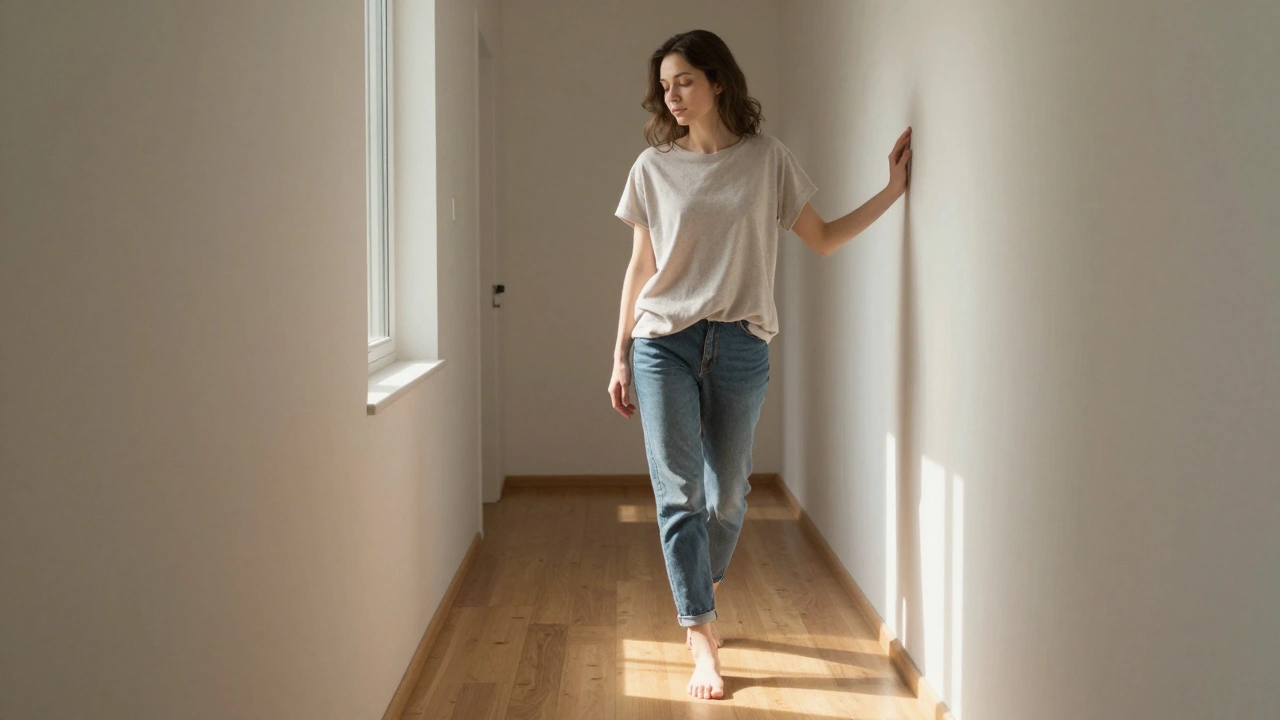
No. You can do it indoors. Walk slowly down a hallway, around your kitchen, or even in place while waiting for your coffee to brew. The key isn’t the location-it’s the attention. Whether you’re on pavement or tile, focus on the sensation of your feet connecting with the surface.
How long should I walk for it to work?
You don’t need long. Studies show benefits from as little as 5-10 minutes a day. The real benefit comes from consistency, not duration. Five minutes every morning, five minutes after lunch-those small moments add up more than one 30-minute session once a week.
Can I do this with my kids around?
Absolutely. You don’t need silence. Walk slowly beside them. Let them lead the pace. You can quietly notice your own steps while they chatter. It’s not about being alone-it’s about being present, even in the middle of chaos. Your calm becomes part of the environment.
What if I forget to do it?
Forget it. Then try again tomorrow. This isn’t a test. There’s no scorecard. The practice isn’t about doing it perfectly-it’s about returning, again and again. One step is enough. One moment of awareness is enough. You’re not failing. You’re practicing.
Walking meditation doesn’t ask you to change your life. It asks you to notice the life you already have. And sometimes, that’s the most powerful change of all.