Travel Insurance for Women: What Policies Actually Cover
 Oct, 29 2026
You’re three weeks into a solo backpacking trip through Southeast Asia when you wake up with a fever that won’t break. Or maybe you’re on a hiking trail in Patagonia and twist your ankle badly enough that you can’t walk back to base camp. In both scenarios, the question isn’t just "am I okay?" but "who pays for this?" Most standard travel policies cover broken bones and lost luggage, but they often leave out the specific medical realities many women face. If you buy a generic policy without checking the fine print, you might find yourself stuck with a $50,000 air ambulance bill because your insurer decided your situation didn't fit their narrow definition of an "emergency."
Here’s the thing about travel insurance: it’s not one-size-fits-all, especially when gender-specific health risks come into play. While men and women face similar risks from car accidents or flight delays, women have unique biological vulnerabilities-from reproductive health issues to higher susceptibility to certain autoimmune flares-that require different coverage structures. This guide breaks down exactly what policies actually cover, where the gaps are, and how to choose protection that matches your actual life, not just a marketing brochure.
The Medical Reality Gap
Standard health insurance plans often exclude international care entirely, and even those that offer global coverage rarely handle complex female-specific emergencies well. For example, if you experience severe complications from endometriosis while abroad, many basic policies will deny the claim, labeling it a "pre-existing condition" unless you bought a specialized waiver within days of booking your trip. It’s frustrating because these conditions are chronic for millions of women, yet travel insurers treat them like rare anomalies.
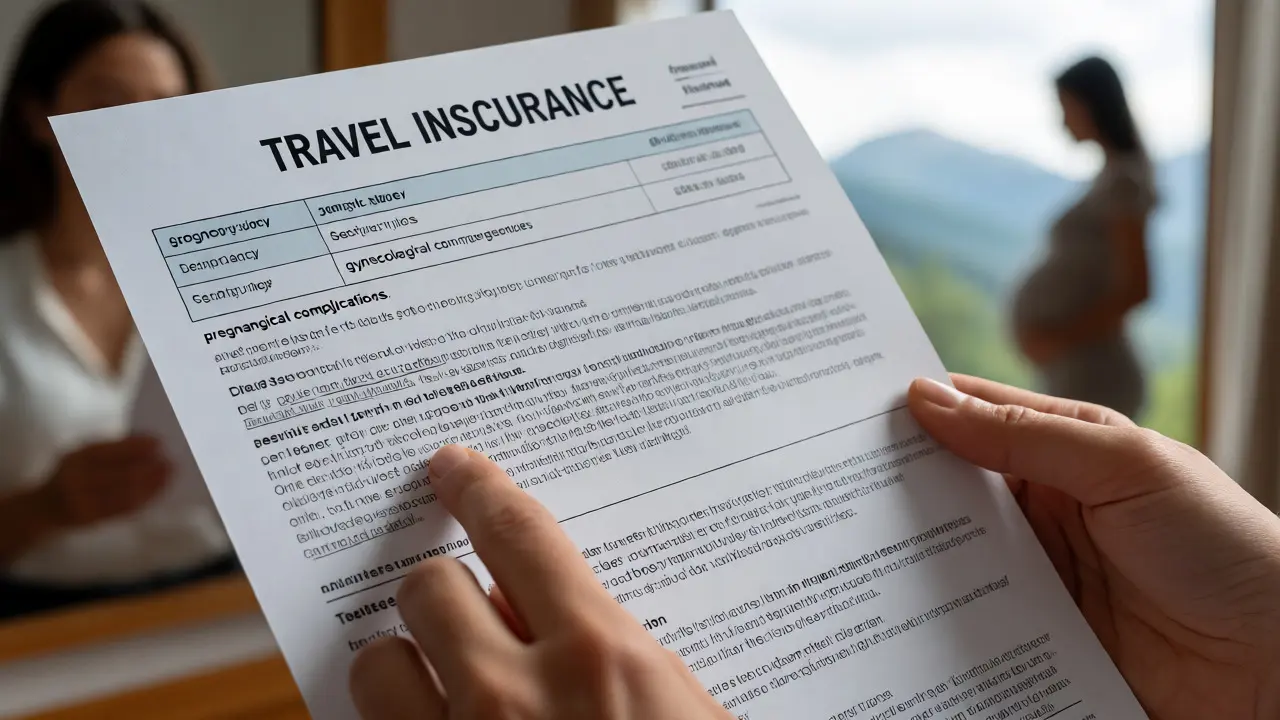
When evaluating a policy, look for explicit mentions of gynecological care. Does the plan cover emergency surgery for ovarian cysts? What about unexpected miscarriage or premature labor if you’re traveling during the second trimester? Many policies cover "pregnancy-related complications" only if the baby is born prematurely, ignoring the mother’s recovery costs. You need a plan that defines "medical necessity" broadly enough to include specialist consultations for pelvic pain or hormonal imbalances triggered by jet lag and stress.
Pregnancy Coverage: The Fine Print Matters
If you’re pregnant-or planning to be soon-this is where most travelers get burned. Insurers typically draw a hard line at 36 weeks for single pregnancies and 32 weeks for multiples. But here’s the catch: most policies only cover complications arising *after* the policy starts, not the birth itself. Unless you buy a "cancel for any reason" add-on, giving birth early due to preeclampsia might not reimburse your non-refundable flights.
Some high-end carriers, like World Nomads or Allianz Global Assistance, offer more flexible terms for expectant mothers, covering emergency C-sections and neonatal intensive care unit (NICU) stays for the newborn. However, you must declare your pregnancy status upfront. Failing to disclose that you were already pregnant when buying the policy can void your entire claim. Always check the exclusion list for "routine prenatal care" versus "emergency obstetric services." One covers your monthly checkup; the other saves your life if you hemorrhage in a rural clinic in Peru.
Adventure Activities and Gender-Specific Risks
Women are increasingly participating in high-adventure travel, from scuba diving in Bali to trekking in Nepal. But did you know that some activities carry higher physiological risks for women? Scuba diving, for instance, poses a slightly higher risk of decompression sickness in women due to differences in body composition and blood flow patterns. Standard adventure sports riders often exclude diving beyond certain depths or ignore hyperbaric chamber treatment costs.
Check if your policy includes "search and rescue" specifically for remote areas. In places like the Andes or the Himalayas, helicopter evacuations can cost over $100,000. Some policies cap this amount at $50,000, leaving you liable for the difference. Furthermore, ensure your coverage includes dental emergencies. A cracked tooth from eating local street food or biting down on something hard while hiking can become excruciatingly painful and expensive to fix abroad, yet many basic plans exclude dental work unless it’s part of a larger trauma injury.
Safety, Harassment, and Trip Interruption
It’s an uncomfortable truth, but safety concerns differ for women travelers. Incidents of sexual harassment or assault can derail a trip emotionally and physically. Do your travel insurance policies cover therapy sessions required after such an event? Probably not under standard medical coverage. However, some modern insurers now offer "trip interruption" benefits if you feel unsafe continuing your journey due to political unrest or personal safety threats, provided you have police reports or credible evidence.
Consider the scenario where you’re forced to return home early due to a family emergency involving childcare. Since women still shoulder a disproportionate share of caregiving responsibilities, having a policy that covers "family member illness" including grandparents or siblings is crucial. Verify who counts as a "family member" in the policy documents. Some define it narrowly as spouse, parent, or child, excluding the aunt who was supposed to watch your kids. That distinction could cost you thousands in change fees.
Comparing Top Policy Features
To help you navigate the options, we’ve compared key features across popular providers known for robust women-focused coverage. Note that prices vary based on age, destination, and trip length, but the structural differences remain consistent.
| Feature | Budget Basic Plan | Mid-Range Comprehensive | Premium Adventure |
|---|---|---|---|
| Gynecological Emergency | Excluded or capped low | Covered up to $5,000 | Covered up to $50,000+ |
| Pregnancy Complications | Only if pre-term birth occurs | Covers maternal hospitalization | Covers mother + NICU baby |
| Emergency Evacuation Cap | $50,000 | $100,000 - $250,000 | $500,000 - $1M |
| Mental Health Support | Not covered | Limited telehealth access | In-person counseling post-trip |
| Pre-existing Condition Waiver | Requires purchase within 7 days | Requires purchase within 14 days | Often included automatically |

How to Buy Without Getting Burned
Buying insurance feels like throwing money away until you need it, so people rush the process. Don’t. Read the exclusions first, not the benefits. Look for phrases like "medically necessary," which sounds good but often requires prior approval from the insurer’s doctor. If you go to a local hospital in Thailand for a severe allergic reaction, call the insurer’s 24/7 hotline immediately. If you don’t, they might refuse to pay the bill later, claiming you didn’t follow protocol.
Another pro tip: keep digital copies of all prescriptions and medical history before you leave. If you have a history of UTIs-a common issue for women travelers due to dehydration and long transit times-having proof of previous diagnoses helps justify urgent antibiotic treatments abroad. Also, consider separate medical-only travel insurance if you’re already using credit card travel perks. Credit cards often cover trip cancellation but offer weak medical coverage. Pairing a cheap medical-only policy with your card’s cancellation benefit often provides better value than a bundled package.
Key Takeaways
- Verify Gynecological Coverage: Ensure your policy explicitly covers emergency surgeries and treatments for conditions like endometriosis or ovarian cysts, not just general "illness."
- Check Pregnancy Exclusions: Understand the gestational limits and whether the policy covers maternal recovery or only the newborn’s care.
- Evaluate Evacuation Caps: For remote adventures, aim for at least $250,000 in emergency evacuation coverage to avoid massive out-of-pocket bills.
- Read the "Family Member" Definition: Confirm who qualifies for trip interruption claims, especially if you rely on extended family for childcare.
- Call Before You Go: Always contact the insurer’s assistance line before seeking non-life-threatening medical care to ensure claim eligibility.
Does travel insurance cover routine prenatal visits?
No, most travel insurance policies do not cover routine prenatal visits, ultrasounds, or standard delivery costs. They typically only cover unexpected complications arising during the trip, such as premature labor, severe bleeding, or preeclampsia. If you want coverage for planned birth, you usually need specialized expat insurance or domestic maternity coverage.
Are pre-existing conditions like PCOS covered?
Polycystic Ovary Syndrome (PCOS) and similar chronic conditions are often excluded unless you purchase a policy with a pre-existing condition waiver. These waivers usually require you to buy the insurance within 10-21 days of making your first trip payment and being medically stable at the time of purchase. Always read the specific definitions of "stable" in your policy.
What if I get sexually assaulted while traveling?
Most comprehensive policies cover medical expenses resulting from sexual assault, including emergency room visits, STI testing, and physical therapy. However, mental health counseling is rarely covered directly. Some premium plans offer limited coverage for post-traumatic stress disorder (PTSD) treatment or allow you to use your primary health insurance for follow-up therapy once you return home.
Do I need separate insurance for scuba diving?
Yes, if you plan to dive deeper than 130 feet or participate in technical diving, you likely need supplemental coverage. Standard policies may exclude hyperbaric chamber treatments or limit depth coverage. Organizations like Divers Alert Network (DAN) offer specialized dive insurance that pairs well with general travel medical policies to cover these niche risks.
Can I cancel my trip if I feel unsafe?
Standard policies generally do not cover cancellation due to a subjective feeling of unsafety. To get reimbursed, you usually need an objective reason, such as a government travel warning, natural disaster, or documented harassment incident filed with local authorities. "Cancel for Any Reason" (CFAR) upgrades allow you to cancel for personal safety concerns but cost 10-15% more and must be purchased shortly after booking.