The Motivation Slump: Practical Strategies to Reboot Your Workout Drive
 Aug, 16 2026
It happens to the best of us. You start a new year with fire in your belly, buy the shiny new sneakers, and hit the gym three times a week for exactly two weeks. Then life gets loud. The kids need attention, work deadlines loom, or you just feel physically drained. Suddenly, the thought of lacing up your shoes feels heavier than the weights on the rack. This is the workout motivation slump, and if you are a woman navigating the complexities of modern life, it is likely not about a lack of discipline. It is about biology, environment, and expectation.
Most advice tells you to "just push through" or find a better playlist. But those tips ignore the specific physiological and psychological hurdles that many women face. From hormonal shifts that affect energy levels to the "mental load" of managing household duties, the barrier to entry for exercise is often higher than we realize. The goal here isn't to force yourself into exhaustion; it is to rebuild a sustainable connection with movement that fits your current reality, not an idealized version of your life.
Understanding the Biological Hurdles
To fix the problem, you first have to understand why it exists. For many women, Hormonal Fluctuations is a natural cycle of estrogen and progesterone changes that directly impact energy levels, mood, and pain perception. During the luteal phase (the week before menstruation), progesterone rises, which can lower blood sugar and increase cravings for carbohydrates. Simultaneously, estrogen drops, which may reduce muscle protein synthesis and increase perceived effort during workouts.
This isn't a sign of weakness; it is physiology. If you try to maintain the same high-intensity interval training (HIIT) routine every single day regardless of where you are in your cycle, you are fighting against your body. Research suggests that aligning exercise intensity with hormonal phases can improve adherence by up to 30%. In the follicular phase (right after your period), when estrogen is rising, you might handle heavier loads and higher intensity better. In the luteal phase, shifting to lower-impact activities like yoga, walking, or steady-state cardio can keep you moving without triggering burnout.
The Mental Load and Time Scarcity
Beyond hormones, there is the issue of time. Women still perform the majority of unpaid domestic labor and mental management tasks. This "invisible work" drains cognitive resources long before you even think about working out. When you finally have free time, it often feels too precious to spend on something that doesn't yield an immediate tangible result, like cleaning or cooking.
The solution isn't to find more hours in the day; it is to lower the activation energy required to start. Psychologists call this reducing "friction." If your workout requires changing clothes, driving to the gym, finding parking, and then waiting for equipment, the friction is high. Instead, consider keeping a set of resistance bands under your desk or doing a 15-minute bodyweight circuit in your living room while dinner cooks. The key is to make the start so easy that procrastination becomes harder than action.

Reframing Success: Consistency Over Intensity
We often define a successful workout by how hard we worked or how much weight we lifted. This mindset creates a binary outcome: either you did a "real" workout, or you didn't do anything. This all-or-nothing thinking is the primary driver of the motivation slump. One missed session feels like a failure, leading to guilt, which leads to skipping the next session.
Try shifting your definition of success from "intensity" to "frequency." A 10-minute walk counts. Stretching for five minutes counts. Even putting on your workout clothes and standing in them for two minutes counts as a win because you broke the inertia. Behavioral scientists refer to this as "habit stacking" or "micro-habits." By lowering the bar, you protect your identity as someone who moves regularly. Once the habit is stable, you can gradually increase the duration or intensity, but only when you have the bandwidth.
| Feature | Traditional Approach | Adaptive/Slump-Proof Approach |
|---|---|---|
| Goal Setting | Fixed weekly volume (e.g., 4x HIIT) | Minimum viable daily movement (e.g., 10 mins) |
| Response to Fatigue | Push through or quit entirely | Scale down to low-impact activity |
| Planning | Rigid schedule based on ideal scenarios | Flexible blocks based on current energy |
| Metric of Success | Calories burned / Weight lifted | Number of days moved / Mood improvement |
Building an Environment That Supports You
Your environment dictates your behavior far more than your willpower does. If your home is cluttered, it is harder to clear space for exercise. If your phone is always within reach, it is easier to scroll than stretch. To reboot your drive, audit your physical and digital spaces.
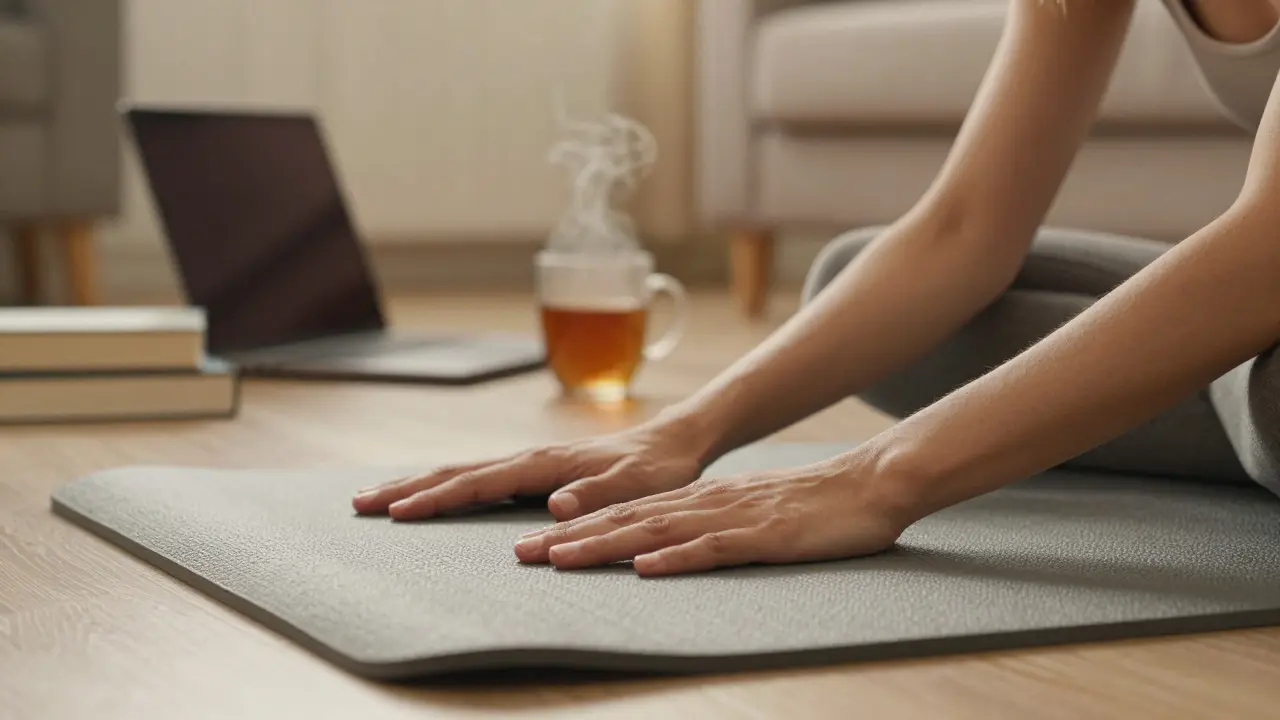
- Visual Cues: Place your yoga mat or dumbbells in a visible spot, like the corner of your bedroom or the living room. Out of sight, out of mind applies to fitness gear too.
- Digital Detox Zones: Designate the first 30 minutes of your morning or evening as phone-free. Use this window for movement before notifications hijack your attention.
- Social Accountability: Find one friend who shares similar goals. You don't need a group chat with 20 people; you need one person you can text when you want to skip. Knowing someone else is expecting you creates a gentle social pressure that is often more effective than self-discipline.

Navigating Specific Life Stages
Your approach to fitness should evolve with your life stage. What works for a 25-year-old student may not work for a 40-year-old mother of three. Here is how to adapt:
- Postpartum Recovery: Forget about heavy lifting immediately. Focus on pelvic floor exercises and gentle walking. The goal is to rebuild core stability, not to chase pre-baby abs. Listen to your body's signals; if you feel exhausted, rest is part of the workout plan.
- Perimenopause/Menopause: Muscle mass naturally declines during these years. Resistance training becomes non-negotiable for bone density and metabolic health. Prioritize compound movements like squats and rows over isolated bicep curls. Strength training also helps combat the mood swings associated with hormonal shifts.
- High-Stress Career Phases: When work stress is peaking, intense cardio can sometimes raise cortisol levels further. Swap high-intensity sessions for restorative practices like Pilates, swimming, or nature walks. These activities lower stress hormones while still providing cardiovascular benefits.
Practical Steps to Restart Today
If you are stuck in the slump right now, do not wait for Monday. Do not wait until you feel "ready." Here is a simple protocol to break the cycle:
- Shrink the Goal: Decide to move for only 5 minutes. Tell yourself you can stop after 5 minutes. Usually, once you start, you will continue, but give yourself permission to stop.
- Choose Low-Friction Movement: Pick an activity that requires no preparation. Walking outside, dancing in your kitchen, or following a YouTube video in your pajamas are all valid options.
- Track Non-Scale Victories: Keep a simple log. Did you sleep better? Did you feel less irritable? Did you have more energy in the afternoon? Connect the movement to how you feel, not just how you look.
- Forgive the Miss: If you miss a day, acknowledge it without judgment. Say, "I missed today, and that's okay," and move on. Guilt is the enemy of consistency.
Rebooting your workout drive isn't about becoming a different person. It is about accepting the person you are right now, with your current energy levels, responsibilities, and biological realities. By removing the pressure to be perfect and focusing on sustainable, adaptable habits, you transform exercise from a chore you dread into a tool you use. The slump isn't permanent; it is just a signal that your current strategy needs a tweak. Listen to the signal, adjust the plan, and keep moving.
Is it bad to take a week off from working out?
No, taking a break is often beneficial. Rest allows your muscles to repair and your nervous system to recover. However, try to keep some form of light movement, like walking, active during the break to maintain the habit loop without taxing your body.
How long does it take to build a consistent exercise habit?
Research suggests it takes anywhere from 18 to 66 days for a new behavior to become automatic. The average is around 66 days. This means you should expect some inconsistency in the first two months. Don't judge your progress at day 7; judge it at day 90.
What is the best type of exercise for boosting mood?
Aerobic exercises like brisk walking, running, or cycling are highly effective for releasing endorphins. However, any form of movement you enjoy is better than none. If you hate running, don't run. Choose an activity that feels fun, such as dance classes or hiking, to ensure you actually do it.
Does timing of workouts matter for women?
While individual preference plays a huge role, some studies suggest that morning exercise can help regulate circadian rhythms and improve daytime energy. However, if you are a night owl, forcing yourself to wake up early may lead to skipped sessions. The best time is the time you are most likely to stick with consistently.
How do I deal with guilt after missing several days?
Guilt stems from the belief that you failed. Reframe the narrative: you paused. There is no penalty for pausing. Start small again. Do not try to "make up" for lost time by overtraining. Return to your baseline level of activity and build from there.