The Minimalist Home for Women: Simplify Without Losing Style
 Feb, 17 2026
Think a minimalist home means white walls, bare shelves, and no personality? That’s a myth. For women who want calm without sacrificing style, minimalism isn’t about stripping away everything-it’s about keeping what truly matters. It’s about a home that feels like a breath of fresh air, not a museum exhibit. You can have soft textures, meaningful art, and a cozy corner that feels like a hug-all while keeping the chaos out.
What Minimalism Really Means for Women
Minimalism got a bad reputation because it was sold as a one-size-fits-all look: Scandinavian whites, industrial metals, and zero plants. But real minimalism isn’t about following trends. It’s about intention. For women, especially those juggling careers, family, or creative work, a minimalist home isn’t a lifestyle choice-it’s a survival tool. It’s the space that lets you think clearly, relax deeply, and feel in control when everything else feels overwhelming.
A 2024 study from the University of Oregon found that women who reduced visual clutter in their homes reported a 40% drop in daily stress levels. Not because they got rid of all their stuff-but because they kept only what brought joy, function, or deep comfort. That’s the key. It’s not about owning less. It’s about surrounding yourself with more meaning.
Start With Your Space, Not Your Stuff
Most people try to declutter by sorting through drawers. That’s backwards. Instead, start with the space itself. Walk through each room and ask: What does this space do for me? If the answer is "nothing," it’s time to rethink it.
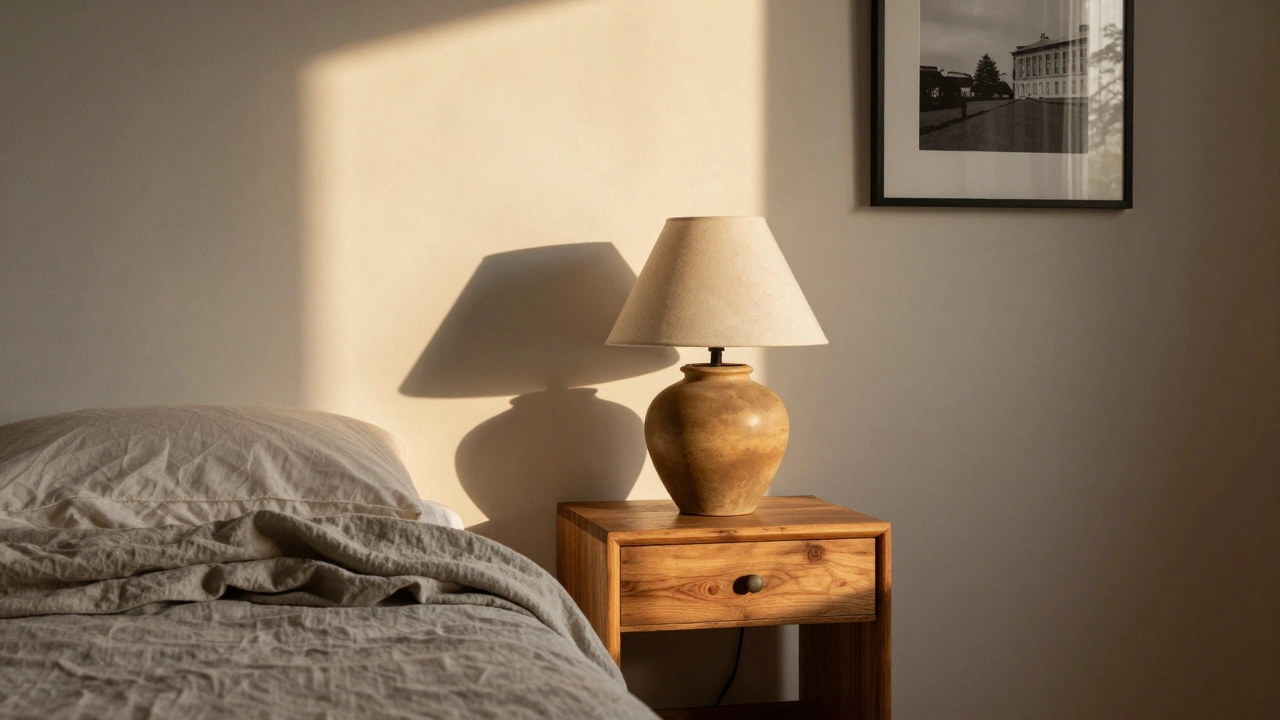
Take your bedroom. If it’s full of random baskets, piles of laundry, and five different lamps, it’s not a sanctuary-it’s a storage unit. A minimalist bedroom doesn’t need to be empty. It needs clarity. One bedside table. One lamp that actually works. One cozy throw. Maybe a single framed photo. That’s it. The rest? Out.
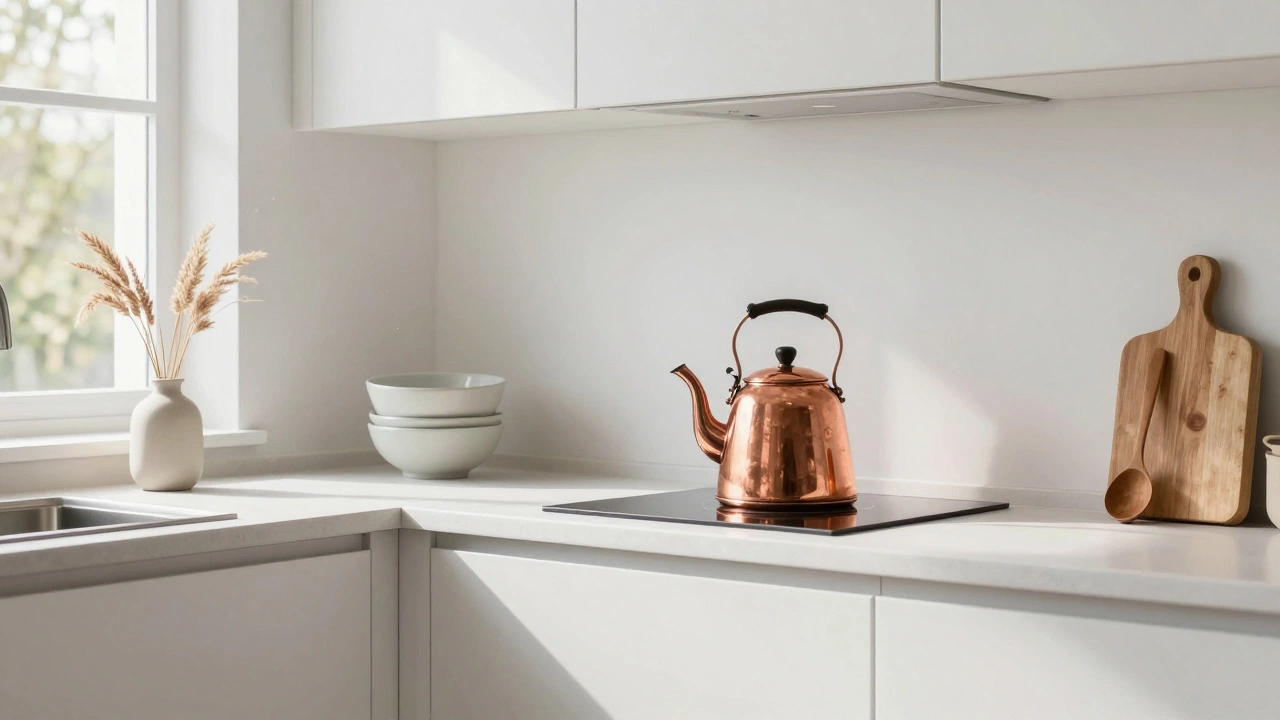
Same goes for the kitchen. Do you have seven spatulas? Three coffee makers? A drawer full of mismatched Tupperware? Keep one good spatula. One reliable coffee maker. One set of stackable containers. Everything else? Donate it. You’ll be amazed how much more you enjoy cooking when you’re not digging through junk.
Style Doesn’t Disappear-It Gets Sharper
Minimalism doesn’t mean giving up color, pattern, or texture. It means choosing them wisely. A minimalist home isn’t cold. It’s curated.
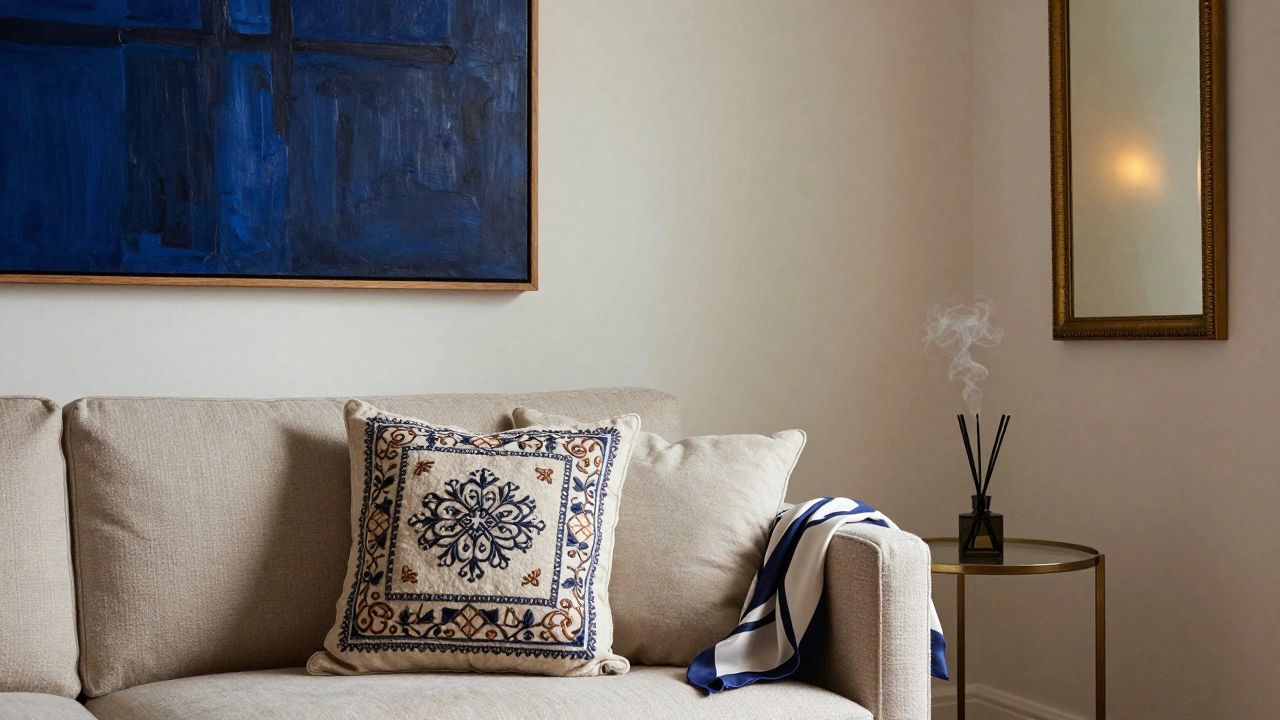
Instead of buying ten throw pillows, pick one with a rich weave or a hand-dyed pattern. Put it on the sofa where you read. Add a single ceramic vase with dried grasses from your backyard. Hang one large piece of art-not a gallery wall, but one bold statement. That one thing becomes the heart of the room.
Women often worry that minimalism means losing femininity. But think about it: a silk scarf draped over a wooden chair, a small brass mirror with an ornate frame, a handmade quilt folded at the foot of the bed-these aren’t clutter. They’re quiet luxury. They’re details that whisper, not shout.
One woman in Portland told me she kept her grandmother’s hand-embroidered pillow. It’s the only one on her couch. She doesn’t need more. It holds her history. That’s minimalism done right.
The 80/20 Rule for Home Objects
Here’s a simple rule that works: 80% of the time, you use 20% of your things. Find that 20%.
Go through your closet. Pull out everything. Try on each piece. If you haven’t worn it in a year, let it go. Keep only what fits, flatters, and makes you feel like yourself. That’s usually less than half of what you thought you owned.
Same with books. Keep the ones you’ve read more than once. The ones that changed how you see the world. The rest? Pass them on. Libraries, shelters, and book swaps are happy homes for unused books.
Even your tech. Do you really need three charging cords? Two tablets? A smart speaker in every room? Keep the one that works. The rest just adds noise-literal and mental.
Design With Sensory Comfort
A minimalist home should feel good to live in-not just look good. That means paying attention to touch, sound, and smell.
- Use natural fibers: cotton, linen, wool. They breathe. They age beautifully.
- Choose warm lighting. LED bulbs with a 2700K color temperature mimic sunset glow. Avoid harsh white light.
- Let in natural sound. A small fountain, a window that opens, or even a single wind chime can soften silence.
- Use scent intentionally. One candle. One essential oil diffuser. Not ten. Let one smell define your space-lavender, sandalwood, or fresh linen.
These aren’t luxuries. They’re anchors. In a world that’s loud and fast, your home should be quiet and steady.
Why This Works Better Than Other Trends
Marie Kondo taught us to keep what sparks joy. But joy isn’t always loud. Sometimes, joy is the quiet moment when you walk into a clean room and just… exhale.
Other trends come and go: Japandi, biophilic design, maximalist minimalism. But minimalism for women isn’t a trend. It’s a response. A response to overload. To constant doing. To the pressure to have it all.
Real minimalism doesn’t ask you to be perfect. It asks you to be present. It doesn’t require you to buy new things-it asks you to stop buying things you don’t need.
And here’s the secret: women who live this way don’t feel deprived. They feel powerful. They feel calm. They feel like they finally own their space-not the other way around.
Where to Begin Today
You don’t need to redo your whole house. Start with one corner. One drawer. One shelf.
- Choose a spot that stresses you out-the entryway, the bathroom counter, the junk drawer.
- Empty it completely.
- Wipe it down.
- Put back only what you use daily, what you love, or what serves a clear purpose.
- Stop there. Don’t move to the next spot until tomorrow.
That’s it. No pressure. No rules. Just one small win.
Minimalism isn’t about perfection. It’s about peace. And peace doesn’t come from having less. It comes from knowing exactly what you have-and why you keep it.