Scars and Stretch Marks: Women Reclaiming Their Skin
 May, 24 2026
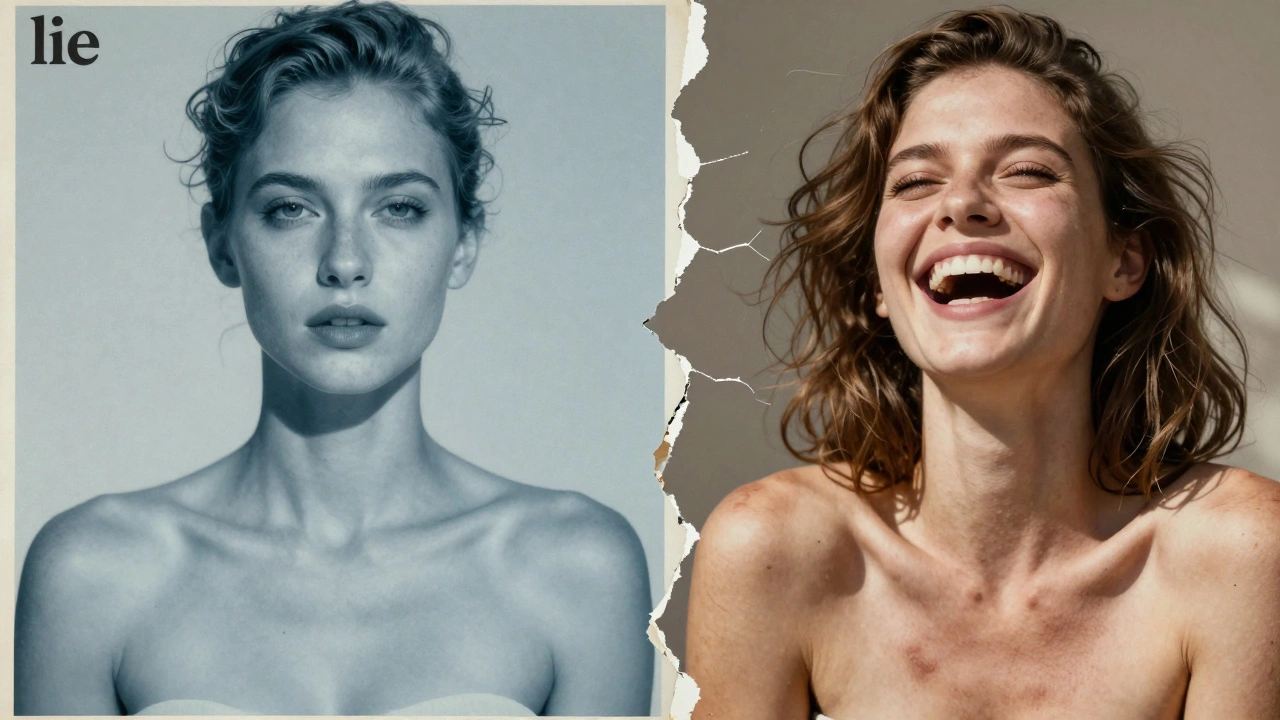
We have been sold a lie. For decades, the beauty industry has convinced us that smooth, unblemished skin is the only standard of worthiness. You scroll through social media, and every image looks like it was airbrushed into existence. But then you look in the mirror. You see the silvery line from a C-section, the faint map of growth on your hips, or the reminder of a childhood accident. The disconnect is jarring. It makes you feel broken when you are actually whole.
This isn't just about vanity. It is about reclamation. When women stop hiding their scars and stretch marks, they are not just changing how they look at themselves; they are dismantling a system that profits from insecurity. This movement toward body positivity is more than a hashtag. It is a daily practice of accepting the physical evidence of our lives.
The Biology Behind the Lines
To reclaim something, you first need to understand what it is. Let's strip away the shame and look at the biology. Your skin is an organ, not a piece of canvas that must remain pristine. It stretches, tears, heals, and changes. That is its job.
Stretch marks, medically known as striae distensae, occur when the skin stretches or shrinks quickly. The rapid change causes the collagen and elastin fibers that support your skin to rupture. As your skin heals, the new tissue forms these lines. They often start red or purple (striae rubra) and eventually fade to silver or white (striae alba).
They are incredibly common. Studies suggest that up to 70% of women develop them during pregnancy, but they also appear due to puberty, rapid weight gain, muscle building, or even hormonal treatments. They are not a sign of poor health. They are a sign of growth. Whether you grew taller in high school, gained muscle in the gym, or carried a child, those lines are proof that your body adapted to survive and thrive.
Similarly, surgical scars are markers of medical intervention. A C-section scar is not a flaw; it is a badge of survival for both mother and baby. It represents a moment where modern medicine stepped in to ensure life continued. To view it as ugly is to misunderstand its purpose entirely.
The History of Hiding
Why do we feel the urge to cover up? We have to look at the history of beauty standards. In the mid-20th century, magazines and advertisements began promoting an idealized version of womanhood that was increasingly detached from reality. Photos were retouched. Models were selected for their lack of visible imperfections.
This created a feedback loop. Women saw images of flawless skin, compared themselves to those images, and felt inadequate. The beauty industry responded by selling solutions. Creams, oils, lasers, and surgeries became multi-billion dollar industries built on the premise that natural skin changes are problems to be fixed rather than realities to be accepted.
For many women, this pressure manifests as anxiety. You might find yourself spending extra time applying makeup to your stomach before a beach day. You might avoid wearing certain swimsuits. You might hesitate to let a partner see your body without clothing. These small acts of concealment add up to a heavy emotional burden. They teach us that our natural state is unacceptable.
Reframing the Narrative
Reclaiming your skin starts with a shift in perspective. Instead of asking "How can I get rid of this?" try asking "What does this tell me about my life?"
- Pregnancy marks: These are maps of creation. They show where life expanded within you. Many mothers describe their stretch marks as part of their connection to their children.
- Growth marks: If you went through a growth spurt, these marks document your transition from childhood to adulthood. They are timelines etched into your skin.
- Healing scars: Every scar tells a story of resilience. Your body fought infection, closed wounds, and restored integrity. That is a remarkable biological achievement.
This reframing is central to the body neutrality movement. While body positivity asks you to love your body, body neutrality suggests that it is okay if you don't love it every day. The goal is simply to stop hating it. To see your skin as functional and factual, rather than aesthetic and judgmental.
Practical Steps to Embrace Your Skin
Changing deeply ingrained beliefs takes time. Here are some practical ways to start integrating acceptance into your daily routine.
- Curate your feed: Unfollow accounts that make you feel inadequate. Follow creators who share real bodies. Look for hashtags like #realbodies, #scarsarebeautiful, and #postpartumreality. Seeing diverse skin textures normalizes your own experience.
- Mirror work: Stand in front of a mirror naked. Touch your scars and stretch marks. Say out loud what they represent. "This mark is from when I broke my arm playing soccer." "These lines are from when I grew three inches in a year." Acknowledge them as data points, not defects.
- Skin care for comfort, not correction: Moisturize because dry skin itches, not because you think lotion will erase years of stretching. Use sunscreen to protect against UV damage, which can darken scars and make them more noticeable. Healthy skin is happy skin, regardless of texture.
- Wear what feels good: If a bikini bottom makes you anxious, wear a tankini. If a dress exposes a scar you aren't ready to show, wear a tunic. There is no rulebook that says you must display your body in a specific way. Comfort is the ultimate form of self-respect.
The Role of Community
You are not alone in this. One of the most powerful aspects of the modern body positivity movement is the sense of community. Online forums, support groups, and social media challenges allow women to share their stories openly.
When you see another woman post a photo of her C-section scar, she is giving you permission to do the same. She is breaking the silence. This collective visibility reduces stigma. It shows that millions of women share the same concerns and experiences. You realize that the "flawless" images you see online are the exception, not the norm.
Community also provides validation. When friends and family celebrate your strength rather than critique your appearance, it reinforces positive self-image. Seek out people who appreciate you for who you are, not how you look. Surround yourself with voices that uplift rather than diminish.

Medical Options: Choice vs. Pressure
It is important to address the elephant in the room: treatments. Lasers, microneedling, and topical creams exist. Some women choose to use them. And that is okay. The key distinction is motivation.
If you are seeking treatment because you genuinely want to improve the appearance of a scar for your own confidence, that is a valid choice. However, if you are seeking treatment because you feel pressured by societal standards or a partner's preferences, pause. Ask yourself who this decision is really for.
| Motivation Type | Internal Driver | Outcome Expectation |
|---|---|---|
| Empowered Choice | Personal preference, curiosity, or genuine desire for change | Acceptance of results, whether dramatic or subtle |
| External Pressure | Societal standards, partner criticism, or media influence | Temporary relief followed by renewed anxiety if perfection isn't achieved |
No treatment can completely erase stretch marks or scars. They may fade, but they will likely remain visible. Understanding this limitation helps manage expectations. The goal should never be invisibility, but rather comfort and confidence.
Building Lasting Self-Love
Self-love is not a destination. It is a practice. Some days you will feel radiant. Other days, you will wish you could hide. Both feelings are valid. The goal is to reduce the frequency and intensity of the negative days.
Start small. Celebrate what your body does, not just how it looks. Thank your legs for carrying you. Thank your lungs for breathing. Thank your skin for protecting you. When you focus on function, the obsession with aesthetics begins to fade.
Remember that your worth is not determined by the smoothness of your skin. You are valuable because of your thoughts, your actions, your kindness, and your resilience. Your scars and stretch marks are simply part of the package. They are the visual evidence of a life lived fully. And that is something to be proud of.
Can stretch marks be permanently removed?
No, stretch marks cannot be completely removed. Treatments like laser therapy or microneedling can significantly fade their appearance and improve texture, but they rarely disappear entirely. Acceptance is often more sustainable than endless treatment cycles.
Do stretch marks mean I am unhealthy?
Absolutely not. Stretch marks are caused by rapid skin stretching due to growth, pregnancy, or weight changes. They are a normal physiological response and are not indicative of poor health or fitness levels.
Is it safe to apply moisturizer to scars?
Yes, keeping scars moisturized can help with itching and tightness during the healing process. Ingredients like silicone gel sheets or vitamin E oil are commonly used, though scientific evidence on their ability to erase scars is mixed. Focus on hydration for comfort.
How can I stop feeling ashamed of my body?
Start by curating your media consumption to include diverse body types. Practice body neutrality by focusing on what your body can do rather than how it looks. Talk to supportive friends or therapists who can help reframe negative thought patterns.
Are surgical scars permanent?
Surgical scars are permanent, but they evolve over time. Initially, they may be red and raised, but they typically flatten and fade to a lighter color over 12-18 months. Proper aftercare, such as sun protection and massage, can optimize healing.