Rest and Recovery for Women: Why Off Days Matter More Than You Think
 Jan, 7 2026
Most women train hard. They lift weights, run miles, crush HIIT classes, and push through fatigue like it’s a badge of honor. But here’s the truth no one talks about: rest and recovery isn’t the backup plan-it’s the core strategy. For women, skipping rest days doesn’t make you tougher. It makes you slower, weaker, and more likely to quit altogether.
Why Women Need More Recovery Than Men
It’s not just a myth. Science shows women recover differently than men. Hormonal cycles play a huge role. Estrogen and progesterone shift every month, affecting muscle repair, inflammation, and energy use. During the follicular phase-right after your period ends-your body is primed for strength gains. But in the luteal phase, right before your period, your body burns more carbs and holds onto less muscle protein. Pushing hard then? You’re fighting your biology.
A 2023 study from the University of Queensland tracked 120 female athletes over six months. Those who scheduled two full rest days per week improved strength by 22% more than those who trained five days straight. The difference? Recovery wasn’t passive. It was planned.
What Happens When You Skip Rest Days
When you train nonstop, your body doesn’t break down-it burns out. For women, this shows up differently than in men. You might not feel sore. But you’ll notice:
- Waking up exhausted, even after eight hours of sleep
- Workouts feeling harder for no reason
- Missed periods or irregular cycles
- Cravings for sugar and carbs that won’t go away
- Getting sick more often
These aren’t signs of laziness. They’re signs of overtraining. And for women, overtraining often leads to Relative Energy Deficiency in Sport (RED-S)-a condition where low energy availability messes with hormones, bone density, and metabolism. It’s not rare. One in four female athletes experiences it.
Rest Doesn’t Mean Lying on the Couch
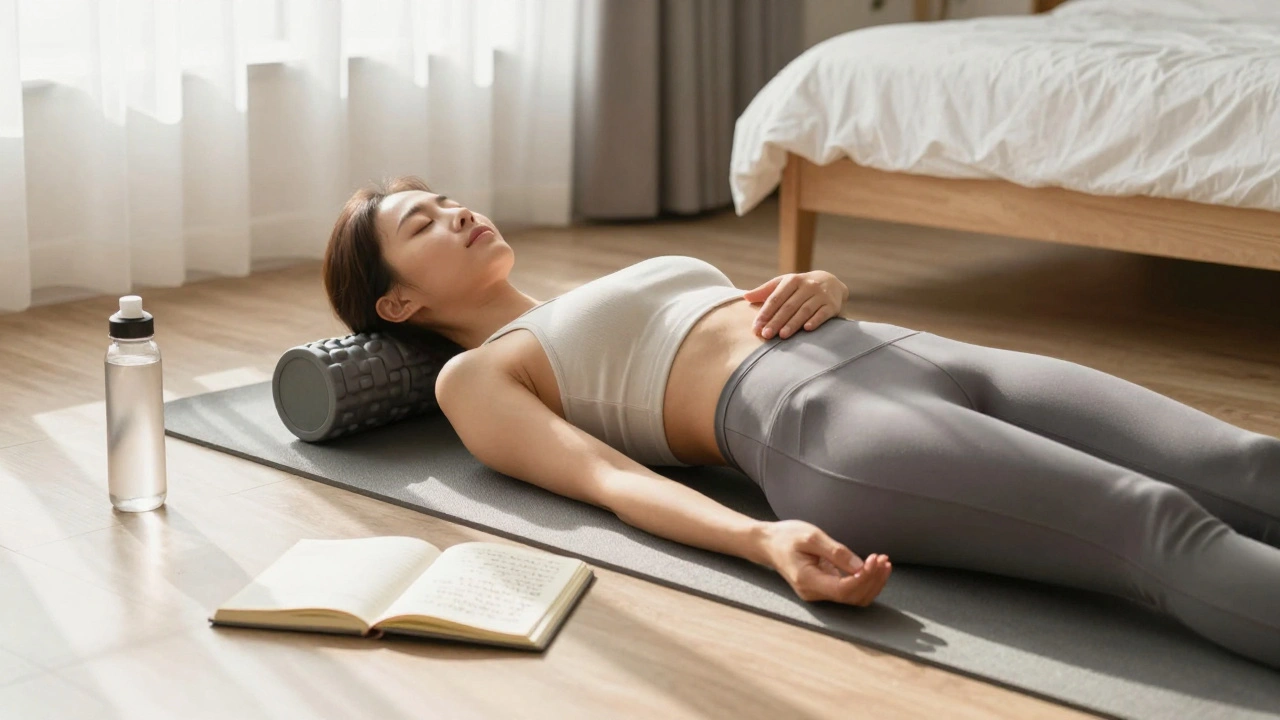
When people say “take a rest day,” they usually mean: do nothing. But true recovery isn’t about doing nothing. It’s about doing the right things.
Active recovery-light walking, yoga, foam rolling, or swimming-boosts blood flow without taxing your muscles. It helps clear lactic acid, reduces stiffness, and lowers cortisol. A 2024 study in the Journal of Strength and Conditioning Research found that women who did 20 minutes of gentle movement on off days recovered 37% faster than those who sat still.
And sleep? It’s non-negotiable. Women need 7-9 hours, but stress, hormonal shifts, and blue light from screens make that harder. If you’re not sleeping well, no amount of stretching will fix it. Try this: turn off screens an hour before bed. Keep your bedroom at 65°F. Drink chamomile tea. Your muscles will thank you.

How to Plan Your Off Days
Here’s a simple system that works for women who train hard:
- Train 3-4 days a week max. If you’re doing strength, don’t hit the same muscle group two days in a row.
- Put one full rest day every 5-6 days. No exceptions.
- On recovery days, move gently. Walk 30 minutes. Do 15 minutes of yoga. Stretch your hips and shoulders.
- Track your energy. If you’re dragging three days in a row, take an extra rest day. Don’t wait until you’re burned out.
- Listen to your cycle. In the week before your period, reduce intensity. Focus on mobility and breathing.
One woman I know, a 38-year-old teacher from Portland, used to train six days a week. She was always tired. Her period disappeared for six months. She started taking two full rest days a week and one active recovery day. Within three months, her cycle returned. Her strength went up. She slept better. She didn’t even realize how much she’d been pushing until she stopped.
Recovery Is Not a Reward-It’s a Requirement
We’ve been sold the idea that more work equals more results. But for women, that’s backwards. Your body doesn’t get stronger while you’re sweating. It gets stronger while you’re sleeping, eating, and resting. Training is the stimulus. Recovery is the response.
Think of it like this: you’re not building muscle in the gym. You’re breaking it down. Your body rebuilds it later-when you’re not looking. If you skip rest, you’re not building. You’re breaking.
What to Do on Your Off Days
Here’s a practical checklist for recovery days:
- Hydrate: Drink half your body weight in ounces of water (e.g., if you weigh 140 lbs, drink 70 oz).
- Eat protein: Aim for 20-30g per meal. Eggs, chicken, tofu, lentils-don’t skip it.
- Move gently: Walk, stretch, or do mobility drills. No heavy lifting.
- Use a foam roller: Focus on quads, glutes, and upper back. Roll for 5 minutes each area.
- Get sunlight: 15 minutes of morning light helps reset your circadian rhythm.
- Write it down: Jot down how you feel. Energy. Mood. Sleep. This helps you spot patterns.
Common Myths About Rest Days
Let’s clear up some lies you’ve been told:
- Myth: “If you’re not sore, you didn’t work hard enough.” Truth: Soreness doesn’t equal results. It equals inflammation. You don’t need to hurt to improve.
- Myth: “Rest days make you lazy.” Truth: Rest days make you consistent. People who rest recover faster and stick with training longer.
- Myth: “Men don’t need rest like women do.” Truth: Men need rest too-but women need more because of hormones. Ignoring that is like driving a car with the wrong fuel.
When to Take an Extra Rest Day
You don’t need a calendar to know when to rest. Your body tells you. Take an extra day off if you notice:
- Your heart rate is 10+ beats higher than normal at rest
- You’re irritable for no reason
- You can’t sleep through the night
- You’ve lost appetite or feel nauseous after workouts
- You’ve skipped your period or it’s been lighter than usual
These aren’t excuses. They’re warning signs. Pushing through them risks long-term damage to your metabolism, bones, and hormones.
Final Thought: Rest Is Your Secret Weapon
The strongest women I know aren’t the ones who train the most. They’re the ones who rest the best. They plan their off days like appointments. They say no to extra workouts. They prioritize sleep. They eat enough. And because of that, they get stronger, faster, and stay in the game longer.
Rest isn’t giving up. It’s getting ready for your next win.
How many rest days should a woman take per week?
Most women benefit from 1-2 full rest days per week, especially if they’re doing intense strength or cardio training. Active recovery-like walking or yoga-can count as a light movement day. But if you’re training hard four or more days a week, you need at least one day where you do absolutely nothing. Listen to your body: if you’re constantly tired, sore, or moody, you need more rest.
Can rest days help with weight loss?
Yes-indirectly. Overtraining raises cortisol, which can lead to fat storage, especially around the belly. Rest days lower stress hormones, improve sleep, and help regulate appetite. When you’re not running on empty, your body is better at burning fat and building lean muscle. Rest isn’t the opposite of weight loss-it’s part of the process.
What’s the difference between rest and recovery?
Rest means no physical activity-sitting, sleeping, or lying down. Recovery includes movement that helps your body heal: walking, stretching, foam rolling, or swimming. Recovery is active healing. Rest is passive healing. Both are needed. You can’t replace one with the other.
Why do I feel worse after a rest day?
If you’re used to constant movement, your body might feel restless at first. That’s normal. But if you feel more fatigued, dizzy, or nauseous after resting, you might be under-fueled. Rest days require good nutrition. Eat enough protein, carbs, and healthy fats. Hydrate. Your body needs fuel to repair-even on days off.
Should I take rest days during my period?
You don’t have to stop training during your period-but you should adjust. Many women feel more fatigued or bloated in the first few days. Reduce intensity. Swap heavy lifts for mobility work. Go for walks. Listen to your body. For some, a full rest day helps. For others, gentle movement eases cramps. There’s no rule-only signals.