Period Products and the Environment: What Women Should Know
 Mar, 8 2026
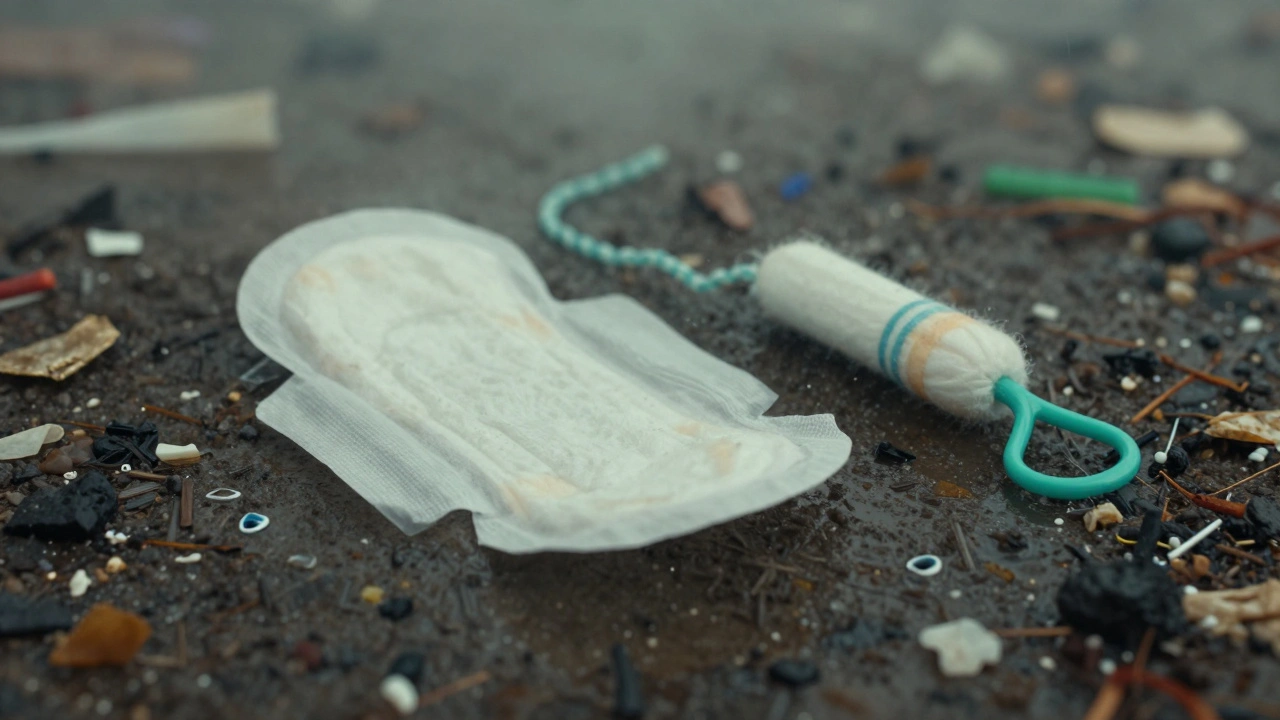
Every month, millions of women use period products without thinking about what happens after they’re thrown away. That tampon, pad, or applicator doesn’t just disappear. It ends up in landfills, oceans, and waterways - and it’s not biodegrading anytime soon. If you’re someone who menstruates, you likely use 5,000 to 15,000 disposable period products in your lifetime. That’s not just a personal health issue - it’s an environmental one.
How Much Waste Do Period Products Really Create?
In the U.S. alone, over 12 billion pads and tampons are thrown away each year. Most of these contain plastic - from the wrapper to the applicator to the backing of the pad. A single tampon can have up to 90% plastic, including the string and the plastic applicator. Even brands that call themselves "eco-friendly" often use plastic in hidden places, like the leak-proof layer.
These items don’t break down quickly. A conventional tampon with a plastic applicator can take 500 to 1,000 years to decompose. Pads? Even longer. In fact, a 2023 study by the Environmental Protection Agency found that menstrual waste makes up about 0.5% of total municipal solid waste - but it’s one of the most persistent types because of its plastic content.
And it’s not just landfills. Microplastics from period products are showing up in rivers, fish, and even drinking water. A 2024 study in the journal Environmental Science & Technology detected microplastics from menstrual products in 8 out of 10 freshwater samples tested across U.S. cities, including Portland.
What’s in Your Period Product?
Most disposable pads and tampons are made from a mix of cotton, rayon, and plastic. The cotton is often grown with heavy pesticides. The rayon is chemically processed using chlorine, which can release dioxins - known carcinogens. The plastic components include polyethylene (for the backing), polypropylene (for the wings), and sometimes even synthetic adhesives.
Even if you buy organic cotton tampons, you’re still likely using plastic applicators or non-biodegradable wrappers. And don’t be fooled by terms like "biodegradable" on packaging. Unless the product is certified by a recognized standard like BPI (Biodegradable Products Institute), it may still contain plastic that won’t break down in home compost or landfills.
Here’s what you’re really using:
- Tampons: Cotton + plastic applicator + plastic wrapper
- Pads: Cotton/polyester top layer + plastic absorbent core + plastic backing + plastic wings
- Liners: Same as pads, just smaller - still mostly plastic
There’s no such thing as a truly plastic-free disposable product on the market today. Even the "green" options often just swap out one material for another without solving the core problem: single-use waste.
Reusable Alternatives That Actually Work
The good news? There are simple, affordable, and effective alternatives that cut waste by over 95%.
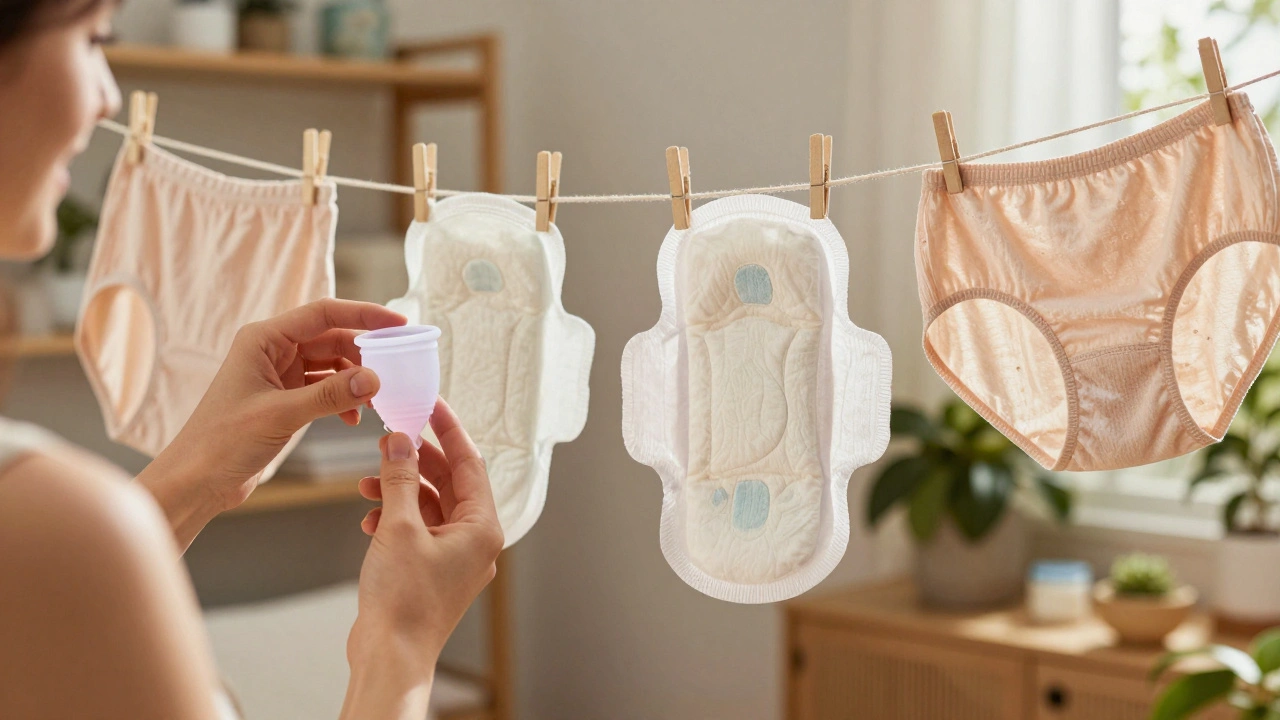
Menstrual cups - made from medical-grade silicone - can last up to 10 years. A single cup replaces hundreds of tampons and pads. They’re inserted like a tampon but collect rather than absorb fluid. Most women find them comfortable after a short learning curve. One cup costs $20-$40, and pays for itself in under three cycles.
Reusable cloth pads are made from organic cotton, bamboo, or hemp. They’re washable, soft, and come in different absorbencies. Many women report fewer leaks and less irritation compared to disposables. A set of 5-7 pads costs $50-$80 and lasts 5+ years.
Period underwear - like Thinx or Modibodi - are designed to absorb light to moderate flow. They’re great for backup, nighttime, or on lighter days. A pair costs $25-$35 and can replace a pad or liner. Most can be washed and reused hundreds of times.
None of these require special equipment. You just wash them like regular underwear. No chemicals. No plastic. No waste.
Why This Matters Beyond the Bin
It’s not just about reducing trash. It’s about what’s in the product and where it ends up.
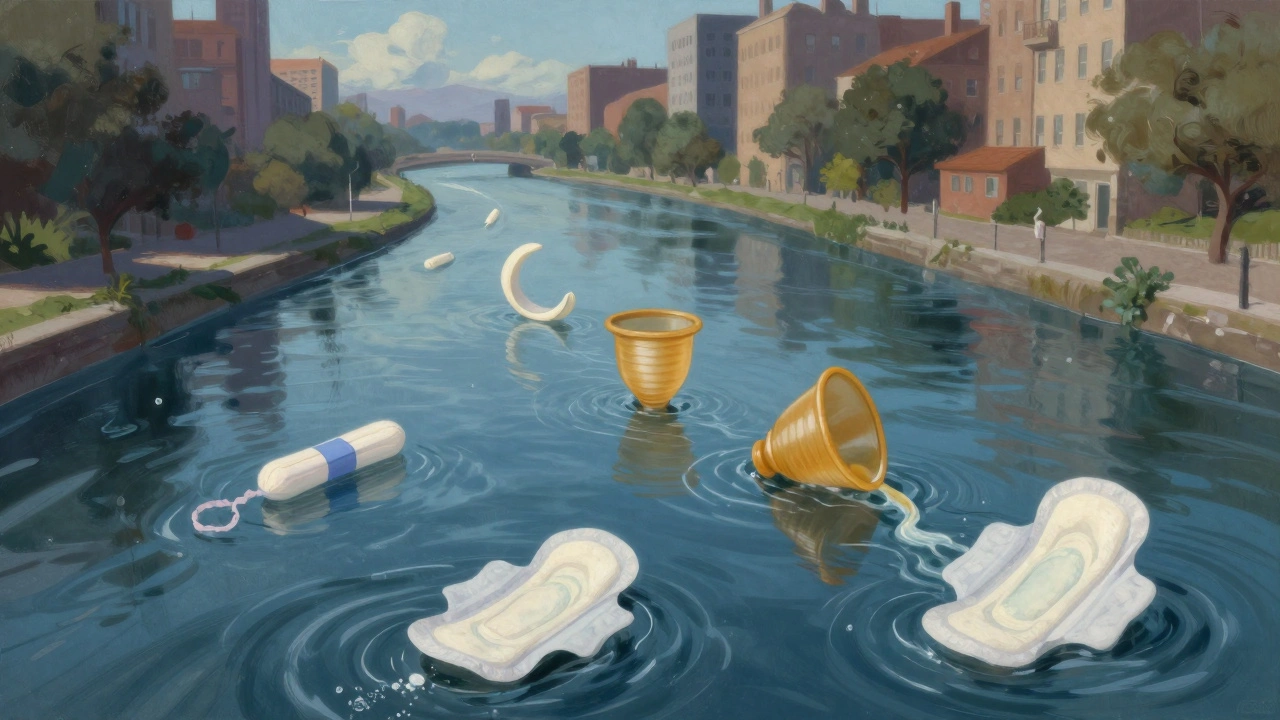
When disposable pads and tampons are incinerated, they release toxic fumes. When they’re flushed (yes, people still do this), they clog sewage systems and contribute to microplastic pollution. In countries without proper waste infrastructure, menstrual waste often ends up in rivers or is burned in open pits - exposing communities to harmful chemicals.
And let’s not forget the carbon footprint. Manufacturing, packaging, shipping, and disposing of billions of disposable products every year uses massive amounts of energy and water. A 2025 life cycle analysis by the University of Oregon found that using a menstrual cup for 10 years reduces your carbon footprint by 68% compared to using disposable tampons.
For women in low-income communities, the cost of period products adds up too. In the U.S., the average person spends $130-$180 a year on disposable products. Over a lifetime, that’s $7,000-$10,000. Reusables cut that cost dramatically.
What You Can Do Right Now
You don’t need to switch everything overnight. Start small.
- Check your current products. Look at the packaging. If it says "plastic" or "polyethylene," you’re using plastic.
- Try one reusable. Pick one: a menstrual cup, a pair of period underwear, or a cloth pad. Use it for one cycle.
- Track your savings. Calculate how much you spent on disposables last year. Compare it to the cost of a reusable.
- Advocate. Ask your school, workplace, or gym to provide free reusable options or menstrual products in bathrooms. Many states now require free tampons and pads in public restrooms - but few offer reusables.
Some cities, including Portland, have started distributing free menstrual cups to low-income residents through public health programs. If you’re eligible, reach out to local clinics or women’s health nonprofits.
Myths About Reusables
There are still a lot of myths floating around.
- "It’s unhygienic." False. Washing with soap and water is enough. Boil your cup once a month. No more germs than you’d get from a reusable water bottle.
- "It’s messy." It takes a cycle to get used to. Most users report less leakage and odor than with disposables.
- "I can’t use it if I’m active." Athletes, hikers, and swimmers use menstrual cups and period underwear daily. Many say they feel more comfortable than with pads or tampons.
The biggest barrier isn’t safety or performance - it’s lack of information. Most people never learn about reusables until they’re already spending thousands on disposables.
What’s Changing in 2026?
More brands are stepping up. Companies like DivaCup, Saalt, and Lunette now offer recycling programs for old cups. Some retailers, including Target and Whole Foods, have expanded their reusable product lines. And in 2025, the U.S. FDA updated its guidelines to require clearer labeling of plastic content in menstrual products - a first.
Legislation is moving too. At least 12 states now have laws requiring free period products in schools and prisons. Several are considering bills to subsidize reusable products through Medicaid or SNAP programs.
Change is slow, but it’s happening. And it starts with individual choices.
Periods aren’t a luxury. They’re a biological reality. And they shouldn’t cost the planet.
Are reusable period products safe?
Yes. Menstrual cups, cloth pads, and period underwear are made from medical-grade silicone, organic cotton, or other non-toxic materials. They’re regulated as Class II medical devices in the U.S. and have been used safely by millions worldwide. Always follow cleaning instructions, and replace them if they show signs of wear.
Can I use a menstrual cup if I have an IUD?
Many people use menstrual cups safely with an IUD. However, you should wait at least two full cycles after IUD insertion before using one. When removing the cup, break the suction gently to avoid pulling on the IUD strings. Talk to your healthcare provider if you’re unsure.
Do reusable products leak?
Leakage is rare if you choose the right absorbency and fit. Menstrual cups hold more fluid than tampons and don’t dry out your skin. Period underwear is designed with multiple absorbent layers and works best for light to medium flow. For heavy days, pair it with a cup or cloth pad.
How do I clean cloth pads and period underwear?
Rinse in cold water immediately after use, then soak in soapy water for a few hours. Wash in the machine with like colors using mild detergent. Air dry - avoid the dryer, as heat can damage absorbent layers. No special cleaners needed.
Are reusable products more expensive upfront?
Yes, the initial cost is higher - a cup costs $25-$40, and a set of 5 pads runs $60-$90. But over 5-10 years, you’ll spend far less than buying disposables. Most users break even within 6-12 months. Plus, you won’t need to shop for products every month.