Panic Attacks in Women: Immediate Coping and Long-Term Care
 Feb, 10 2026
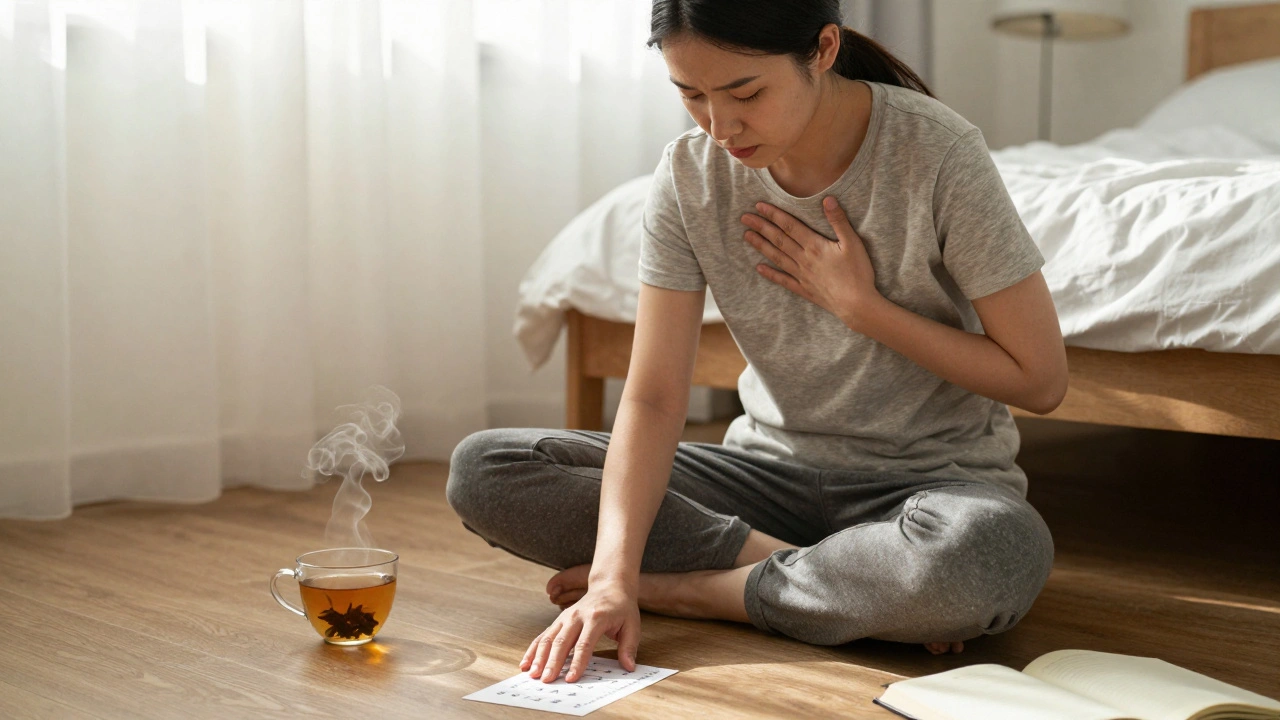
When a panic attack hits, time doesn’t slow down-it stops. Your heart pounds like it’s trying to escape your chest. Your breath turns shallow, your fingers go numb, and suddenly, you’re convinced you’re having a heart attack, losing control, or even dying. For many women, these episodes don’t just come out of nowhere-they follow a pattern tied to hormones, stress, or past trauma. And while panic attacks can feel terrifyingly isolated, they’re more common than you think. About 1 in 5 women will experience at least one panic attack in their lifetime, and nearly half of those will develop panic disorder if left unaddressed.
What Happens During a Panic Attack?
A panic attack isn’t just feeling stressed or anxious. It’s a full-body surge of fear that peaks within minutes and mimics life-threatening conditions. Common symptoms include:
- Heart palpitations or racing heartbeat
- Sweating, trembling, or shaking
- Shortness of breath or feeling smothered
- Chest pain or discomfort
- Dizziness, lightheadedness, or fainting
- Numbness or tingling in hands, feet, or face
- Feeling detached from reality or yourself
- Overwhelming fear of losing control or dying
These symptoms are driven by the amygdala-the brain’s alarm system-firing off a false emergency signal. No real danger exists, but your body reacts as if it’s being chased by a bear. For women, hormonal shifts during menstruation, pregnancy, postpartum, or perimenopause can make these alarms more sensitive. Estrogen and progesterone influence serotonin and GABA, two key neurotransmitters that regulate mood and calm. When levels dip, so does your brain’s ability to quiet panic.
Immediate Coping: What to Do Right Now
If you’re in the middle of a panic attack, your goal isn’t to stop it-it’s to ride it out without fighting it. Resistance makes it worse. Instead, try this three-step reset:
- Ground yourself with the 5-4-3-2-1 method: Name five things you can see, four you can touch, three you can hear, two you can smell, and one you can taste. This forces your brain out of panic mode and back into your body.
- Breathe slowly-not deeply: Inhale for 4 seconds through your nose, hold for 2, exhale for 6 through your mouth. Repeat 5 times. Don’t take huge breaths-that can trigger more dizziness. Focus on lengthening the exhale; that’s what calms your nervous system.
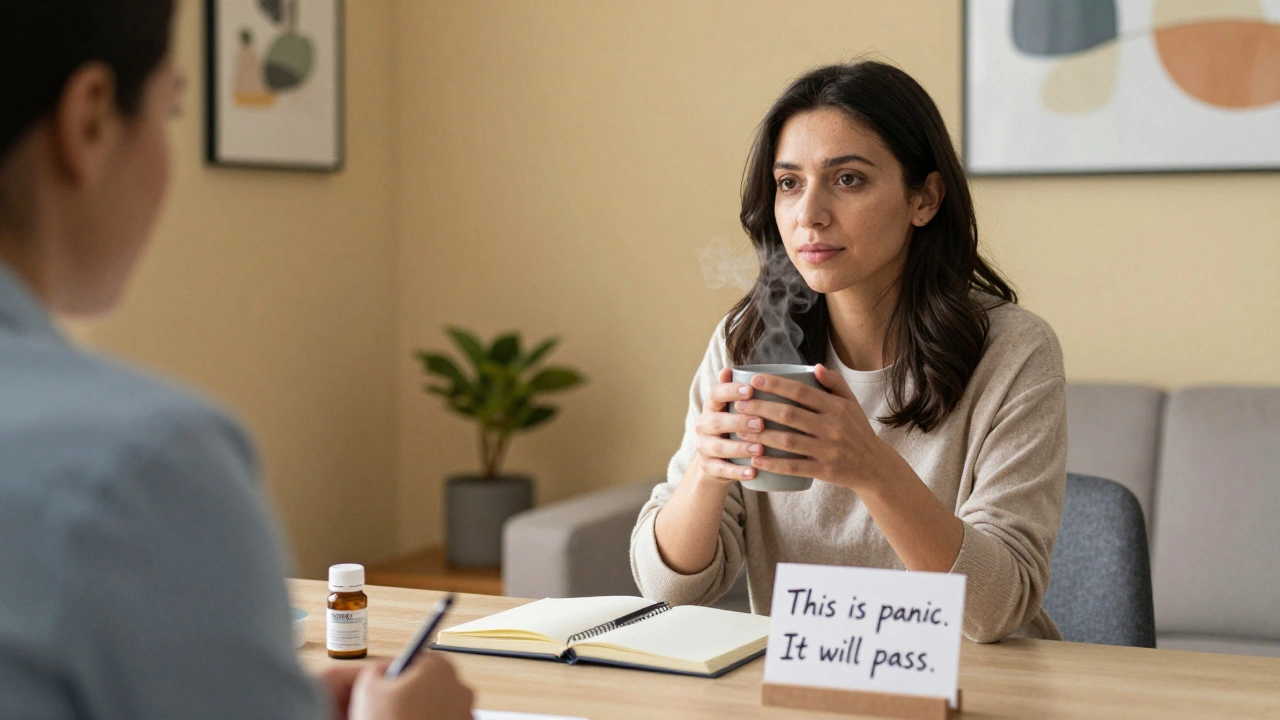
- Say out loud: “This is panic. It will pass.” Naming it removes its power. Panic thrives on mystery. Once you label it, your prefrontal cortex kicks in and starts regaining control.
Keep a small card in your wallet or phone notes with these steps. You won’t remember anything when panic hits. Having a script ready saves you.
Why Women Are More Affected
Women are twice as likely as men to develop panic disorder. It’s not just about being “more emotional.” Biology plays a real role. Studies from the National Institute of Mental Health show that women’s stress response systems are wired differently. Cortisol-the stress hormone-stays elevated longer after a trigger. Add in societal pressures: juggling work, caregiving, emotional labor, and body image expectations, and it’s no surprise that anxiety builds up silently.
Also, trauma is a major factor. One in four women has experienced sexual assault. Many develop panic attacks years later, often triggered by something as small as a smell, a tone of voice, or a crowded room. These aren’t random. They’re memories stored in the body.

Long-Term Care: Beyond the Moment
One panic attack doesn’t mean you have panic disorder. But if they happen more than once a month, or if you start avoiding places out of fear-like driving, malls, or public transit-you’re likely developing agoraphobia. That’s when panic starts to control your life. Here’s what works long-term:
- Cognitive Behavioral Therapy (CBT): This is the gold standard. CBT teaches you to identify distorted thoughts (“I’m going to die”) and replace them with facts (“My heart is racing, but I’m not having a heart attack”). Studies show 80% of women see major improvement within 12 weeks.
- Regular aerobic exercise: Just 30 minutes of brisk walking, cycling, or swimming 4 times a week cuts panic frequency by up to 60%. Movement lowers cortisol, boosts endorphins, and retrains your body to handle stress.
- Limit caffeine and alcohol: Both are disguised triggers. Caffeine mimics panic symptoms-racing heart, jitters. Alcohol disrupts GABA, making you more reactive the next day. Cutting both out for 30 days can make a dramatic difference.
- Track your triggers: Keep a simple journal: date, time, what happened before, what you were thinking, how long it lasted. Patterns emerge. Maybe it’s always after arguing with your partner. Or right before your period. Knowledge is power.
Medication: When and How
Medication isn’t a sign of weakness-it’s a tool. For some women, especially those with frequent attacks or co-occurring depression, SSRIs like sertraline or escitalopram are prescribed. These take 4-6 weeks to work but have fewer side effects than older drugs. Benzodiazepines like Xanax offer fast relief but are risky for long-term use due to dependency. If prescribed, use them only during severe flare-ups, not daily.
Always pair medication with therapy. Drugs calm the body; therapy rewires the mind. One without the other rarely lasts.
Support Systems Matter
Isolation makes panic worse. Tell someone you trust-a partner, friend, or therapist-what you’re going through. Say: “I sometimes have panic attacks. I don’t need you to fix it. Just sit with me until it passes.” That simple sentence changes everything. Many women hide their attacks out of shame. But when you speak up, you give others permission to do the same.
Online support groups like the Anxiety and Depression Association of America’s forums or Reddit’s r/Anxiety offer quiet, anonymous spaces. Reading others’ stories helps you realize: you’re not broken. You’re human.
What Doesn’t Work
Don’t try to distract yourself with scrolling, sugar, or overworking. These are temporary escapes that build up more pressure. Don’t rely on breathing apps that tell you to “inhale for 5, hold for 7, exhale for 9”-that’s too complex during panic. Stick to simple, proven techniques.
And don’t wait for it to “get better on its own.” Panic doesn’t fade without intervention. The longer it goes untreated, the more your brain learns to expect it-and the harder it becomes to break the cycle.
When to Seek Professional Help
See a therapist or doctor if:
- Panic attacks happen more than once a month
- You avoid places or situations because you fear an attack
- You feel constantly on edge, even between attacks
- Your sleep, work, or relationships are suffering
Primary care doctors can refer you to a mental health specialist. Many insurance plans cover CBT and medication. If cost is a barrier, community clinics and university counseling centers often offer sliding-scale fees.
You’re Not Alone
Panic attacks in women aren’t a character flaw. They’re a biological response to overwhelming stress, often amplified by systems that don’t prioritize women’s mental health. But recovery isn’t about eliminating anxiety-it’s about learning to move through it without fear.
One woman I know started having attacks after her second child. She thought she was failing as a mom. Then she found a therapist who specialized in perinatal anxiety. Within three months, she was biking again. She still gets nervous sometimes. But now, she knows the difference between panic and worry. And that’s everything.
Can panic attacks cause long-term damage?
No, panic attacks themselves don’t cause physical damage. Your heart won’t fail, your lungs won’t collapse, and you won’t faint from one. But if panic goes untreated for years, it can lead to chronic stress, which does affect your body-raising blood pressure, weakening immunity, and increasing risk for conditions like heart disease or irritable bowel syndrome. The real danger isn’t the attack-it’s the life you start avoiding because of it.
Are panic attacks the same as anxiety?
Anxiety is a general feeling of worry or unease that can last for days or weeks. A panic attack is sudden, intense, and peaks within minutes. Think of anxiety as a slow drip, and a panic attack as a flood. You can have anxiety without panic attacks, but frequent panic attacks often lead to generalized anxiety disorder.
Why do panic attacks happen at night?
Nighttime panic attacks are common and not fully understood. One theory is that during sleep, your brain processes unresolved stress, and if you’re carrying emotional tension, it can trigger the panic response while you’re still half-asleep. Another reason: lying still makes you hyper-aware of your heartbeat or breathing, which can feel alarming. They’re not dangerous, but they’re scary-especially when you’re alone.
Can diet help reduce panic attacks?
Yes. A diet high in processed sugar, refined carbs, and caffeine worsens symptoms. Focus on whole foods: vegetables, lean proteins, healthy fats, and complex carbs like oats and sweet potatoes. Magnesium-rich foods (spinach, almonds, pumpkin seeds) and omega-3s (salmon, flaxseeds) support nervous system function. Some women notice a drop in attacks after cutting out gluten or dairy, but that’s individual-track your own responses.
Is it possible to recover completely?
Absolutely. Many women who once lived in fear of their next attack now live full, active lives. Recovery doesn’t mean never feeling anxious again. It means knowing how to respond. With consistent therapy, lifestyle changes, and self-compassion, most people reduce attacks to rare events-or eliminate them entirely. The brain can relearn safety. You just have to give it the right tools and time.