Open Shelving Styling for Women: Practical and Pretty Guide
 Aug, 21 2026
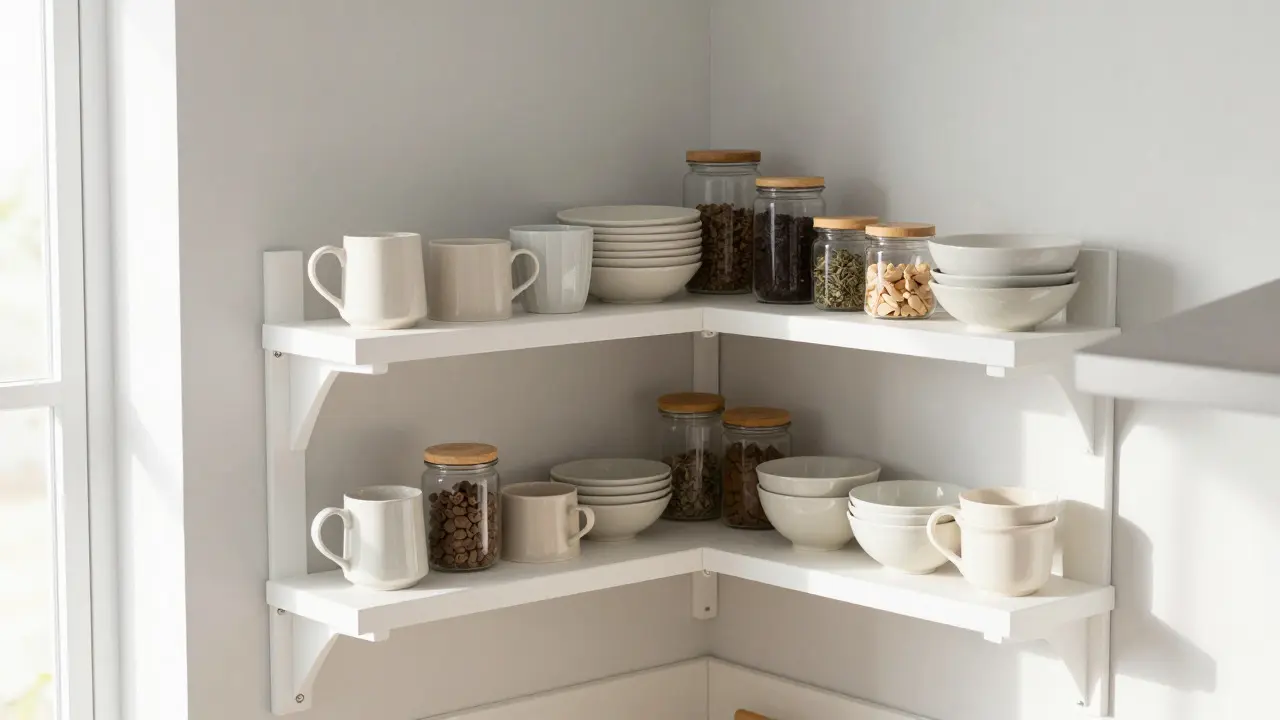
There is a specific kind of chaos that only happens when you open up your kitchen cabinets. You finally have the space, but suddenly every mug, bowl, and spice jar is competing for attention. For many women balancing work, family, and home life, open shelving offers a solution that feels both liberating and slightly intimidating. It removes the visual clutter of closed doors, making small spaces feel larger and more airy. But without a plan, it can quickly turn into a display of disorganized dishware.
The goal here isn't to create a museum piece that requires daily dusting and perfect alignment. Instead, we want a setup that looks intentional yet lived-in. Think of it as curating a gallery where the art changes based on what you actually use. This approach saves time because you stop hiding things you need constantly. You also gain a sense of control over your environment, turning functional storage into a source of daily joy rather than a chore.
Why Open Shelving Works Better Than Closed Cabinets
Closed cabinets hide mess, sure, but they also hide personality. When you remove the doors, you expose the rhythm of your home. In my own kitchen in Portland, I found that switching two rows of upper cabinets to open shelves immediately made the room feel 20% larger. The light bounces off the glass and ceramic instead of being trapped behind wood panels. This is especially true if you live in a smaller apartment or a house with lower ceilings.
From a practical standpoint, accessibility is a huge win. How many times have you stood on a step stool just to grab a single baking sheet? With open shelving, everything is at eye level. You see what you have, which reduces impulse buying. If you can see that you already own three identical mixing bowls, you are less likely to buy a fourth one online. This visibility creates a natural feedback loop for decluttering. You start noticing duplicates faster and letting them go sooner.
| Feature | Closed Cabinets | Open Shelving |
|---|---|---|
| Visual Space | Can feel heavy or cramped | Creates an illusion of height and airiness |
| Accessibility | Requires opening doors; items hidden | Immediate access; items visible |
| Maintenance | Low (dust hides inside) | Medium (requires regular wiping) |
| Personalization | Hidden until opened | Constantly displayed and curated |
| Cost | Higher (doors, hardware, hinges) | Lower (shelves, brackets, or floating mounts) |
The Rule of Three: A Framework for Balance
If you stare at an empty shelf, you might feel overwhelmed by the blank canvas. The "Rule of Three" is a simple design heuristic that solves this. Humans find groups of three more aesthetically pleasing than pairs or large odd numbers. When arranging items, try to group objects in threes. This could be three different heights, three different textures, or three distinct color tones.
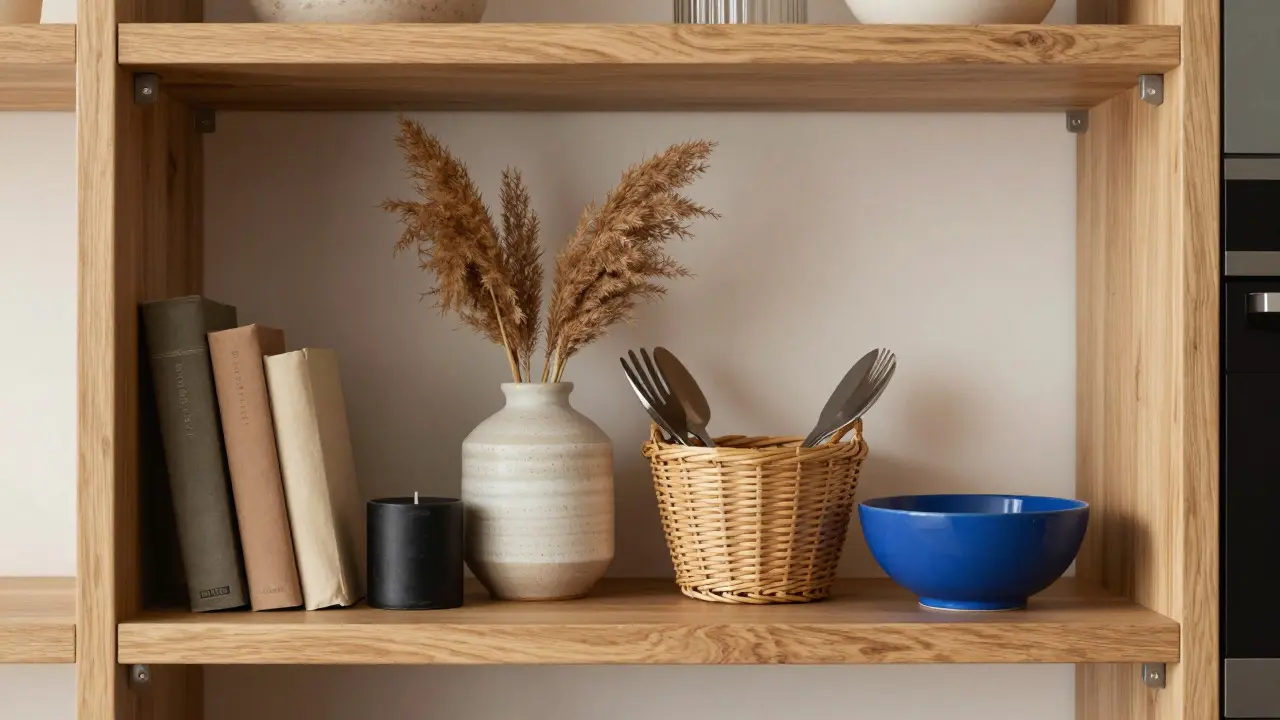
For example, on a mid-level shelf, place a tall stack of books, a medium-sized vase, and a short candle. This creates a triangular visual flow that guides the eye across the surface. Avoid placing all items at the same height, as this looks static and boring. Vary the vertical dimension. Lean some items against the wall and stand others upright. This layering adds depth and prevents the shelf from looking like a flat line of objects.
Texture is just as important as shape. Mix smooth ceramics with rough woven baskets or matte stoneware. If you have shiny glass bottles, pair them with a wooden cutting board. These contrasts create visual interest without needing bright colors. Neutral palettes work best for most homes because they allow the items themselves to shine. Stick to whites, creams, grays, and earthy browns. Add one pop of color, like a cobalt blue bowl or a terracotta pot, to anchor the look.
Choosing the Right Items to Display
Not everything belongs on an open shelf. The biggest mistake people make is trying to display everything. You need to edit ruthlessly. Ask yourself: Do I use this daily? Does it bring me joy? Is it clean and undamaged? If the answer is no to any of these, it probably belongs in a drawer or a lower cabinet.
Decorative Storage is a category of household items designed to hold essentials while contributing to the aesthetic of a room. Baskets are your best friend here. They catch the small stuff-utensils, spices, or snacks-that would otherwise create visual noise. Choose baskets that match your material palette. Wicker or rattan adds warmth, while metal bins offer a modern edge. Labeling them can help maintain order, especially if multiple people share the kitchen.
Dishes and glassware should be selected for their beauty, not just their utility. You don't need to own a full set of matching plates. In fact, mismatched sets often look more curated and collected over time. Look for pieces with interesting glazes or unique shapes. Stack similar items together to keep the lines clean. If you have a collection of mugs, rotate them seasonally. Keep the winter mugs out in November and switch to lighter patterns in spring. This keeps the display fresh without requiring new purchases.
Placement and Height Considerations
Where you put the shelves matters as much as what you put on them. Start with the highest row. This is usually the least accessible area, so it’s perfect for rarely used items or purely decorative pieces. Since you won’t be reaching up constantly, you can afford to be more artistic here. Place taller items like vases or book stacks here to draw the eye upward.
The middle row is your workhorse. This is where you place your daily drivers: coffee mugs, favorite glasses, and frequently used spices. Keep this area functional. If you have to move three other items to get your morning coffee cup, you will hate the system. Leave negative space here. Don’t cram every inch. Empty space allows the eye to rest and makes the items look more deliberate.
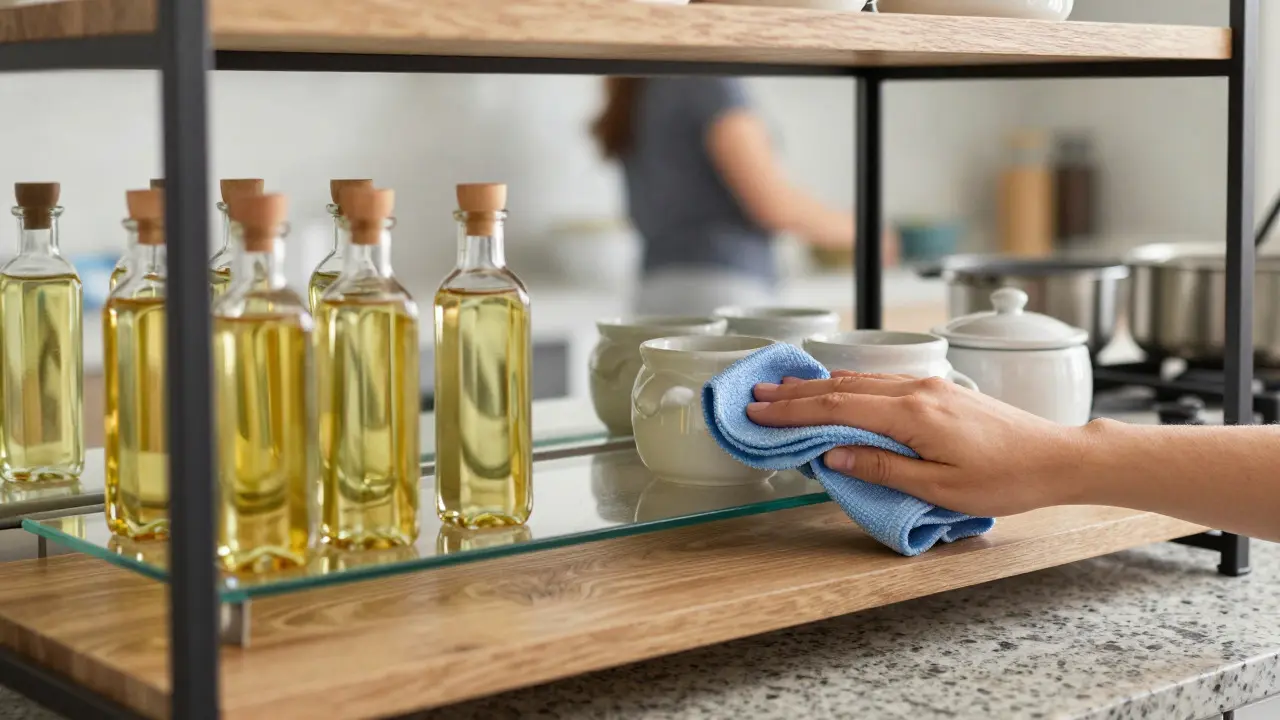
The lowest row, just above the counter, should be reserved for items you grab often. Spices, oils, and small appliances fit well here. Because this area is close to the countertop, it’s prone to grease splatters. Use materials that are easy to wipe down. Glass and glazed ceramic are ideal. Avoid porous materials like unsealed wood or fabric baskets in this zone unless you are diligent about cleaning.
Maintaining the Look Without Stress
Let’s be honest: open shelving requires maintenance. Dust settles on everything. Grease flies from the stove. If you dread cleaning, this might not be the right style for you. But with a few habits, you can keep it manageable. Dedicate five minutes each week to wiping down the shelves. Use a microfiber cloth and a gentle cleaner. Make it part of your Sunday reset routine.
Group similar tasks together. When you wash dishes, return them directly to their designated spot on the shelf. Don’t let them pile up in the sink or on the counter. This prevents the "clutter buildup" phase that leads to messy displays. Rotate your items every few months. Pull out the holiday decorations in December and store them away in January. Swap out seasonal plants or flowers. This rotation keeps the space feeling alive and prevents boredom.
If you have kids or pets, consider using clear acrylic covers or glass fronts for the lower shelves. This protects delicate items while maintaining the open look. Alternatively, stick to durable, break-resistant materials like plastic or metal for high-traffic areas. Flexibility is key. If a shelf looks too busy, take something off. If it looks too empty, add a small plant or a framed photo. The goal is balance, not perfection.
Common Mistakes to Avoid
One common error is over-styling. People tend to think they need to fill every gap. But negative space is powerful. It gives the design room to breathe. Another mistake is ignoring scale. Don’t put tiny items on wide shelves; they will get lost. Conversely, don’t crowd narrow shelves with large objects. Match the size of the items to the width of the shelf.
Color clashes are another pitfall. If your kitchen has bold cabinetry, keep the shelf items neutral. If your kitchen is stark white, you can introduce more color through the dishes and accessories. Finally, avoid mixing too many styles. Stick to a cohesive theme. Modern farmhouse, minimalist, or eclectic vintage-pick one lane and commit. Mixing too many aesthetics can make the space feel chaotic rather than curated.
Frequently Asked Questions
How often should I rearrange my open shelves?
You don’t need to rearrange them daily. A good rule of thumb is to do a major refresh every three to six months. However, small adjustments, like rotating mugs or moving a plant, can be done weekly to keep the space feeling fresh.
What is the best material for open shelves in a kitchen?
Wood and metal are the most popular choices. Wood adds warmth and fits well with traditional or farmhouse styles. Metal offers a sleek, industrial look and is very durable. Ensure whatever material you choose is sealed or coated to withstand moisture and heat from cooking.
Can I mix matching and non-matching dishes on open shelves?
Yes, absolutely. Mixing is often preferred as it looks more personal and collected. Just try to maintain a consistent color palette or material type to ensure the mix doesn’t look random. For example, mix different patterns but keep them all in shades of blue and white.
How do I handle dust on open shelves without constant cleaning?
Use a lint roller or a microfiber cloth once a week. Placing a thin, removable liner under the items can also help catch crumbs and dust, making cleanup easier. Some people use clear acrylic panels behind the shelves to reduce dust accumulation from nearby windows or vents.
Is open shelving suitable for small kitchens?
Yes, it is often recommended for small kitchens because it creates an illusion of space. By removing solid cabinet doors, the walls appear further away, making the room feel larger. Just be careful not to overcrowd the shelves, as clutter can make a small space feel even tighter.