One Outfit, Ten Looks: Women’s Styling Techniques That Stretch Your Closet
 Mar, 26 2026
You stand in front of your closet. It’s packed. Clothes are hanging off doors, bins are overflowing, yet you stare blankly and feel like you have absolutely nothing to wear. It’s a frustrating paradox that many of us face daily. The solution isn’t buying more; it’s seeing what you already own through a different lens.
Capsule Wardrobe isn’t just about owning fewer clothes. It is a curated collection of interchangeable items that work together seamlessly. By focusing on versatility rather than volume, you can unlock a surprising amount of creativity. Today, we aren’t talking about buying a new £500 bag or seasonal fast fashion. We are going to take one foundational outfit and morph it into ten completely different looks suitable for various settings.
The Anchor: Choosing Your Base
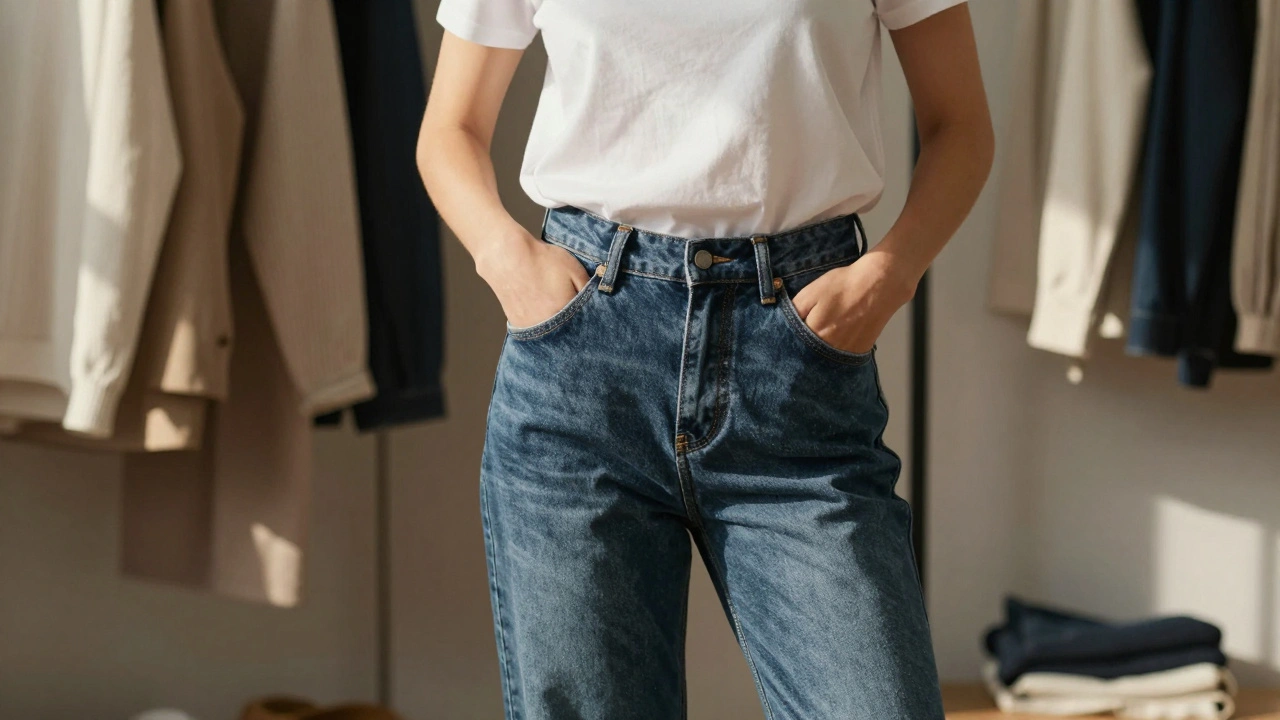
Before you start mixing and matching, you need a reliable foundation. In the world of styling, this is often referred to as the “anchor piece.” For this exercise, imagine a classic pair of straight-leg dark wash denim paired with a high-quality white crew-neck t-shirt. This combination is the blank canvas for everything that follows.
Denim is a versatile textile made from cotton twill that provides durability and structure. Dark washes specifically signal a bit more polish than faded light blue, allowing you to step up or down depending on what else you add. The white tee acts as a neutral buffer between patterns and colors later on.
Why this base? Because almost every woman owns something similar, even if it hasn’t been styled to its full potential. You might have these items tucked away, forgotten because they felt “comfortable” rather than “stylish.” We fix that today.
Mastery of Layering
Layering is the primary engine of outfit transformation. It changes the silhouette, the warmth, and the perceived effort of the look.
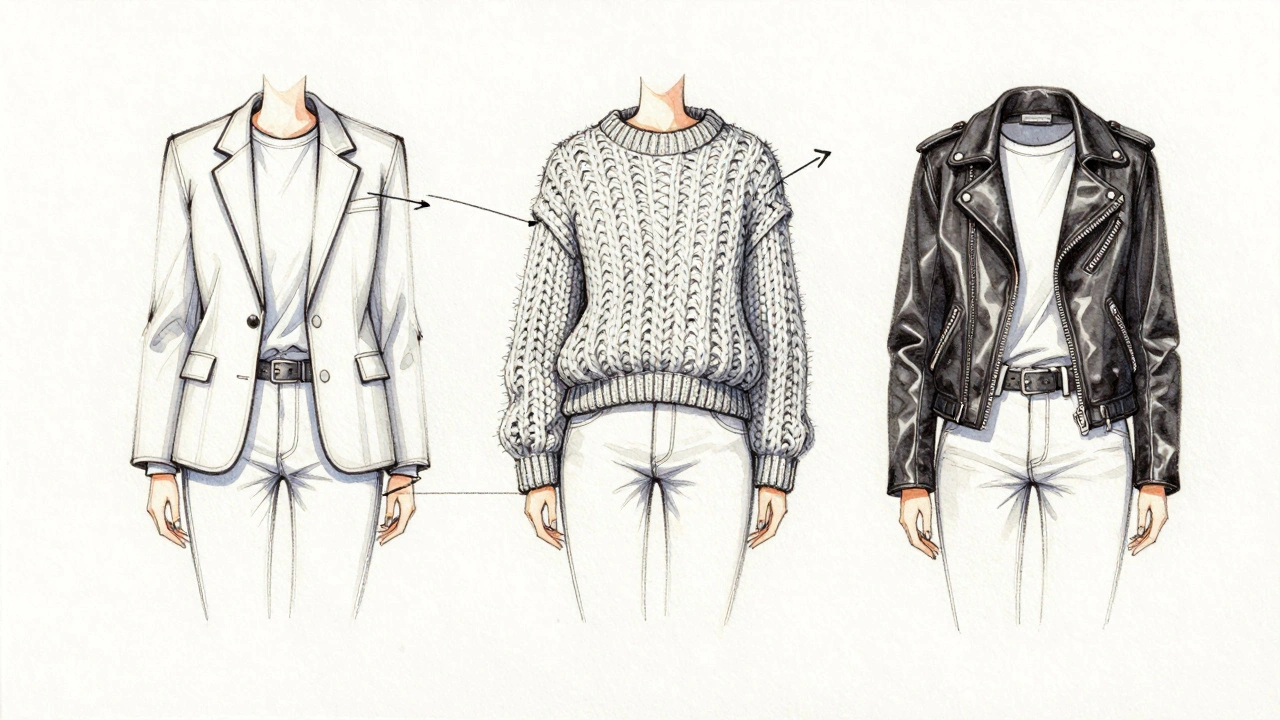
- The Structured Layer: Throw on a tailored blazer. Suddenly, you are ready for a client meeting or a boardroom presentation. Blazer adds formal authority to casual basics.
- The Cozy Layer: Swap the blazer for an oversized cardigan or a chunky knit sweater. Tuck the sweater in to maintain waist definition, or leave it open for a relaxed weekend vibe.
- The Outer Shell: A trench coat or leather jacket instantly shifts the mood. Leather adds edge and attitude; a trench adds sophistication and grace.
This technique relies heavily on texture contrast. Mixing smooth denim with soft wool or sleek leather creates visual interest without needing complex patterns. It’s about friction. If all your fabrics slide over each other equally, the outfit feels flat. You want tactile variety to keep the eye engaged.
Footwear Defines the Occasion
Your shoes are perhaps the quickest way to rewrite the story of an outfit. They tell people immediately where you are going and what your energy level is. Consider the same jeans-and-tee combo:
| Footwear Type | Vibe Created | Best Scenario |
|---|---|---|
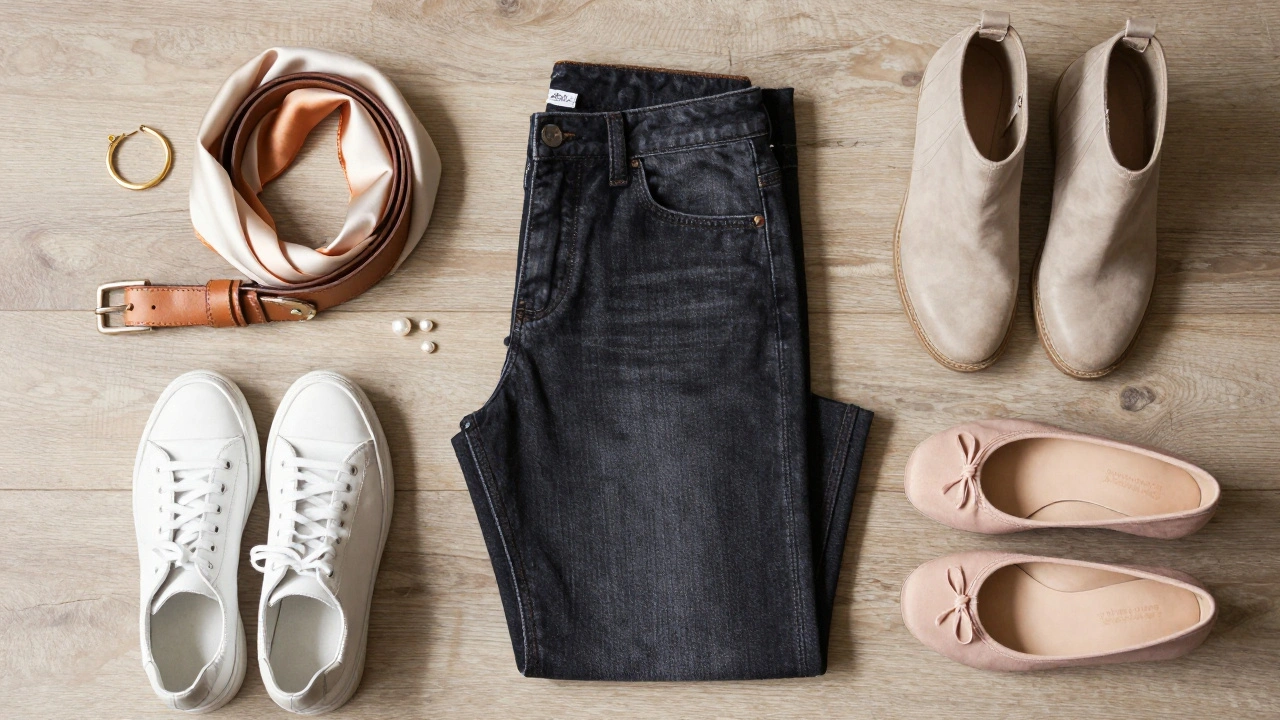
| Sneakers (White Minimal) | Casual, Sporty, Relaxed | Running errands, Coffee run |
| Ankle Boots | Trendy, Edgy, Winter-ready | Dinner out, Weekend party |
| Ballet Flats | Romantic, French-style, Soft | Date night, Brunch |
| Heeled Pumps | Professional, Polished, Confident | Interview, Formal event |
| Loafers | Academic, Preppy, Practical | Office work, Library |
Notice how the clothing didn’t change, but the destination did. In March 2026, as we move into spring, consider how weather dictates the choice here. Rain-resistant materials for boots become relevant quickly, whereas sandals might come out during warmer late-Spring transitions.
Accessory Alchemy
If shoes set the stage, accessories direct the play. Small items carry disproportionate weight in styling.
- Belts: A wide leather belt cinched at the waist changes the proportion of high-waisted jeans entirely. It creates an hourglass illusion.
- Jewelry: Gold hoop earrings versus pearl studs. One screams modern confidence; the other whispers classic elegance.
- Scarves: A silk scarf tied on a handbag or worn as a headband introduces color and texture without covering your skin.
- Glasses: Oversized frames can add an intellectual edge to a simple tee and jeans combo.
Think of Color Theory as the relationship between hues and values. Sticking to monochrome with your accessories (all black hardware on black shoes, for instance) makes the outfit look intentional and expensive. Mixing complementary colors (like orange rust against navy denim) makes it look artistic and fun.
The Ten-Look Blueprint
Here is exactly how you execute the 10 variations using our anchor piece (dark denim + white tee). These aren’t just random ideas; they are structured solutions to real-world scenarios.
- Casual Tuesday: Sneakers + Open Cardigan. Comfort focused.
- Office Ready: Black Loafers + Tailored Blazer. Professional focus.
- Weekend Market: Canvas Tote + Bucket Hat + Sandals (if warm enough).
- Date Night Edge: Ankle Boots + Faux Leather Jacket + Statement Earrings.
- Classic Chic: Ballet Flats + Silk Scarf + Pearl Necklace.
- The Commuter: Trench Coat + Leather Bag + Comfortable Kicks.
- Elevated Basic: Heeled Pumps + Skinny Gold Belt.
- Relaxed Loungewear: Ugly Sweater + Socks + Slippers (for home Zoom calls that turn social).
- Travel Mode: Cross-body bag + Hoodie + Comfortable Walking Shoes.
- Night Out: Sequin Bolero or Satin Vest + High Heels + Clutch.
Each of these requires swapping only 2-3 elements on top of the base. That means you can plan a week of outfits without touching a single item twice. This significantly reduces decision fatigue in the morning.
Sustainability and Cost Savings
There is a financial argument to be made for this approach. Fast fashion cycles encourage rapid turnover, leading to waste. By maximizing the utility of items you already own, you align with Sustainable Fashion, which prioritizes eco-friendly production and longevity. Buying five quality pieces that generate fifty outfits is economically smarter than buying fifty cheap pieces that last one season.
Consider the cost-per-wear metric. If you buy a $200 jacket and wear it 200 times, it costs you $1 per wear. If you buy a $50 item that sits in the closet, the cost per wear is infinite until you actually use it. Versibility ensures usage.
Troubleshooting Common Pitfalls
Some things don’t work when you try to stretch an outfit. Tighter jeans don’t fit under thick winter coats, causing discomfort. White tees show sweat marks easily after long days. To mitigate this, always have a clean rotation of basics ready. Don’t force one shirt to last two days in hot weather.
Also, pay attention to body shape feedback. Sometimes a layer makes you feel bulky. Adjust by choosing fitted layers instead of oversized ones, or defining the waistline to regain balance.
Can I do this with a skirt instead of jeans?
Absolutely. A midi skirt functions similarly to jeans as an anchor. Just ensure the hem length stays consistent when layering different footwear so the proportions remain flattering.
Is it okay to mix brands in one outfit?
Yes. High-low fashion mixing (luxury items with thrifted finds) is a standard styling technique. Focus on fit and fabric quality rather than logos.
How do I keep the base outfit from looking boring?
Change the neckline exposure. Tuck the shirt in differently, roll the sleeves, or add statement jewelry. Visual texture prevents boredom more than prints do.
Does this work for petite or tall frames?
It does. Petite individuals should focus on cropped layers to avoid being swallowed by fabric. Tall individuals can embrace fuller layers without worrying about overwhelming their frame.
What if I don’t own a blazer?
A structured denim jacket or a heavy cotton overshirt works as a substitute. The goal is the structured silhouette, not the specific garment type.