Music for Your Mood: The Ultimate Women-Led Playlists for Every Emotion
 Apr, 17 2026
The 'Main Character' Energy: Power and Confidence
There's a specific frequency that hits when you need to feel like you own the room. This isn't just about high volume; it's about tempo and lyrical authority. When you're getting ready for a big presentation or a first date, you need tracks that act as an emotional armor. Think of the sonic architecture used by artists like Beyoncé. Her work often utilizes brass sections and heavy percussion to signal power. When you build a confidence playlist, you want songs with a driving beat-usually around 120 to 128 BPM (beats per minute)-which naturally mimics a heightened heart rate and triggers a dopamine release. To build this, mix high-energy pop with anthemic R&B. Start with a track that builds slowly, then hit a peak with a heavy bassline. The goal is to move from a state of doubt to a state of absolute certainty. If the song makes you want to walk faster and stand taller, it belongs here.The Midnight Melancholy: Processing Heartbreak and Loss
Heartbreak is a universal experience, but the way we process it is deeply personal. Sometimes you need to lean into the sadness to get through it. This is where the "sad girl autumn" aesthetic comes in, characterized by stripped-back instrumentals and raw vocal delivery. Taylor Swift is a master of this, specifically in her folklore and evermore eras, where she trades stadium pop for indie-folk textures. When your mood is low, look for music with slower tempos and minor keys. The piano and acoustic guitar are the primary tools here because they create an intimate, conversational feel. These playlists shouldn't be about "fixing" the mood, but rather sitting with it. By listening to someone else articulate a pain you're currently feeling, you reduce the sense of isolation. It's a form of auditory therapy that allows the brain to process grief in a controlled environment.| Mood | Suggested Tempo | Key Instruments | Vocal Style |
|---|---|---|---|
| Confidence | Fast (120+ BPM) | Bass, Synth, Brass | Assertive, Belted |
| Sadness | Slow (60-80 BPM) | Piano, Acoustic Guitar | Breathy, Vulnerable |
| Focus | Mid (90-110 BPM) | Ambient Pads, Lo-fi Beats | Minimal or None |
| Euphoria | Upbeat (120-140 BPM) | Electric Guitar, Drums | Harmonized, Bright |
The Quiet Hour: Focus, Flow, and Mental Clarity
Not every playlist needs to be an emotional rollercoaster. Sometimes, the mood is simply "I need to get things done." For many women, the chaos of a workday or a hectic home life makes silence feel too loud. This is where functional music comes in. Lo-fi Hip Hop is a genre characterized by low-fidelity samples and a relaxed, repetitive beat. To create a flow-state playlist, avoid songs with complex lyrics that demand your attention. When you listen to lyrics, your brain's language processing center (Broca's area) activates, which can actually distract you from a writing or coding task. Instead, opt for instrumental tracks or artists who use vocals as an instrument rather than a storyteller. Think of ambient soundscapes or neo-soul instrumentals. The goal here is a consistent, unobtrusive sonic blanket that masks background noise and keeps your brain in the zone.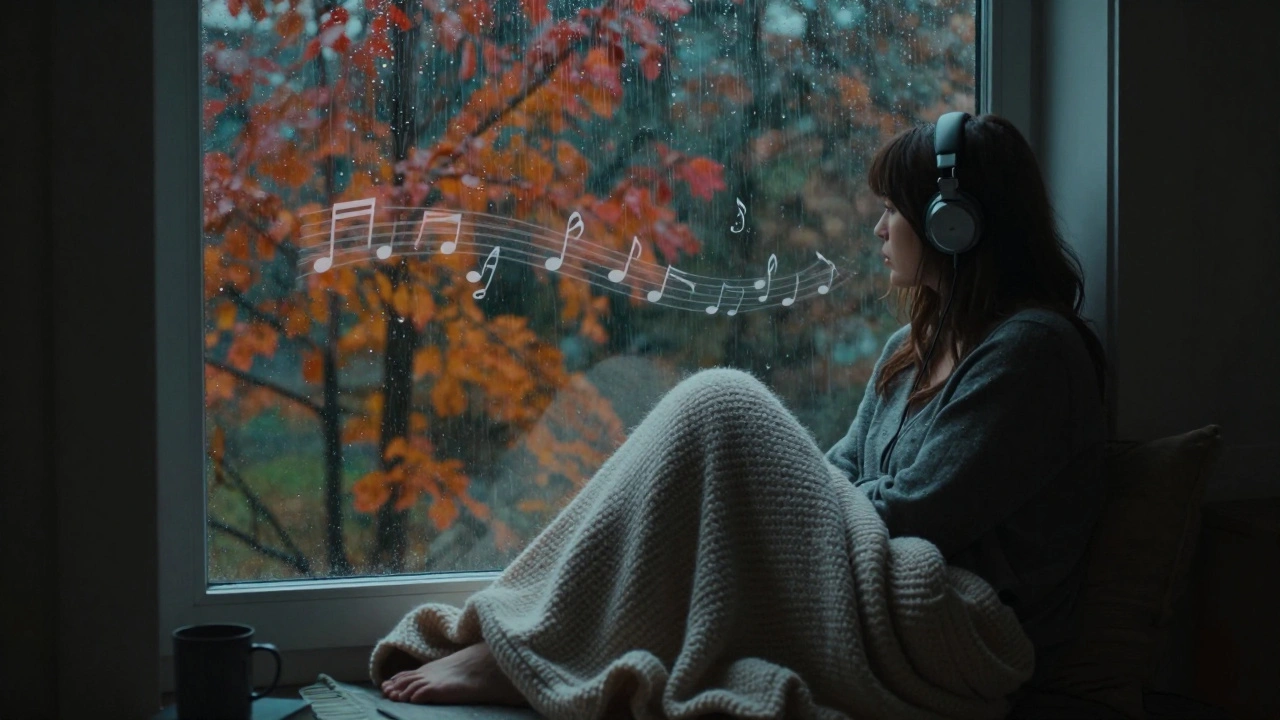
The Healing Space: Anger and Catharsis
Anger is an underrated mood for a playlist. Too often, women are told to be "composed," but there is immense psychological value in a sonic scream. Cathartic playlists are designed to let you feel the heat of frustration without causing real-world damage. Look for tracks with distorted guitars or aggressive electronic elements. Artists like Halsey or Olivia Rodrigo often blend pop sensibilities with a raw, edgy energy that mirrors a temper tantrum in the best way possible. When assembling this list, don't be afraid of dissonance. Use songs that build in intensity-starting with a simmer and ending in a boil. The key to a successful anger playlist is the "release." By the time the final track ends, you should feel physically exhausted, as if you've just finished a heavy workout. This physical release helps lower cortisol levels and brings you back to a state of calm.The Sunday Morning: Peace and Restoration
There is a specific kind of peace that comes with a slow morning-coffee, sunlight, and no immediate deadlines. This mood requires a playlist that feels like a warm blanket. We're talking about bossa nova rhythms, light jazz, and soft indie pop. SZA often brings a relaxed, atmospheric quality to her music that fits perfectly into a restoration set. Focus on tracks with "warm" tones-sounds that aren't too sharp or piercing. The music should float in the background rather than demand center stage. Use these playlists to practice mindfulness. Try pairing the music with a slow stretch or a journaling session. The relationship between a slow tempo and a lowered heart rate can actually help signal to your nervous system that it is safe to relax and recover.
How to Build Your Own Mood Library
Creating these lists isn't just about adding songs you like; it's about mapping your internal landscape. To do this effectively, start by identifying your "trigger songs"-those tracks that immediately change your mood the moment they start.- Audit Your Current Library: Go through your liked songs and group them by the emotion they evoke, not the genre. A rock song and a rap song can both provide the same "power" feeling.
- Test the Transitions: The order of songs matters. Avoid abrupt jumps from a whisper-quiet track to a scream-heavy one unless you're intentionally trying to wake yourself up.
- Use a "Seed" Track: If you're using a streaming algorithm, find one song that perfectly captures the mood and use the "create radio" feature to find similar sonic profiles.
- Update Regularly: Your relationship with a song changes. A song that felt like "healing" a year ago might now feel like "sadness." Be ruthless with your deletions to keep the mood pure.
How do I find new female artists for my playlists?
The best way is to explore "Artist Radio" features on streaming platforms. Once you find a female artist you love, look at their "Fans Also Like" section. Additionally, searching for curated blogs that focus on indie female artists or checking out festival lineups (like Coachella or Glastonbury) can introduce you to emerging talent before they hit the mainstream.
Why does music affect my mood so strongly?
Music triggers the limbic system, the part of the brain responsible for emotions and memory. When you hear a certain chord progression or beat, your brain releases neurotransmitters like dopamine (for pleasure) or oxytocin (for connection), which physically changes your emotional state.
Can I use music to actually change my mood, or just match it?
You can do both. Matching your mood (the "Iso-principle") helps you feel validated. However, you can also use "mood shifting." Start with music that matches your current state (e.g., sad) and gradually transition the playlist toward the mood you want to reach (e.g., calm or happy). This gently guides your brain from one state to another.
What is the best length for a mood-based playlist?
For a specific activity, like a workout or a commute, match the length to the duration of the event. For general mood regulation, 2 to 3 hours is ideal. This provides enough variety to keep you engaged without the music becoming repetitive, which can eventually lead to "listener fatigue."
Are there specific genres that are better for anxiety?
Ambient, classical, and low-fi beats are generally most effective for anxiety because they lack sudden changes in volume or tempo. Look for music with a steady, rhythmic pulse-similar to a resting heartbeat-which can help ground you and slow your breathing.