Mentorship Circles for Women: A Practical Guide to Starting and Sustaining Your Group
 Aug, 17 2026
Imagine sitting in a room with five other women who truly get it. No small talk about the weather, no performative networking where you’re just collecting business cards. Instead, you’re talking about the specific roadblock keeping you up at night, the career pivot that feels scary but necessary, or the leadership style you’re trying to refine. That’s the power of a mentorship circle is a small, structured group of peers who meet regularly to provide reciprocal guidance, accountability, and emotional support. Unlike traditional one-on-one mentoring, which can feel hierarchical and exclusive, these circles democratize wisdom. Everyone gives, everyone receives, and the dynamic stays fluid.
Many women assume they need to find a “big shot” mentor to move forward. But research from the Harvard Business Review suggests that peer networks often provide more actionable advice because the context is shared. You don’t have to explain why your boss is difficult; your circle members know exactly what that looks like. The goal here isn’t to build a corporate ladder; it’s to build a safety net that catches you when you stumble and pushes you when you hesitate.
Why Traditional Mentoring Falls Short
Traditional mentoring has a survivorship bias problem. Usually, only those who already have access to powerful networks get matched with senior leaders. If you’re early in your career, working in a non-traditional field, or navigating a niche industry, finding a willing mentor can be a shot in the dark. Plus, there’s a power imbalance. It’s hard to ask for honest feedback when the person across from you holds the keys to your promotion.
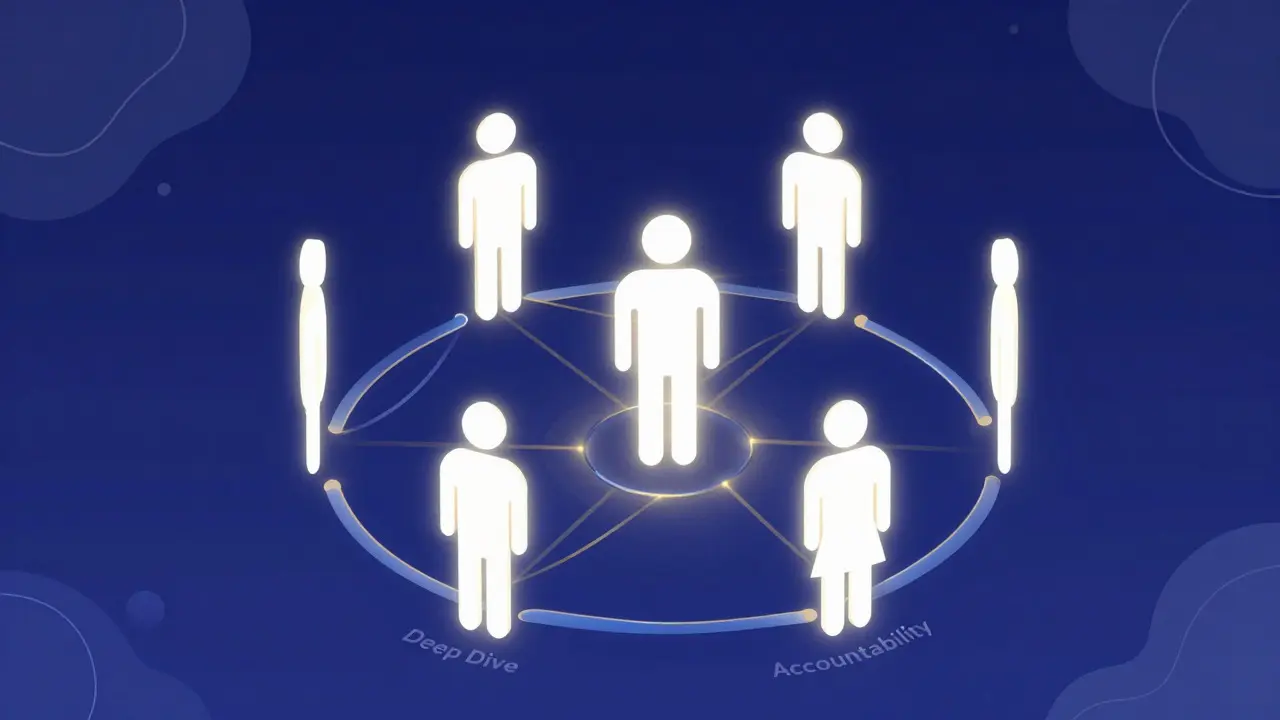
A mentorship circle flips this script. By keeping the group small-typically between four and seven people-you ensure intimacy without losing focus. This size allows every member to speak fully while still maintaining enough diversity of perspective to challenge blind spots. Think of it as a mastermind group, but with a stronger emphasis on emotional intelligence and long-term sustainability rather than just quick wins.
- Reciprocity: Every member is both a mentor and a mentee. This keeps energy high and prevents burnout.
- Accountability: You commit to goals in front of others. Social pressure becomes a positive force.
- Diversity of Thought: Even within similar career stages, different backgrounds offer unique solutions.
Building Your Core Group: The First Step
The hardest part isn’t running the meetings; it’s finding the right people. You want individuals who are curious, reliable, and willing to be vulnerable. Start by looking at your existing network. Who do you trust? Who challenges you intellectually? Who listens without immediately jumping to fix everything?
If your immediate network doesn’t have enough candidates, look to professional associations, local women’s business groups, or alumni networks. When reaching out, be specific. Don’t just say, “Want to join my study group?” Try this instead: “I’m starting a small mentorship circle for women in tech. We’ll meet monthly for 90 minutes to share goals and give feedback. Interested?” Specificity filters out the casual observers and attracts the committed.
Once you have your list, invite them to a low-stakes coffee or virtual hangout before the first official meeting. This “pre-meeting” helps gauge chemistry. If the vibe feels forced or competitive, keep looking. The right group should feel like a relief, not another performance.
Structuring the Meetings for Success
Without structure, mentorship circles often devolve into venting sessions or social gatherings. To sustain momentum, you need a consistent format. Here is a proven 90-minute agenda that balances input and output:
- Check-in (15 mins): Each person shares one win and one challenge from the past month. Keep it brief.
- Deep Dive (45 mins): One volunteer presents a specific issue. The group asks clarifying questions, then offers three distinct perspectives or suggestions. No unsolicited advice unless asked.
- Action Planning (15 mins): The presenter defines one concrete next step. The group notes this down.
- Accountability Check (15 mins): Review last month’s action items. Did they happen? What got in the way?
This structure ensures that every meeting has a clear purpose. The “Deep Dive” section is particularly powerful because it forces the group to practice active listening. Often, the best advice comes from asking better questions, not giving answers.
Sustaining Momentum: Avoiding the Drop-Off
Most groups die after three months. Why? Because life gets busy, and the initial excitement fades. To prevent this, you need rituals that make attendance easy and valuable.
First, set a recurring time that works for everyone and block it off calendars immediately. Treat it like a board meeting. Second, rotate the facilitator role. Having someone lead each session keeps engagement high and distributes the work. Third, create a private digital space, like a Slack channel or WhatsApp group, for light check-ins between meetings. A simple “How’s the project going?” message on a Tuesday can keep the thread alive without requiring a full meeting.
Also, be flexible. If someone misses a meeting, don’t let guilt fester. Send them the notes and a warm note saying, “We missed you.” Low friction is key to long-term survival.
Navigating Conflicts and Dynamics
No group is immune to friction. Sometimes, two members will clash on a topic. Or one person might dominate the conversation. How you handle these moments defines the culture of your circle.
Establish ground rules early. For example: “One person speaks at a time,” or “Critique the idea, not the person.” If tension arises, address it directly in the next meeting. Use “I” statements. “I felt unheard during the last discussion” is less accusatory than “You talked too much.”
If a member consistently fails to show up or participate, have a gentle but firm conversation. Sometimes, people join with good intentions but realize the commitment is too heavy. It’s okay to part ways amicably. Replace them if possible, or continue as a smaller group. Quality over quantity always wins.

Measuring Impact Beyond Metrics
How do you know if the circle is working? Look beyond promotions or salary bumps. While those are great outcomes, the real value lies in confidence and clarity.
| Indicator | What It Looks Like |
|---|---|
| Attendance Consistency | 80%+ of members attend most meetings |
| Vulnerability Depth | Members share personal fears, not just surface-level issues |
| Action Completion | At least 70% of defined next steps are completed |
| Peer Referrals | Members introduce each other to new opportunities |
If you see these indicators, you’re building something durable. If not, revisit your structure or membership composition. Adjustments are normal and healthy.
Frequently Asked Questions
How many people should be in a mentorship circle?
Aim for 4 to 7 people. Fewer than four lacks diverse perspective; more than seven makes it hard for everyone to contribute meaningfully in a 90-minute session.
Do we need to be in the same industry?
Not necessarily. Cross-industry circles can be incredibly refreshing because they bring fresh eyes to problems. However, sharing a common challenge (like balancing career and family) can also create strong bonds.
What if someone dominates the conversation?
Address it gently during the check-in phase. You can say, “Let’s make sure we hear from everyone today.” Rotating the facilitator role also helps distribute speaking time naturally.
How often should we meet?
Monthly is the sweet spot for most professionals. Bi-weekly can work if the group is highly motivated, but it risks burnout. Weekly is usually too frequent for deep work.
Can we have remote members?
Yes, hybrid models work well. Just ensure the technology is reliable and that remote members have equal opportunity to speak. Consider rotating meeting times to accommodate different time zones if applicable.