Mental Health Disparities for LGBTQ+ Women: How to Get Help
 Mar, 15 2026
For LGBTQ+ women, mental health isn’t just about feeling stressed or sad-it’s often about surviving a world that doesn’t always see you as whole. Studies show that LGBTQ+ women are two to three times more likely to experience depression, anxiety, and suicidal thoughts than their cisgender, heterosexual peers. This isn’t random. It’s the result of years of discrimination, isolation, and systems that weren’t built for people like you.
Why LGBTQ+ Women Face Higher Mental Health Risks
Being a woman who identifies as lesbian, bisexual, transgender, or nonbinary doesn’t automatically mean you’re mentally unwell. But the world around you? It often makes things harder. Think about it: you might face rejection from family, harassment at work, or even denial of care from doctors who don’t understand your identity. These aren’t isolated incidents-they pile up.
A 2024 study from the Williams Institute found that 68% of transgender women and 59% of bisexual women reported having a mental health condition in the past year. Compare that to 21% of straight, cisgender women. That gap doesn’t come from genetics. It comes from stigma, lack of access, and systemic neglect.
And it’s not just about being out. Even if you’re “passing” or hiding your identity to stay safe, the constant pressure to perform normalcy takes a toll. That’s called minority stress-and it’s real. It’s the weight of knowing you could be judged, fired, or worse just for being yourself.
Barriers to Getting Help
You want help? Great. Now try to find it.
Many therapists still don’t know how to talk to LGBTQ+ women. Some assume bisexuality is a phase. Others misgender trans women or treat gender identity as a “problem” to fix. A 2023 survey of 1,200 LGBTQ+ women found that 43% had been misgendered by a mental health provider-and 27% said they were refused care outright.
Insurance is another wall. Some plans don’t cover gender-affirming therapy. Others require years of documentation just to get a referral. And if you live outside a big city? Good luck finding someone who even knows what “gender-affirming care” means.
Then there’s cost. Therapy can run $150 an hour. For women who are more likely to be underemployed or living paycheck to paycheck, that’s not an option. It’s not laziness. It’s logistics.
Where to Start: Finding the Right Support
You don’t have to figure this out alone. There are paths forward-even if they’re not always obvious.
- Look for LGBTQ+-affirming providers through directories like Psychology Today’s filter tool (select “LGBTQ+ affirming”) or the GLMA (Gay and Lesbian Medical Association) provider list. These are clinicians trained to understand your identity-not just tolerate it.
- Try telehealth if in-person options are scarce. Platforms like TherapyDen (a directory connecting LGBTQ+ clients with affirming therapists) and BetterHelp (offers LGBTQ+ specific counseling filters) let you filter by identity, language, and specialty.
- Join peer groups. Online communities like the Trans Lifeline (a trans-run crisis line and peer support network) or local meetups through GLSEN (an organization supporting LGBTQ+ youth and adults) can reduce isolation. Sometimes, just talking to someone who gets it is the first step to healing.
- Check out sliding-scale clinics. Many community health centers offer therapy on a pay-what-you-can basis. In Portland, the Q Center (a nonprofit serving LGBTQ+ communities in Oregon) offers free weekly support circles and low-cost counseling.

What to Ask When You Call a Therapist
Not every therapist who says they’re “LGBTQ+ friendly” actually is. Here’s what to ask before booking:
- Have you worked with LGBTQ+ women before? What kinds of issues did you help them with?
- Do you understand the difference between sexual orientation and gender identity?
- Have you received training in trauma-informed care for queer clients?
- How do you handle misgendering or deadnaming if it happens?
- Do you offer sliding-scale rates or accept Medicaid?
If they hesitate, give them a second chance-but don’t settle for vague answers. Your mental health matters too much to waste time on someone who doesn’t get it.
Self-Care That Actually Works
Therapy isn’t the only tool. Daily practices matter too.
Start small:
- Write in a journal for 5 minutes a day. No rules. Just let it out.
- Find one person you trust-friend, coworker, online buddy-and check in with them weekly.
- Move your body in ways that feel good, not punishing. Dance. Walk. Stretch. Yoga. Doesn’t matter what, as long as it feels like yours.
- Limit social media that makes you feel smaller. Follow accounts that celebrate queer joy, not just struggle.
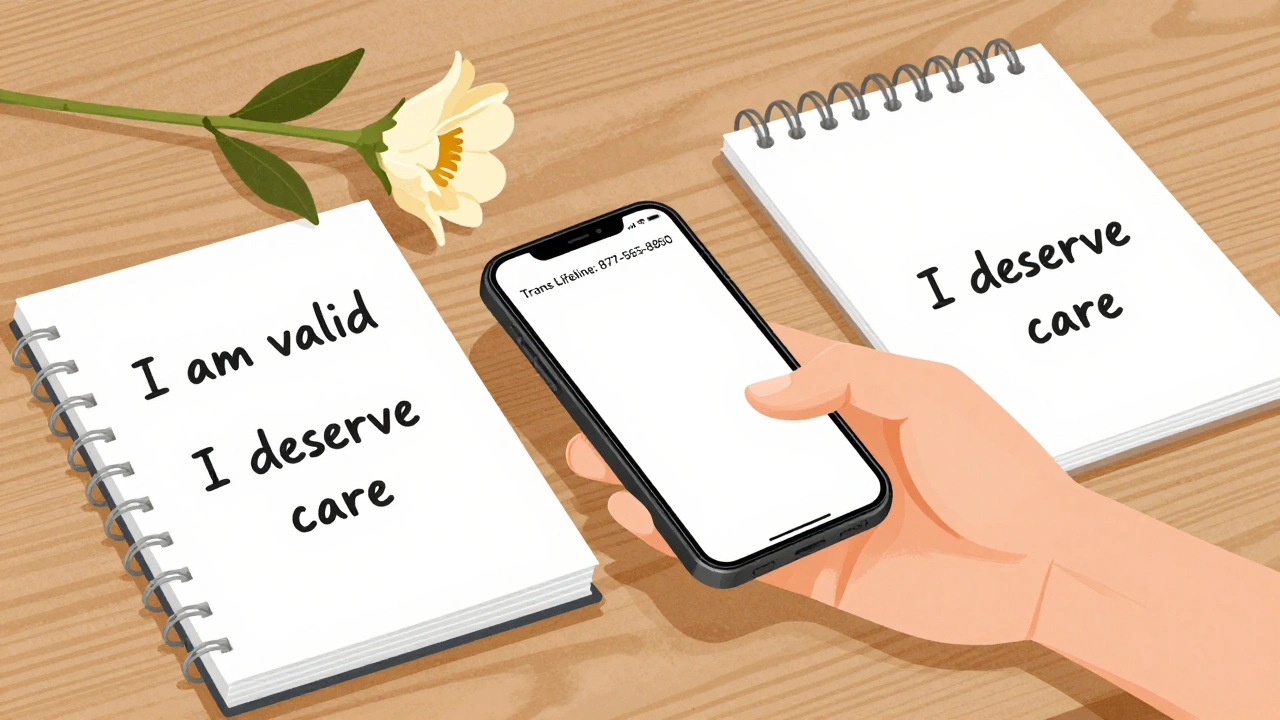
- Use affirmations: “I am valid.” “I deserve care.” Say them out loud if you can.
These aren’t fixes. They’re anchors. When the world feels heavy, they keep you grounded.
When to Seek Emergency Help
If you’re having thoughts of suicide or self-harm, you don’t have to wait. Reach out now.
- Trans Lifeline: Call 877-565-8860. Staffed by trans people, for trans people.
- Crisis Text Line: Text HOME to 741741. Free, confidential, 24/7.
- The Trevor Project: Call 1-866-488-7386 or chat online. Designed for LGBTQ+ youth, but open to all ages.
You are not a burden. You are not too much. You are not broken. You are a person who deserves care, and help is waiting for you.
How Allies Can Help
If you’re not LGBTQ+, but care about someone who is, here’s how to support them:
- Don’t pressure them to “just be happy” or “get over it.” Mental health struggles aren’t a choice.
- Learn the difference between gender identity, sexual orientation, and expression. Read a few articles. Ask questions respectfully.
- Offer to help them find resources. Sometimes just saying “I’ll look up therapists with you” makes a huge difference.
- Advocate for inclusive policies at work, school, or in your community. Change starts with people who speak up.
You don’t need to have all the answers. Just show up. That’s enough.
Is therapy only for people with serious mental illness?
No. Therapy isn’t just for crises. It’s for anyone who wants to understand themselves better, process trauma, or build healthier coping skills. Many LGBTQ+ women use therapy to navigate relationships, workplace stress, or gender dysphoria-not because they’re “broken,” but because they’re human.
Can I get mental health care without insurance?
Yes. Many community health centers, universities, and nonprofits offer sliding-scale therapy. Some apps like Open Path Collective connect people with therapists charging as low as $30 per session. In Portland, organizations like Q Center and Cascade AIDS Project provide free or low-cost counseling regardless of income or documentation status.
What if I’m not ready to talk to a therapist?
That’s okay. Healing doesn’t have one timeline. Start with peer support groups, online forums, or self-help books written by LGBTQ+ authors. Journaling, art, or even talking to a trusted friend can be powerful first steps. You don’t need to be “ready” to deserve care-you just need to be alive.
Are there LGBTQ+ specific hotlines?
Yes. Trans Lifeline (877-565-8860) is staffed entirely by trans people and offers crisis support without judgment. The Trevor Project (1-866-488-7386) serves LGBTQ+ people of all ages. Crisis Text Line (741741) also has LGBTQ+-trained responders. These services are free, confidential, and available 24/7.
How do I know if a therapist is truly affirming?
Ask direct questions: Do they have experience working with LGBTQ+ women? Have they had training in gender-affirming care? Do they use inclusive language? If they seem unsure, defensive, or dismissive, keep looking. A truly affirming therapist will welcome your questions, not fear them.
What’s Next?
Getting help is a process, not a one-time event. Some days will be easier than others. That’s normal. What matters is that you keep showing up-for yourself.
Start today: pick one thing from this list. Call a hotline. Text a friend. Look up one affirming therapist. Go to a support group. You don’t need to do it all. Just do one thing. Then do another tomorrow.
You’re not alone. There are thousands of LGBTQ+ women out there who’ve been where you are-and made it through. You can too.