Menopause and Sex for Women: Changes, Comfort, and Pleasure
 Mar, 4 2026
When menopause hits, sex doesn’t have to disappear. But it often changes-sometimes in ways that surprise women who thought they knew their own bodies. You might notice less interest in sex. Or maybe sex feels uncomfortable, even painful. That’s not your imagination. It’s biology. And it’s fixable.
What Actually Happens to Your Body
During menopause, your ovaries stop making estrogen and progesterone. That drop doesn’t just bring hot flashes and sleepless nights. It also affects your vaginal tissue. The walls thin out. Natural lubrication drops. Blood flow to the pelvis slows. These changes aren’t dramatic overnight-they creep in over months or years. But they add up.
A 2023 study in the Journal of Sexual Medicine found that 67% of women over 55 reported discomfort during intercourse. Not because they didn’t want sex. But because their bodies didn’t feel the same way anymore. The problem isn’t desire. It’s access.
Comfort Comes Before Pleasure
You can’t enjoy sex if it hurts. That’s simple. But many women don’t realize how easy it is to fix.
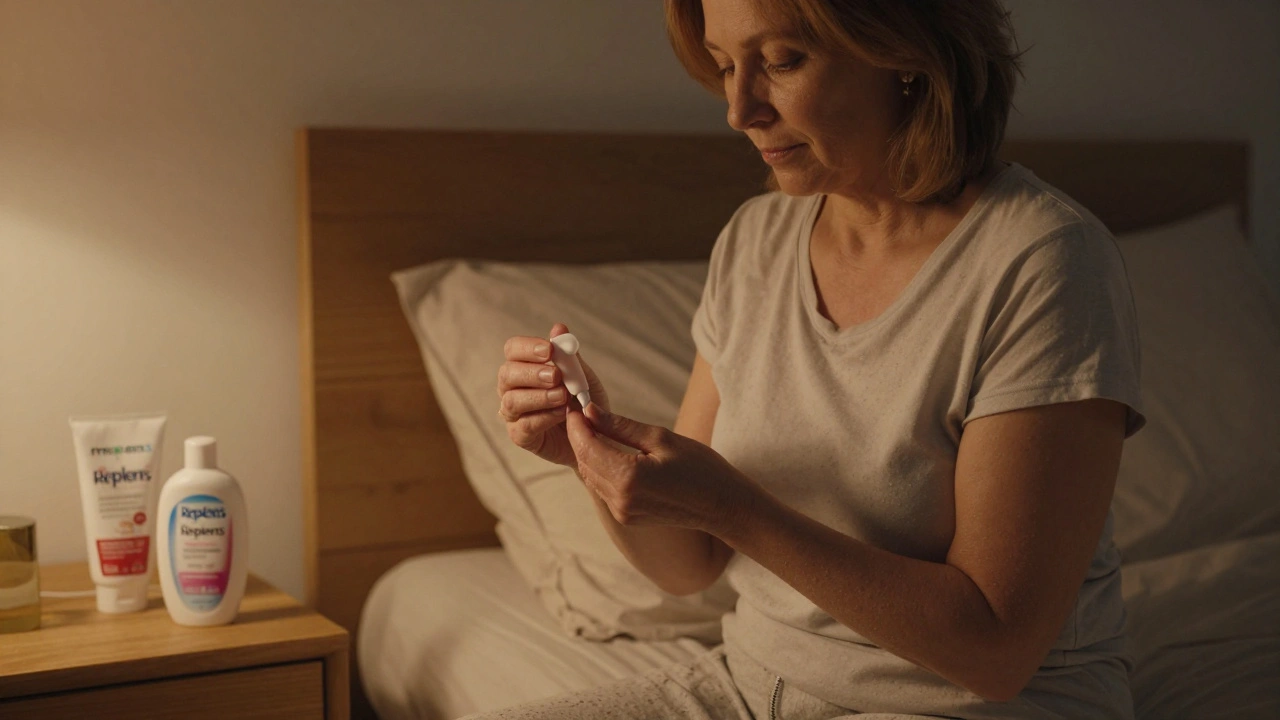
Water-based lubricants? They help. But not enough. Silicone-based lubes last longer and don’t dry out like water ones. Try one with aloe or vitamin E-some women find them soothing. Then there’s vaginal moisturizers, used a few times a week. They’re not for sex. They’re for healing. Products like Replens or Hyalofemme rebuild moisture in the tissue over time. They work better than you’d think.
And then there’s low-dose vaginal estrogen. Yes, it’s a hormone. But it’s applied locally-just a small ring, cream, or tablet. It doesn’t flood your whole body. It just rebuilds the tissue in your vagina. Studies show it cuts pain by 80% in women who use it consistently. And no, it doesn’t raise your risk of breast cancer if you’ve had a hysterectomy. Talk to your doctor. This isn’t outdated advice. It’s modern care.
Libido Doesn’t Vanish-It Shifts
Some women feel less interested in sex after menopause. Others feel more. It’s not random. It’s tied to how you feel about your body, your relationship, and your stress levels.
Testosterone drops too during menopause. That hormone plays a role in sexual drive. But you don’t need a big boost to feel turned on. Small things matter more: touch, time, and emotional safety. If you’re exhausted from caregiving, overwhelmed at work, or feeling invisible in your relationship, your libido will lag. Not because you’re broken. Because you’re human.
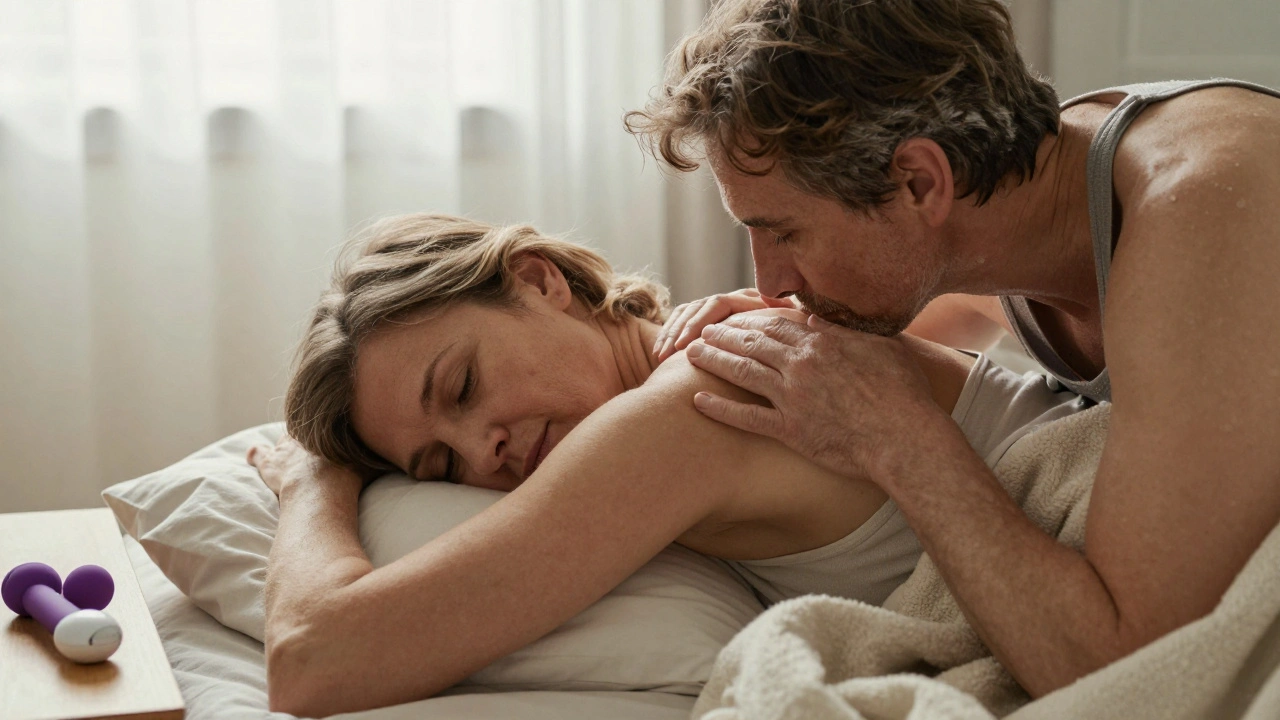
Try this: Schedule intimacy. Not sex. Just touch. A 10-minute massage. Holding hands while watching TV. Skin-to-skin contact without pressure. It rebuilds connection. And often, desire follows.
Pleasure Isn’t About Penetration
Many women think sex means intercourse. But after menopause, that’s not the only-or even the best-way to feel pleasure.
Clitoral stimulation still works. Better than ever, sometimes. The clitoris has more nerve endings than the vagina. And it doesn’t change with hormones. A vibrator, even a quiet one, can help you rediscover what feels good. Try a wand-style vibrator with adjustable intensity. You don’t need to be alone to use it. Partnered sex can include clitoral focus. It’s not a workaround. It’s the upgrade.
And don’t ignore non-penetrative options. Oral sex, mutual touching, sensual massage, even just kissing for 20 minutes without rushing to the next step. These aren’t second-best. They’re rich, full, and deeply satisfying.
Communication Is the Missing Ingredient
Most women don’t talk about this. Not with partners. Not with doctors. Not even with close friends.
But here’s the truth: if your partner doesn’t know what’s changed, they can’t adapt. They might think you’re pulling away. Or worse-they might think it’s their fault.
Start simple. Say: “I’ve noticed sex feels different lately. I still want to be close. I just need a little help making it comfortable.” That’s enough. You don’t need a lecture. You need honesty.
And if your partner shuts down? That’s a red flag. Not about your body. About their willingness to grow with you.
When to See a Specialist
You don’t need to suffer. If lubricants and moisturizers don’t help after 6-8 weeks, it’s time to see a women’s health provider who specializes in sexual medicine. Not every gynecologist does this. Look for someone who mentions “menopause and sexuality” on their website or in their bio.
There are also pelvic floor physical therapists who specialize in post-menopausal discomfort. They help with muscle tension, scar tissue, and nerve sensitivity. It sounds odd, but it’s one of the most effective treatments for pain during sex. And it’s non-hormonal.
Don’t wait until it’s unbearable. Early intervention means faster relief.
It’s Not Over. It’s Redefined
Menopause doesn’t end your sex life. It changes its shape. What felt automatic before might now need attention. And that’s okay. You’re not losing something. You’re gaining awareness.
Many women in their 60s and 70s say this is the most satisfying time for sex. No pregnancy worries. No pressure to perform. Just honesty, curiosity, and the freedom to explore what feels good now.
One woman I spoke to in Portland told me: “I didn’t know I could still feel pleasure like this. I thought menopause meant the end of good sex. Turns out, it was just the beginning of better sex.”
Your body has changed. But your right to pleasure hasn’t.
Is it normal to lose interest in sex after menopause?
Yes, it’s common-but not inevitable. Hormonal shifts, stress, fatigue, and relationship dynamics all play a role. Some women feel less desire. Others feel more. What matters isn’t the number-it’s whether you feel okay with how you feel. If low desire is causing distress, talk to a provider. There are options, from lifestyle tweaks to targeted therapies.
Can vaginal dryness be reversed?
Not fully, but it can be managed very effectively. Vaginal moisturizers used 2-3 times a week restore hydration over time. Low-dose vaginal estrogen (cream, ring, or tablet) rebuilds tissue health and can reduce dryness by 80% or more. Lubricants help during sex. Together, these tools make sex comfortable again. It takes consistency, not magic.
Do I need to stop using estrogen if I’ve had breast cancer?
Systemic estrogen (pills, patches) is usually avoided after estrogen-positive breast cancer. But vaginal estrogen? It’s different. Only a tiny amount enters the bloodstream. Studies, including one from the North American Menopause Society, show it’s safe for most women with a history of breast cancer. Always talk to your oncologist first-but don’t assume it’s off-limits.
Can I still enjoy sex without a partner?
Absolutely. Pleasure doesn’t require a partner. Masturbation helps maintain blood flow to the genitals, keeps tissue flexible, and reminds your body what feels good. Vibrators, especially ones designed for clitoral stimulation, can be very effective. Many women find solo exploration helps them communicate their needs better with partners later on.
How long does it take for vaginal estrogen to work?
Most women notice improvement in 2-4 weeks. Full tissue restoration takes 6-12 weeks. The ring lasts 3 months. Creams are used daily for 2 weeks, then 2-3 times a week. Consistency matters more than intensity. Even using it once a week after improvement can keep things comfortable long-term.