Meditation for Women Beginners: A Five-Minute Start Guide
 Feb, 22 2026
Feeling overwhelmed? You’re not alone. Many women wake up with a to-do list longer than their day, juggle work, family, and personal responsibilities, and wonder when they’ll ever get a moment to breathe. What if you could reset your mind in just five minutes? No special equipment. No need to sit cross-legged on the floor. Just you, your breath, and a quiet corner.
Why Five Minutes Is Enough
You don’t need to meditate for an hour to feel the difference. Studies from the University of California, Los Angeles show that even short daily sessions can lower cortisol levels - the body’s main stress hormone - within two weeks. For women, who often carry emotional labor on top of physical demands, five minutes isn’t just a shortcut. It’s a lifeline.
Think of it like charging your phone. You don’t wait until it’s dead before plugging it in. Same with your mind. Five minutes of stillness every morning or before bed keeps your nervous system from running on empty.
What Meditation Actually Feels Like (Spoiler: It’s Not Blank Mind)
A lot of people quit meditation because they think they’re doing it wrong. They sit down, close their eyes, and immediately think: “Why is my brain so loud? I’m failing.” But here’s the truth: your mind is supposed to wander. That’s not failure - that’s the practice.
Meditation isn’t about stopping thoughts. It’s about noticing them without getting tangled up. Imagine you’re sitting by a river. Thoughts float by like leaves. You don’t jump in and chase them. You just watch. Then gently bring your attention back to your breath. That’s it.
Your Five-Minute Starter Routine
Here’s a simple, no-fluff method designed for women with packed schedules. Do this anytime - morning, lunch break, or right before sleep.
- Find your spot. Sit in a chair, lie on your bed, or even stand by the sink. No need to change clothes or light candles. Just get comfortable.
- Set a timer. Five minutes. Use your phone, but put it face down so you’re not tempted to check it.
- Close your eyes or soften your gaze. If closing them feels too intense, look at a blank wall.
- Focus on your breath. Don’t force it. Just notice the air moving in through your nose and out through your mouth. Feel the rise and fall of your chest or belly.
- When your mind drifts - and it will - gently return. You might think about your kid’s school project, your boss’s email, or what’s for dinner. That’s fine. Say to yourself, “Not now,” and come back to your breath. Each time you return, you’re strengthening your focus muscle.
That’s it. Five minutes. No chanting. No mantras. No apps needed.
Common Mistakes (And How to Avoid Them)
Most women who try meditation give up because they hit these roadblocks:
- “I don’t have time.” Try attaching meditation to something you already do - brushing your teeth, waiting for coffee to brew, or sitting in the car before pulling out of the driveway. Five minutes fits anywhere.
- “I get restless.” Move. Shift your weight. Stretch your fingers. Then return. Meditation doesn’t require perfect stillness. It requires gentle return.
- “I feel worse.” Sometimes, when you slow down, emotions you’ve been ignoring surface. That’s normal. Don’t fight it. Just breathe through it. This isn’t about fixing feelings - it’s about creating space around them.
Why This Works for Women
Women’s bodies and brains are wired differently - not better or worse, just different. Hormonal shifts, caregiving roles, and societal pressures create a unique kind of mental fatigue. Meditation doesn’t fix your life. It gives you a place to stand while everything else spins.
Research from the Journal of Women’s Health found that women who practiced daily mindfulness for just 10 minutes a day reported better sleep, fewer panic attacks, and improved emotional regulation within four weeks. You don’t need 10 minutes. Start with five. Build from there.
What Happens After You Stick With It
After a week, you might notice small shifts:
- You pause before snapping at your partner.
- You notice when you’re holding your breath during a Zoom call.
- You catch yourself thinking, “I’m not enough,” and laugh a little.
These aren’t big changes. But they’re real. And they add up.
By month two, you might find yourself choosing a walk over scrolling. Or saying “no” to an extra commitment without guilt. That’s the quiet power of consistent micro-moments of stillness.

Tools That Actually Help (No App Required)
You don’t need a subscription to Calm or Headspace. But if you want a little guidance, try this:
- Use your phone’s timer - it’s free and distraction-free.
- Try a free five-minute guided session on YouTube (search “five-minute meditation for women”).
- Put on one song you love and breathe with it. When the song ends, you’re done.
Some women like to hold a smooth stone or wear a simple bracelet as a tactile reminder. That’s fine. But don’t turn meditation into another thing to buy.
When to Skip It (And When Not To)
There are days when you’re too tired, too angry, too overwhelmed to sit still. That’s okay. On those days, try this instead:
- Stand still for one minute. Feel your feet on the floor.
- Take three slow breaths before answering a text.
- Notice one thing you can see, hear, and feel right now.
That’s still meditation. It’s just shorter. And sometimes, that’s all you can handle.
Final Thought: You Deserve This
Women are taught to give - to others, to work, to family, to society. But who gives to you? Your mind does. Your breath does. Your body does. Five minutes a day is your way of saying: I matter too.
You don’t need to be calm to start. You just need to show up. Even for five minutes. Even if you’re tired. Even if you think it won’t work. Just try it tomorrow. Right after you brush your teeth. Or before you turn off the light.
It’s not about becoming a better meditator. It’s about becoming a better version of yourself - one quiet breath at a time.
Can I meditate while doing chores?
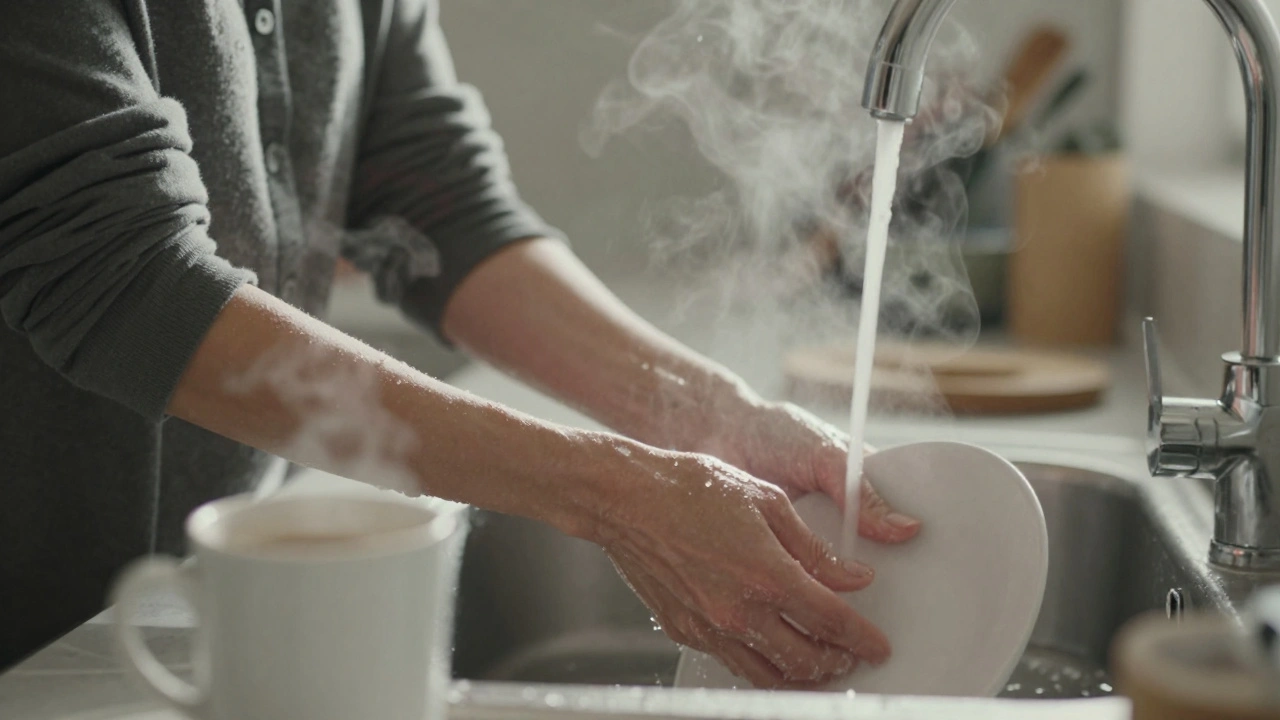
Yes. Mindfulness isn’t limited to sitting still. Washing dishes, folding laundry, or walking the dog can all become meditation if you focus fully on the sensations - the temperature of the water, the texture of the fabric, the rhythm of your steps. The goal isn’t to stop doing, but to be fully present while doing.
What if I fall asleep during meditation?
If you’re exhausted, falling asleep is your body’s way of asking for rest. That’s not failure - it’s feedback. Try meditating while sitting upright, or right after waking up instead of before bed. If sleep keeps happening, prioritize rest. Meditation can wait until you’re more alert.
Do I need to breathe through my nose?
No. Breathe however feels natural. If your nose is stuffy, breathe through your mouth. If your chest feels tight, let your belly rise and fall. The point isn’t to control your breath - it’s to notice it. Any breath counts.
How long until I feel the benefits?
Some women notice a calmer reaction to stress within three days. Others take two weeks. It depends on your baseline stress level and consistency. Don’t wait for a big change. Look for small ones - like pausing before reacting, or noticing when you’re tense. Those are the early wins.
Is meditation spiritual or religious?
It can be, but it doesn’t have to be. This five-minute method is purely about training attention and calming the nervous system. No beliefs, no rituals, no chanting. It’s science-backed, secular, and designed for anyone - whether you’re spiritual, skeptical, or somewhere in between.