Meditation for Complete Beginners: A Practical Start Guide for Women
 Aug, 28 2026
You don't need a silent mountain cabin or an hour of free time to start meditating. In fact, trying to do both is exactly why most people quit after three days. If you're a woman looking to add mindfulness meditation to your routine but feel overwhelmed by the complexity of it all, this guide strips away the mystique and gives you a realistic, step-by-step path to begin.
The goal here isn't to empty your mind-it's impossible anyway. The goal is to train your attention so that when life gets loud (and it will), you have a pause button. For many women, this pause is the difference between reacting to a stressful email with anger and responding with clarity. Let's break down how to actually make this happen without adding another source of guilt to your plate.
Why Mindfulness Meditation Works for Women
Mindfulness meditation is a mental training practice where you focus on the present moment without judgment. It’s not a religion, nor is it a magic pill. It’s a cognitive skill, much like learning to play the piano or lift weights. Your brain has a default mode network that constantly ruminates on past regrets or future anxieties. Meditation strengthens the prefrontal cortex, which helps regulate those thoughts.
For women specifically, research suggests that mindfulness can help manage symptoms related to hormonal fluctuations, such as PMS irritability or perimenopausal anxiety. It also aids in emotional regulation, which is crucial if you’re balancing caregiving roles, career demands, and personal health. You aren’t just relaxing; you’re rewiring neural pathways to handle stress more efficiently.
- Stress Reduction: Lowers cortisol levels, helping with sleep and energy.
- Emotional Balance: Creates a gap between stimulus and response.
- Focus Improvement: Enhances concentration during work or parenting tasks.
Setting Up Your First Session: The 5-Minute Rule
The biggest mistake beginners make is aiming too high. Don’t try to sit for 20 minutes on day one. Aim for five. That’s it. Five minutes is enough to build the habit without feeling like a chore. Consistency beats duration every single time.
- Choose a Time: Pick a time you are least likely to be interrupted. Morning before coffee works well because your mind is fresh. Evening after dinner can help wind down.
- Find a Spot: You don’t need a yoga mat or a candle. A sturdy chair is perfect. Sit upright but relaxed. Feet flat on the floor. Hands resting on your lap.
- Set a Timer: Use your phone or a kitchen timer. Set it for 5 minutes. This frees your mind from wondering "how long has been?"
- Start Breathing: Close your eyes or lower your gaze. Take a deep breath in through your nose, hold for two seconds, and exhale slowly through your mouth. Do this three times to settle in.
Once the timer starts, simply observe your breath. Feel the air entering your nostrils. Feel your chest rise and fall. That’s it. No counting, no visualization required yet. Just watching the breath.
Dealing with the Noisy Mind
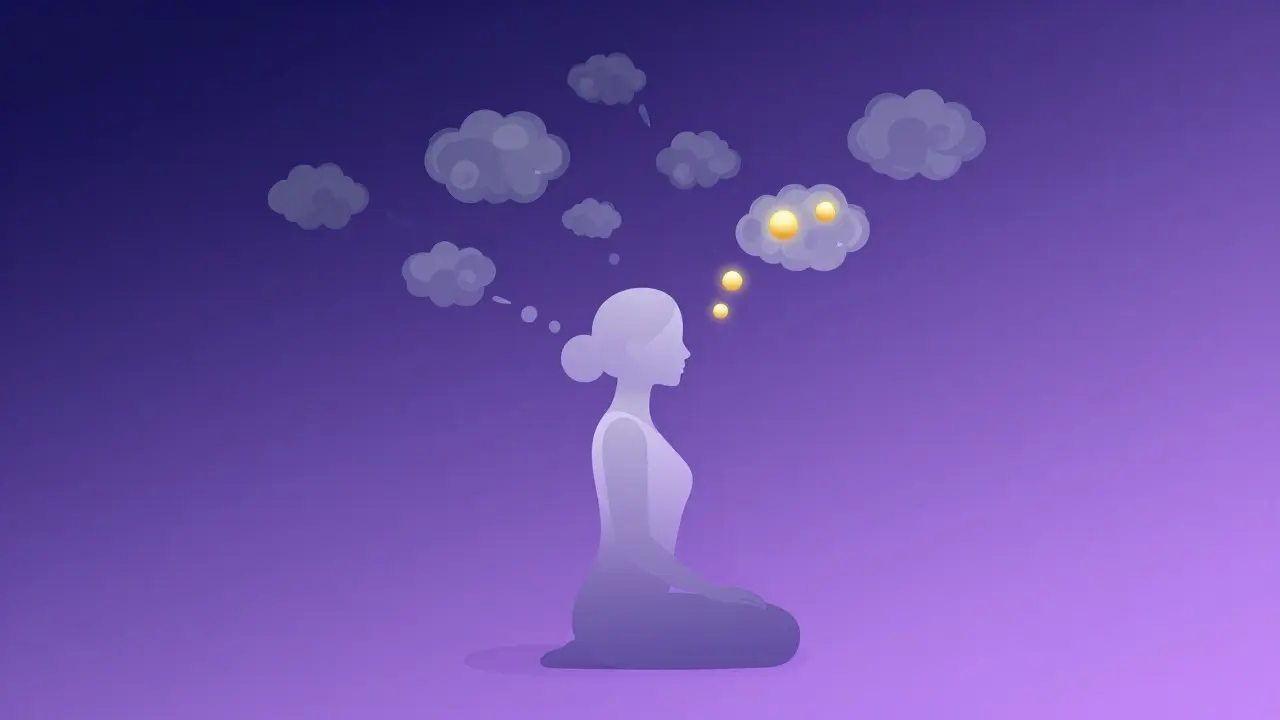
Here’s the truth: your mind will wander. Within ten seconds, you’ll be thinking about laundry, a conversation from yesterday, or what’s for lunch. This is not failure. This is the exercise.
Think of meditation like bicep curls. Every time you notice your mind has wandered and gently bring it back to the breath, that’s one rep. The more reps you do, the stronger your attention muscle becomes. Don’t judge yourself for wandering. Just note it-"thinking"-and return to the breath.
| Challenge | What It Feels Like | Practical Solution |
|---|---|---|
| Racing Thoughts | Can't stop analyzing problems | Label the thought (e.g., "planning") and let it go |
| Physical Discomfort | Numb legs, sore back | Use a chair instead of the floor; adjust posture |
| Feeling Bored | Nothing is happening | Remember: boredom is part of the practice; stay with it |
| Inconsistency | Skipped days lead to quitting | Link meditation to an existing habit (e.g., after brushing teeth) |
Simple Techniques to Try This Week
Once you’ve mastered the basic breath awareness, you can experiment with other simple techniques. These are all beginner-friendly and require no special equipment.
1. Body Scan
Lie down or sit comfortably. Bring your attention to your toes. Notice any sensations-tingling, warmth, tension. Slowly move up to your feet, ankles, calves, knees, and so on until you reach the top of your head. This takes about 10-15 minutes but can be shortened to 5 minutes by focusing only on the lower body. It’s excellent for releasing physical tension accumulated during the day.
2. Loving-Kindness (Metta)
This technique focuses on cultivating compassion. Sit quietly and repeat these phrases silently to yourself:
- May I be happy.
- May I be healthy.
- May I be safe.
- May I live with ease.
3. Walking Meditation
If sitting still feels impossible, walk. Choose a straight path in your home or park. Walk slowly. Focus on the sensation of lifting, moving, and placing each foot. When you reach the end of the path, pause, turn around, and walk back. Keep your attention on the movement of your legs and feet. This is great for high-energy days when sitting feels like torture.
Building a Sustainable Habit
Willpower is a limited resource. Relying on it to meditate every day is a recipe for burnout. Instead, use behavioral design principles.
Habit Stacking: Attach your new meditation habit to an existing one. For example, "After I pour my morning coffee, I will meditate for 5 minutes." The coffee acts as the cue. The meditation is the routine. The feeling of calm is the reward.
Track Your Progress: Use a calendar. Mark an X for every day you meditate. Don’t break the chain. Even if you only do 1 minute, mark the X. The visual progress motivates you to keep going.
Be Kind to Yourself: Some days you won’t want to meditate. That’s okay. Missed a day? Don’t spiral into guilt. Just resume the next day. Perfection is the enemy of progress.

Tools and Resources for Beginners
You don’t need expensive apps or courses, but having guidance can help in the beginning. Here are some accessible options:
- Free Apps: Insight Timer offers thousands of free guided meditations. Look for ones labeled "Beginner" or "5 Minutes."
- YouTube Channels: Search for "guided meditation for beginners." Many teachers offer short, clear instructions.
- Books: "Wherever You Go, There You Are" by Jon Kabat-Zinn is a classic introduction to mindfulness for busy people.
However, the best tool is your own consistency. After a few weeks, you may find you don’t need external guidance anymore. Your internal voice becomes your teacher.
When to Expect Results
Don’t wait for enlightenment. You might not feel "different" after the first week. That’s normal. Benefits often accumulate subtly. You might notice you’re less reactive to minor annoyances, or you sleep slightly better. These small shifts are real progress.
Studies show that significant changes in brain structure and stress response can occur after 8 weeks of consistent daily practice. So, give it at least two months before judging its effectiveness. Treat it like a gym membership-you don’t see abs after one workout, but you will after a consistent regimen.
Frequently Asked Questions
Do I need to sit cross-legged to meditate?
No. While cross-legged sitting is traditional, it’s not required. You can sit in a chair, lie down, or even stand. The key is maintaining an alert but relaxed posture. If your legs fall asleep, switch to a chair immediately.
How long should I meditate as a beginner?
Start with 5 minutes. This is short enough to fit into any schedule but long enough to establish the habit. Once 5 minutes feels easy, gradually increase to 10, then 15. Never force yourself to sit longer than feels comfortable.
What if my mind doesn't quiet down?
That’s expected. Meditation isn’t about stopping thoughts; it’s about changing your relationship with them. When thoughts arise, acknowledge them and return to your anchor (usually the breath). Each return is a successful repetition of the practice.
Is mindfulness meditation different from other types?
Yes. Mindfulness focuses on non-judgmental awareness of the present moment. Other types, like transcendental meditation, use mantras, while loving-kindness focuses on emotion. Mindfulness is generally secular and evidence-based, making it accessible to anyone regardless of belief system.
Can I meditate while working or driving?
Formal meditation usually requires a dedicated time slot. However, informal mindfulness can be practiced anywhere. For example, pay full attention to the taste of your food while eating, or focus on the sensation of walking while commuting. This integrates mindfulness into daily life without needing extra time.