Meal Planning for Women: A Simple System That Actually Works
 Aug, 17 2026
It’s 5:30 PM on a Tuesday. You’re exhausted from work, your brain is foggy, and the question “What do I want for dinner?” feels heavier than it should. Sound familiar? For many women, meal planning is a structured approach to deciding what to eat in advance to reduce daily decision fatigue and ensure nutritional balance. It isn’t about spending four hours chopping vegetables or living out of Tupperware. It’s about creating a rhythm that fits your life, not one that dictates it.
The reality is that women often juggle more invisible labor than men-managing schedules, household logistics, and emotional support. Adding complex dietary restrictions or rigid macro tracking to that mix usually leads to burnout within two weeks. The goal here isn’t perfection; it’s consistency with low friction. If you can stick to a system for three months, it works. If you quit after three days because it felt like a second job, it didn’t.
Why Standard Advice Fails Most Women
Most generic advice tells you to "eat more greens" or "track your calories." While true, it ignores the biological and social context. Women experience hormonal fluctuations that affect appetite and energy levels throughout the month. What works during your follicular phase might feel draining during your luteal phase. Furthermore, social expectations around food are different. We are often the default planners for family dinners, friend gatherings, and holidays. This means our meal plans need to be flexible enough to absorb these external demands without collapsing.
A common pitfall is the "all-or-nothing" mindset. If you miss one planned meal, the whole week feels ruined. Instead, think of your plan as a skeleton, not a cage. The structure provides safety, but the details can shift based on how you feel that day. This mental shift reduces the stress associated with nutritional adherence is the degree to which an individual follows their intended dietary pattern over time.
The 3-Step Framework for Low-Effort Planning
You don’t need a spreadsheet or a color-coded app. You need a simple loop that takes no more than 15 minutes on Sunday evening. Here is the framework that balances nutrition with minimal effort.
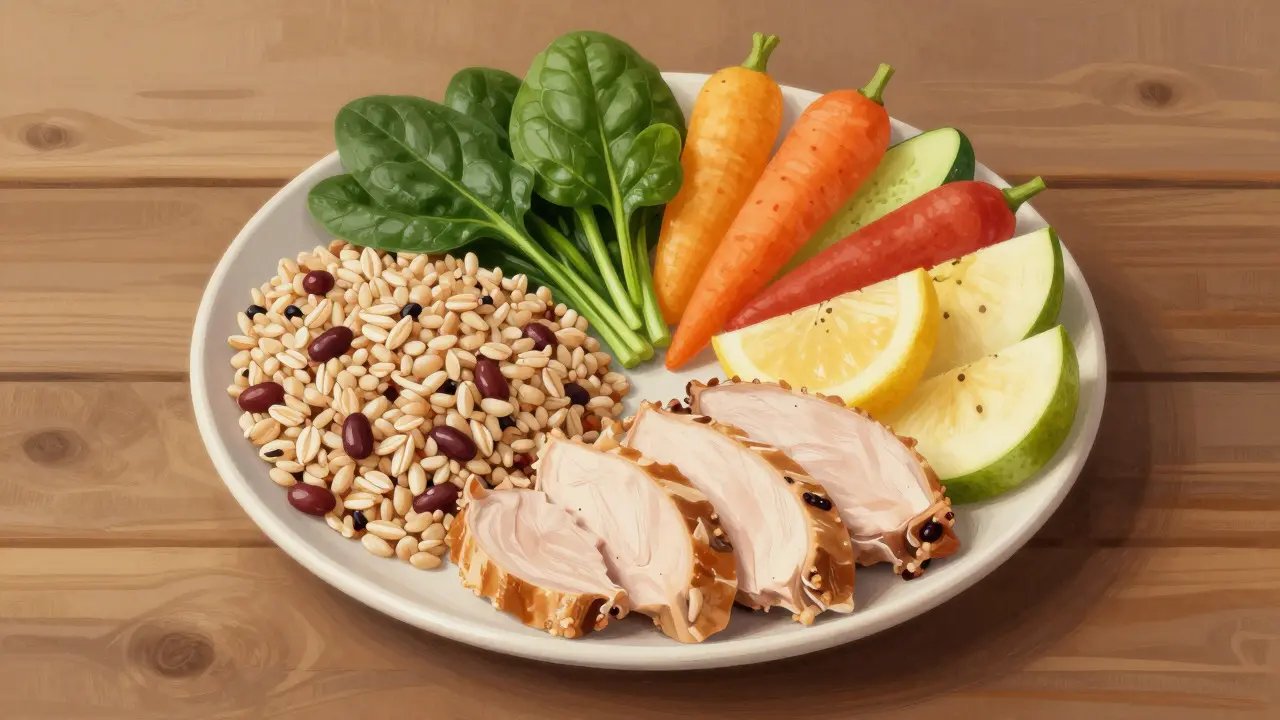
- Choose Your Anchors: Pick two staple meals that repeat weekly. These are your "anchors." They should be easy to make, cheap, and filling. Examples include a large grain bowl with protein or a slow-cooker soup. Because they repeat, you buy the same ingredients every week, simplifying shopping.
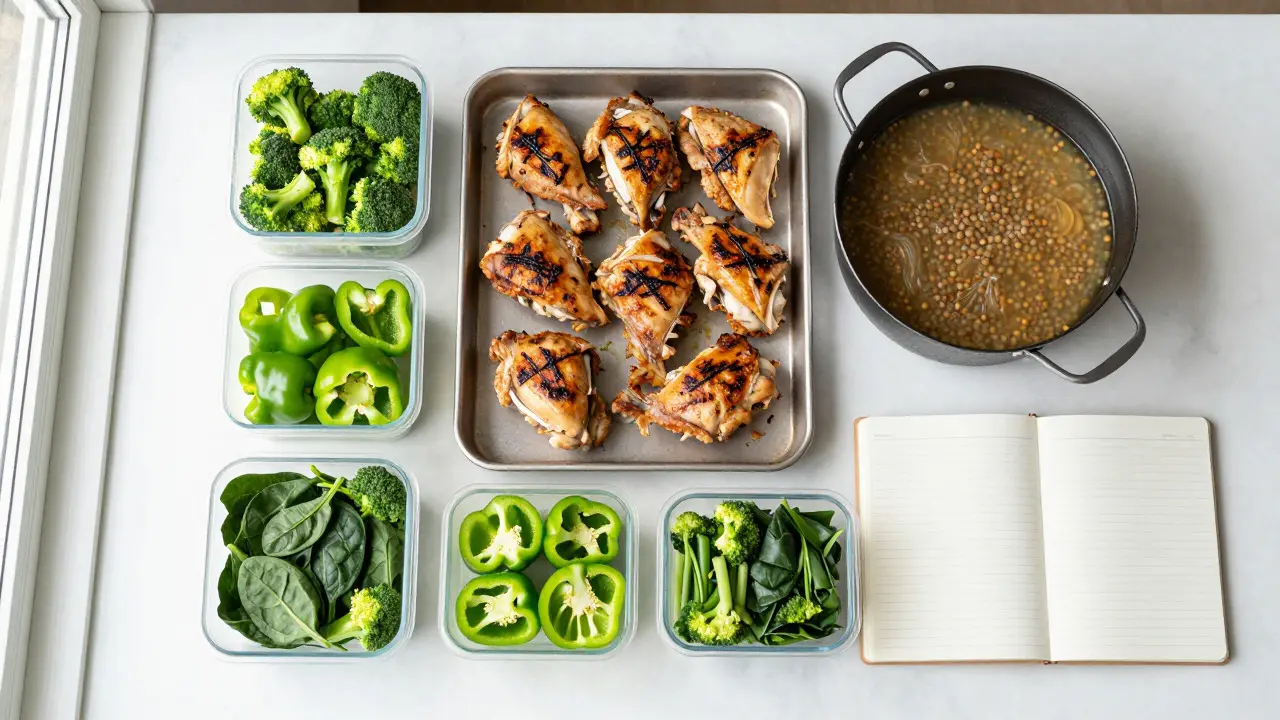
- Batch One Protein Source: Cook one versatile protein source in bulk. Chicken thighs, ground turkey, or white beans are great options. Roast a tray of chicken or simmer a pot of beans. This protein can be used in salads, wraps, stir-fries, or added to soups throughout the week. This single action eliminates five separate cooking tasks.
- Assign Three "Wildcard" Nights: Leave three nights open for variety or leftovers. On these nights, you can use up fresh produce before it spoils, try a new recipe, or simply order takeout without guilt. This prevents the monotony that causes people to abandon their plans.
This structure ensures you have a base (anchors), a flexible middle (batched protein), and room for spontaneity (wildcards). It respects your time while keeping nutrition consistent.
Nutrition Specifics for Women’s Health
When building your anchors and batches, focus on nutrients that directly impact women’s health markers. You don’t need to count macros, but you should be mindful of specific components.
- Iron-Rich Foods: Menstruation leads to iron loss. Include spinach, lentils, red meat, or fortified cereals in your weekly rotation. Pairing these with Vitamin C sources (like lemon juice or bell peppers) significantly boosts absorption.
- Fiber for Hormonal Balance: Fiber helps regulate estrogen levels and supports gut health. Aim for at least 25 grams daily. Oats, chia seeds, broccoli, and legumes are easy additions to your batched meals.
- Calcium and Magnesium: Bone density is a long-term concern. Dairy, leafy greens, almonds, and dark chocolate provide these minerals. Ensure at least one serving of calcium-rich food appears in your anchor meals.
By focusing on these three pillars, you address the most common deficiencies reported in women’s health studies without needing a dietitian for every snack choice. This approach aligns with guidelines from the Dietary Guidelines for Americans is a set of recommendations issued by the U.S. Department of Agriculture and the Department of Health and Human Services to promote health through food choices., which emphasize variety and nutrient density over restriction.
Shopping Strategies That Save Time and Money
Planning fails when shopping becomes a chore. To streamline this, adopt a "Zone-Based" grocery list. Organize your store visit by aisle, not by recipe. This prevents you from wandering back and forth across the store.
| Approach | Time Commitment | Flexibility | Best For |
|---|---|---|---|
| Rigid Macro Tracking | High (30+ mins/day) | Low | Bodybuilders, athletes |
| App-Based Generators | Medium (15 mins/week) | Medium | Tech-savvy users |
| Anchor & Batch System | Low (15 mins/week) | High | Busy professionals, parents |
Stick to a list derived from your Anchor Meals and Batched Protein. Buy only what you need for those specific items plus a few wildcard ingredients. Avoid impulse buys by never shopping hungry. If you have a local farmers market, consider buying seasonal produce there once a month to keep things interesting without increasing weekly frequency.
Handling Life’s Interruptions
Life happens. Travel, sick kids, unexpected overtime-these disrupt even the best plans. The key is having a "Plan B" ready. Keep a freezer stocked with frozen vegetables, canned fish, or pre-cooked grains. These items require zero prep and can turn a chaotic night into a decent meal in under ten minutes.
If you miss a planned meal, don’t spiral. Just resume the next day. Consistency matters more than perfection. A study published in the Journal of the Academy of Nutrition and Dietetics found that individuals who viewed dietary slips as temporary setbacks rather than failures were more likely to maintain long-term healthy eating patterns. Your mindset is part of the system.
Tools and Resources to Simplify Execution
You don’t need expensive gadgets, but a few basic tools help. A good knife keeps prep fast. A slow cooker or Instant Pot saves active cooking time. Digital notes or a simple paper notebook in your kitchen fridge hold your weekly plan. Some women prefer apps like Paprika or PlateJoy for visual inspiration, but if you find yourself spending more time organizing the app than cooking, ditch it. The tool should serve you, not the other way around.
Consider involving others. If you live with a partner or children, assign them small roles. Let them choose the wildcard recipe or handle the grocery pickup. Shared responsibility reduces the burden on any single person and makes the process less isolating.
Building Long-Term Habits
Start small. Try the Anchor & Batch system for just two weeks. Evaluate what worked and what didn’t. Did you have too much leftover protein? Adjust the quantity. Did the anchors get boring? Swap one out for a new staple. Iteration is better than perfection. Over time, this system becomes automatic. You stop thinking about what to eat and start enjoying the act of cooking and sharing food again.
Remember, the goal is to reclaim your energy and time. When you aren’t constantly making high-stakes decisions about food, you free up mental space for the things that truly matter to you. Whether that’s reading, exercising, or just resting, a simple meal planning system paves the way.
How much time does meal planning actually take?
With the Anchor & Batch system, planning takes about 15 minutes per week. Cooking adds roughly 45-60 minutes on Sunday, but this time is reduced during the week since you are mostly assembling pre-prepped components rather than cooking from scratch.
Is meal planning suitable for picky eaters?
Yes. The system allows you to choose anchors that you already love. Since you control the staples, you avoid forcing new foods on yourself until you are comfortable. Wildcard nights provide space to experiment gradually if desired.
What should I do if I run out of my batched protein mid-week?
Keep a backup source of protein in the pantry, such as canned beans, eggs, or tofu. These shelf-stable items can substitute seamlessly in most dishes. Alternatively, use the remaining nights for vegetarian meals using vegetables and grains.
Does meal planning help with weight management?
Indirectly, yes. By removing the decision fatigue of "what to eat," you are less likely to reach for convenient but calorie-dense processed snacks. Portion control is also easier when you prepare meals in advance, though the primary benefit is consistency and reduced stress.
Can I meal plan if I have a busy schedule with little downtime?
Absolutely. The system is designed for busy lives. Using appliances like slow cookers or pressure cookers minimizes active standing time. You can set timers and walk away, making it compatible with working parents or professionals with packed calendars.