Lean Startup Guide for Female Founders: Building on a Budget
 Apr, 12 2026
Most people think you need a massive bank account or a Silicon Valley connection to launch a company. They picture a fancy office and a seed round of five million dollars just to get a prototype off the ground. But here is the truth: spending a fortune before you have a single paying customer is the fastest way to fail. For women entering the startup world-especially those balancing family, side hustles, or tight budgets-the goal shouldn't be to build a perfect product, but to learn what people actually want without going broke.
Key Takeaways for Fast Growth
- Stop guessing and start testing with a Minimum Viable Product (MVP).
- Use the Build-Measure-Learn loop to pivot based on real data, not intuition.
- Focus on "validated learning" to avoid wasting time on features nobody uses.
- Bootstrap your tools using low-cost or free software to keep overhead low.
The Core Engine: Build-Measure-Learn
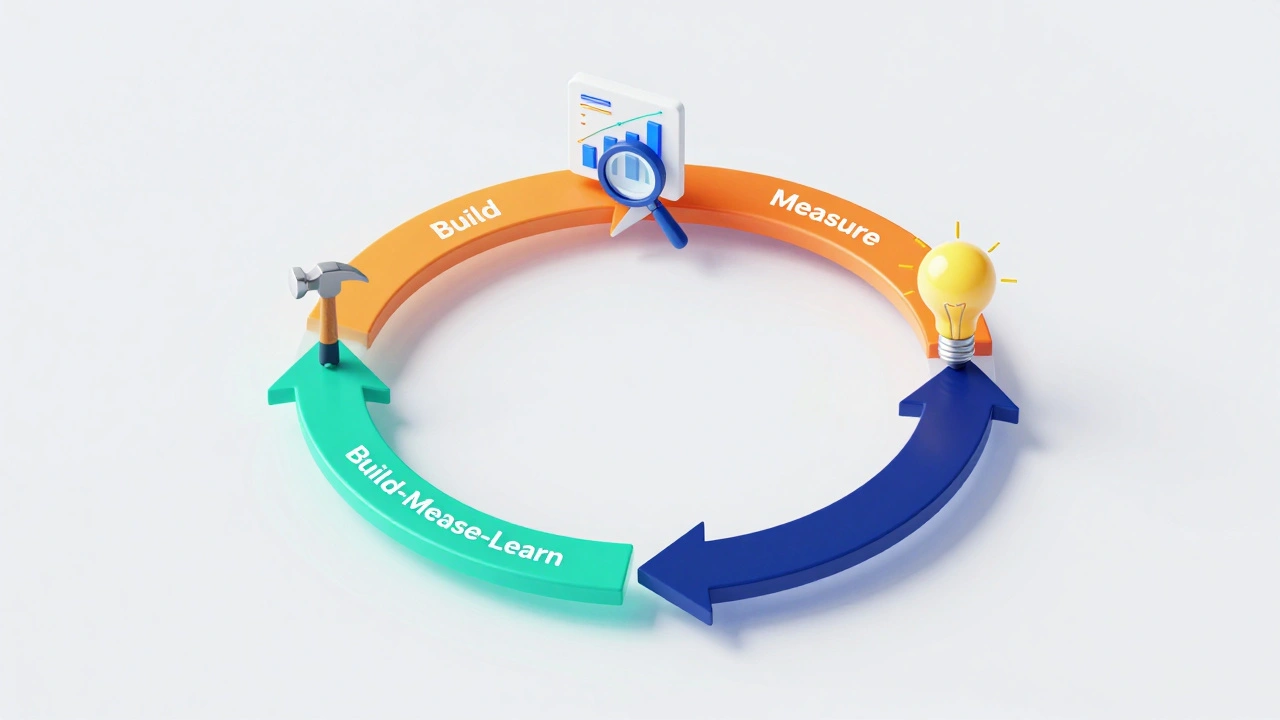
At its heart, the Lean Startup is a methodology for developing businesses and products that aims to shorten product development cycles and rapidly discover if a proposed business model is viable. It moves away from the traditional business plan-which is basically a giant set of guesses-and replaces it with a scientific loop: Build, Measure, and Learn.
Imagine you want to start a subscription box for organic baby clothes. Instead of ordering 5,000 units of inventory and spending $10k on a professional website, you start by building a simple landing page. This is the Build phase. You aren't building the whole company; you're building a test. You run a few targeted ads to see if parents actually click the "Subscribe" button. That's the Measure phase. If 10% of visitors sign up, you've learned something. If 0% do, you've just saved yourself thousands of dollars and months of wasted effort. This is the Learn phase.
For female founders, this approach is a superpower. It levels the playing field by prioritizing agility and intelligence over raw capital. When you don't have a huge budget, your speed of learning becomes your primary competitive advantage.
Creating Your MVP Without Breaking the Bank
The biggest mistake founders make is confusing a Minimum Viable Product (or MVP) with a "cheap' or 'broken' version of their product. An MVP is the smallest version of a product that allows a team to collect the maximum amount of validated learning about customers. It should be functional enough to solve one core problem for one specific type of person.
You don't need a developer to build an MVP in 2026. The No-Code Movement has made it possible to build complex apps using visual interfaces. Instead of hiring an agency for $20,000, you can use tools like Bubble or Softr to create a working version of your idea for less than $50 a month. If you're launching a service, your MVP might just be a Google Form and a manual process where you do the work yourself behind the scenes. This is often called a "Concierge MVP," and it's the cheapest way to see if your value proposition actually hits the mark.
| MVP Type | Cost Level | Best For... | Example Scenario |
|---|---|---|---|
| Smoke Test / Landing Page | Very Low | Validating Demand | Testing if people want a new AI meal planner before building it. |
| Concierge MVP | Low (Time Intensive) | Understanding User Needs | Manually curation of a "personalized gift box" via email before automating. |
| No-Code Prototype | Medium | Testing Functionality | Building a directory of female-led therapists using Airtable and Softr. |
| Single-Feature Product | Medium to High | Proving Technical Value | A budgeting app that only does one thing: tracks daily coffee spend. |
Measuring What Actually Matters
Once you have your MVP in the wild, you need to measure it. But be careful-not all numbers are useful. In the Lean Startup world, we call useless metrics "Vanity Metrics." A vanity metric is something like total registered users or social media followers. These look great on a slide deck, but they don't tell you if your business is actually working.
Instead, focus on Actionable Metrics. These are data points that link specific actions to a result. For example, instead of looking at how many people visited your site, look at the conversion rate from the landing page to a sign-up. If you're building a software tool, look at the "Churn Rate"-how many people stop using the app after day one? If people are signing up but leaving immediately, your product isn't solving the problem, no matter how many followers you have on Instagram.
A great rule of thumb is to pick one "North Star Metric." This is the single most important number that indicates your customers are getting value. If you're running a tutoring platform, your North Star might be "completed lesson hours." If that number goes up, your business is growing. If it stays flat, you need to change your approach.
The Pivot: Knowing When to Change Direction
The most stressful part of the Build-Measure-Learn cycle is the realization that your original idea might be wrong. This is where the "Pivot" comes in. A pivot isn't a failure; it's a strategic correction based on data.
There are several types of pivots you might encounter. You might find that a small feature of your product is actually what people love, leading to a "Zoom-in Pivot," where that one feature becomes the entire product. Or you might realize your product is great, but you're targeting the wrong people, leading to a "Customer Segment Pivot." For instance, you might have built a productivity tool for corporate executives, but find that freelance designers are the only ones actually paying for it.
Don't get emotionally attached to your first version. The goal isn't to be right about your first guess; the goal is to find the right answer as cheaply as possible. If the data tells you to change direction, do it quickly. The faster you pivot, the less money you waste.
Bootstrapping Your Tech Stack
Building on a budget means being ruthless with your spending. You don't need the "Enterprise" plan for anything in the early stages. Most software companies offer generous free tiers for startups. Use them.
For communication, Slack and Discord have free versions that handle small teams perfectly. For project management, Trello or Notion allow you to organize your roadmap without spending a dime. When it comes to marketing, don't start with paid ads. Use "unscalable" methods first. Reach out to people individually on LinkedIn, post in niche Facebook groups, or host a free webinar. This gives you a direct line to your customers and provides qualitative feedback that a Google Analytics dashboard simply cannot give you.

Avoiding Common Pitfalls
One of the most common traps for female founders is the "perfectionism trap." There is often a social pressure to present a polished, professional image to be taken seriously in male-dominated spaces. This leads to spending too much time on the logo, the brand colors, and the "perfect" website before ever talking to a customer. Remember: a beautiful website that nobody wants is just an expensive piece of art.
Another mistake is ignoring the "Early Adopters." Your first 10 customers aren't your average users; they are people who have a problem so painful that they are willing to use a clunky, imperfect product just to get a solution. These people are your most valuable resource. Talk to them every single week. Ask them what they hate about your product. Their complaints are actually a roadmap for your next set of features.
How do I know when my MVP is "enough"?
Your MVP is enough when it can test your core hypothesis. If your hypothesis is "People will pay for a weekly curated list of sustainable fashion," your MVP is a manual email list. You don't need an app, a login system, or a payment gateway to test that. Once you have people paying you via PayPal or Venmo for that list, you've validated the demand, and you can then invest in building a more scalable system.
What if I don't have any technical skills?
You don't need to be a coder to be a founder. Use no-code tools like Glide or Adalo to build apps, or Shopify for e-commerce. If you need something more complex, look for a technical co-founder who shares your vision. However, it's much easier to attract a high-quality co-founder if you can show them a working MVP and a list of interested customers, rather than just a slide deck.
Is bootstrapping always better than taking funding?
Not always, but it's a great way to start. Bootstrapping gives you 100% control and forces you to be disciplined with your spending. Funding is a tool for scaling something that already works. If you take money too early, you might spend it on scaling a product that hasn't been validated yet, which leads to a much more expensive type of failure.
How often should I pivot?
There is no set schedule, but you should evaluate your data every few weeks. If you've run three different tests and the results consistently show that customers aren't engaging with your primary feature, it's time to pivot. Don't pivot based on one bad interview, but do pivot when the aggregate data proves your current path is a dead end.
How can I find my first 10 customers on a budget?
Go where your customers already hang out. Join Reddit communities, Slack groups, or specialized forums. Don't spam your link; instead, answer questions and provide value. When someone mentions a problem your product solves, send them a direct message: "I'm actually building a small tool to solve exactly that, would you be open to trying it for free in exchange for some feedback?" Most people love being part of an early-stage project.
Next Steps for Your Journey
If you're just starting today, don't try to map out the next three years. Instead, focus on the next two weeks. Your goal should be to get your first piece of "validated learning." Create a simple landing page, send it to 50 people who fit your target customer profile, and see what happens.
If you're already in the build phase, audit your spending. Are you paying for software you don't use? Are you spending hours on a logo that doesn't help you get users? Cut the fat and put that energy into talking to your customers. The most successful founders aren't the ones with the best ideas, but the ones who can iterate the fastest.