K-Beauty vs. J-Beauty vs. Western Skincare: What Women Should Know
 Nov, 15 2026
You’re standing in the aisle of a drugstore or scrolling through Sephora’s website, staring at three different bottles promising "glass skin," "barrier repair," and "clinical results." It feels like you need a chemistry degree just to pick a moisturizer. Are the ten-step Korean routines actually necessary? Is Japanese minimalism better for sensitive skin? Or should you just stick to what dermatologists recommend in the US?
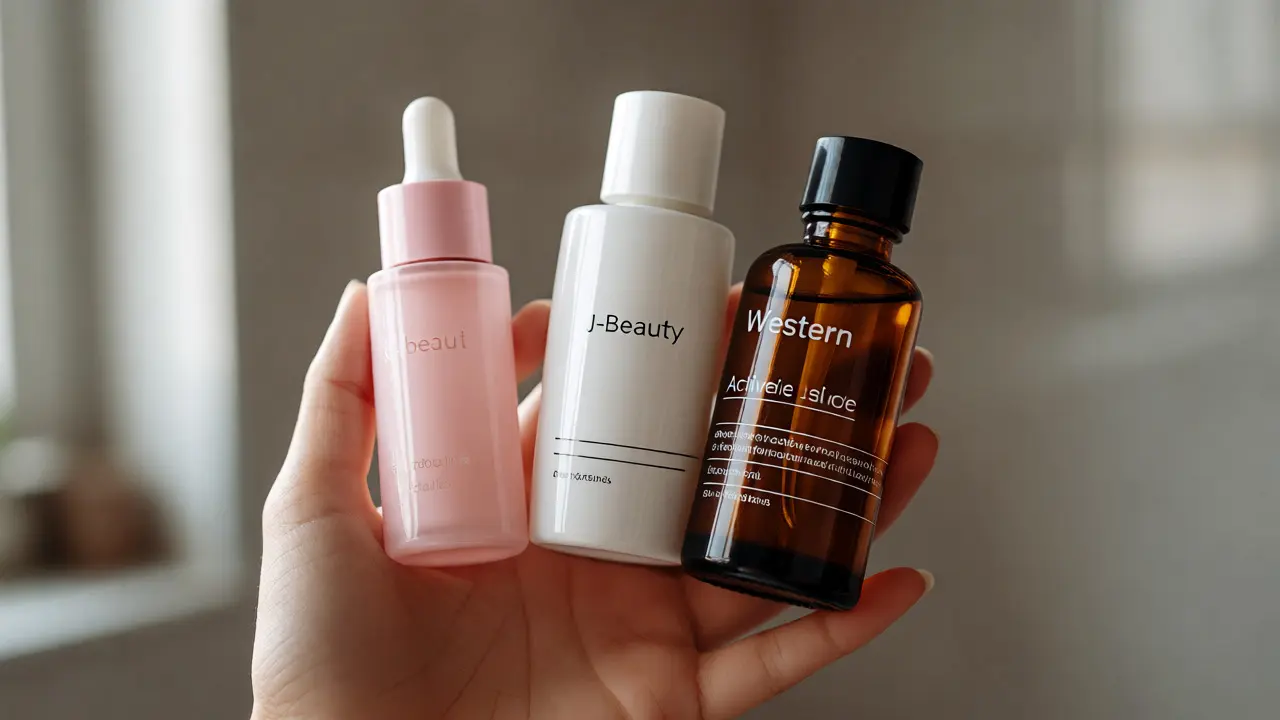
Here is the truth: there is no single "best" system. Each approach reflects a specific cultural philosophy about health, aging, and self-care. Choosing the wrong one isn’t just a waste of money; it can lead to irritation if your skin type clashes with the method. This guide breaks down the core differences between K-Beauty, a skincare philosophy originating from South Korea that emphasizes hydration, gentle exfoliation, and multi-step layering, J-Beauty, Japanese skincare focused on simplicity, prevention, and high-quality ingredients, and Western Skincare, the dominant market approach prioritizing active ingredients, clinical efficacy, and quick fixes. We’ll help you decide which fits your life, your budget, and your skin barrier.
Key Takeaways
- Philosophy: K-Beauty focuses on hydration and prevention through layering; J-Beauty values minimalism and long-term maintenance; Western skincare targets specific problems with potent actives.
- Routine Length: Expect 10+ steps for traditional K-Beauty, 3-5 for J-Beauty, and 3-4 for Western routines.
- Skin Type Fit: Dry or dehydrated skin often thrives with K-Beauty; sensitive or reactive skin may prefer J-Beauty; acne-prone or pigmented skin often responds well to Western actives.
- Cost Structure: K-Beauty has low entry costs but high volume needs; Western brands charge more per unit but require fewer products.
The Core Philosophies: Hydration vs. Prevention vs. Correction
To understand why these routines look so different, you have to look at what each culture considers "good skin." In the West, good skin is often defined by what is absent: no wrinkles, no spots, no redness. It’s corrective. If you have a pimple, you treat it. If you have dark circles, you cover them or use a serum. The goal is efficiency and visible change.
In contrast, K-Beauty views skin as a living ecosystem that needs constant nourishment. The ideal isn't just "clear" skin; it's "glass skin"-translucent, dewy, and deeply hydrated. The belief here is that most skin issues stem from dehydration. Therefore, the solution is water, not harsh chemicals. You don’t fix a problem; you prevent it by keeping the barrier plump and strong.
J-Beauty sits somewhere in the middle but leans heavily into prevention and respect for the skin’s natural state. Influenced by Zen principles, Japanese skincare avoids excess. The idea is that less is more. If you strip your skin with too many products, you damage its ability to heal itself. J-Beauty trusts the skin to do its job if you provide it with high-quality, gentle support. It’s about longevity and maintaining what you have rather than chasing perfection.
Breaking Down the Routines: Step-by-Step Differences
The biggest shock for most people switching systems is the number of steps. Let’s look at how a typical evening routine differs across the three regions.
| Feature | K-Beauty Routine | J-Beauty Routine | Western Routine |
|---|---|---|---|
| Cleansing | Double cleanse (Oil + Foam) | Single cleanse (Cream/Oil) or Double if heavy makeup | Single cleanse (Gel/Foam) |
| Toner/Essence | Hydrating Toner + Essence (multiple layers) | Lotion (watery texture, applied with hands) | Astringent or Treatment Toner |
| Treatment | Ampoules/Serums (targeted hydration) | Essence/Serum (minimalist) | Active Serums (Retinol, Vitamin C, Acids) |
| Eye Care | Dedicated Eye Cream (often early step) | Often skipped or combined with moisturizer | Dedicated Eye Cream |
| Moisturizer | Lightweight Gel-Cream or Emulsion | Milk or Light Lotion | Heavy Cream or Oil |
| Sleep Mask | Night Mask (optional but common) | Rarely used | Occasional overnight treatment |
Notice the pattern? K-Beauty relies on layering. You apply thin layers of hydrating products, letting each absorb before adding the next. This creates a reservoir of moisture. J-Beauty uses fewer products but emphasizes technique-like pressing lotion into the skin with palms rather than wiping with cotton pads, which reduces friction and irritation. Western routines are streamlined because they rely on higher concentrations of active ingredients that do the heavy lifting quickly.
Ingredient Strategies: Gentle Botanicals vs. Clinical Actives
If you’ve ever looked at an ingredient list for a popular Western serum, you might see terms like "Salicylic Acid," "Glycolic Acid," or "Tretinoin." These are powerful tools. They work by disrupting cell turnover or killing bacteria. But they come with side effects: peeling, redness, and sun sensitivity. Western skincare embraces this trade-off because the results are fast.
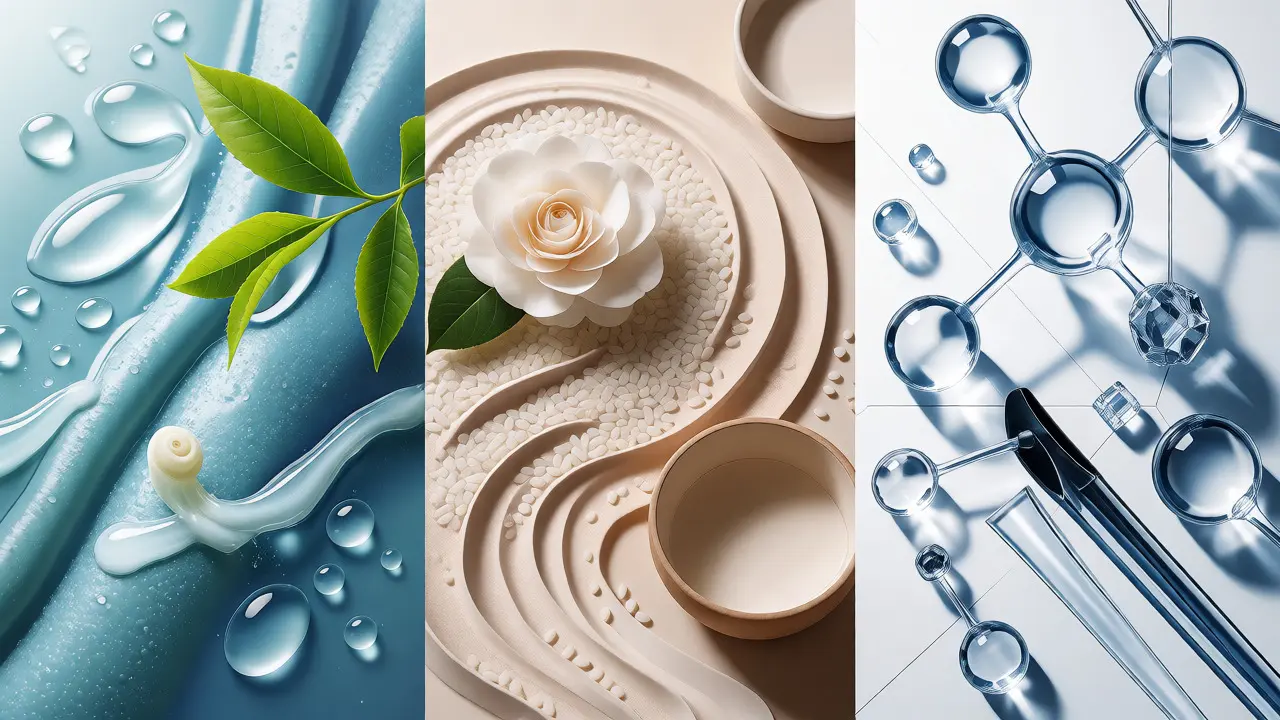
K-Beauty takes a different route. While they do use acids, they often buffer them with soothing agents like centella asiatica (cica), green tea, or snail mucin. The focus is on calming inflammation while treating issues. For example, instead of a harsh benzoyl peroxide spot treatment, a K-beauty user might use a pimple patch infused with tea tree oil and salicylic acid to draw out impurities without drying out the surrounding skin.
J-Beauty ingredients are often sourced locally and emphasize purity. Think rice bran, camellia oil, yuzu, and sake. These aren’t just marketing fluff; they contain antioxidants and fatty acids that support the lipid barrier. Japanese brands also excel in fermentation technology, breaking down ingredients into smaller molecules for better absorption without increasing potency to irritating levels. It’s gentle science.
Who Should Choose Which System?
So, how do you decide? It comes down to your lifestyle, skin concerns, and tolerance for complexity.
Choose K-Beauty If...
- You have dry or dehydrated skin. The layering technique is unmatched for restoring moisture balance.
- You enjoy the ritual. If spending 15 minutes pampering yourself helps you unwind, the multi-step process is a feature, not a bug.
- You want affordable experimentation. Many K-beauty brands offer small sizes or lower price points, allowing you to try new trends without breaking the bank.
- You have dull skin. The emphasis on hydration and gentle exfoliation often leads to that coveted "glow."
Choose J-Beauty If...
- You have sensitive or reactive skin. Fewer products mean fewer potential irritants. The focus on gentle textures respects compromised barriers.
- You value time efficiency. A 3-step routine is easy to maintain when you’re tired or traveling.
- You are anti-wrinkle proactive. J-Beauty is excellent for maintaining healthy skin in your 20s and 30s to prevent aging signs later.
- You dislike sticky residues. Japanese formulations are engineered to absorb completely, leaving no film behind.
Choose Western Skincare If...
- You have specific, stubborn issues. Deep cystic acne, hyperpigmentation, or deep wrinkles often require the potency of clinical-grade actives.
- You prefer straightforward instructions. "Apply serum AM and PM" is easier to follow than "Layer toner three times."
- You trust clinical trials. Western brands often publish peer-reviewed data on their key ingredients, offering transparency on efficacy.
- You have oily or resilient skin. Your skin can likely handle stronger acids and retinoids without becoming irritated.
Can You Mix and Match?
Yes, absolutely. In fact, many dermatologists now recommend a hybrid approach. You don’t have to commit to one philosophy entirely. Here is how women are successfully blending these worlds:
The "K-West" Hybrid: Use a K-beauty double cleanse to ensure your face is truly clean, then switch to a Western active serum (like Retinol) for night-time treatment, followed by a lightweight K-beauty moisturizer to soothe any potential irritation from the retinol. This gives you the cleaning power and the clinical results with the comfort factor.
The "J-West" Minimalist: Stick to the simple J-beauty cleansing and moisturizing steps but incorporate a Western sunscreen. While Asian sunscreens are excellent cosmetically, some Western mineral options offer broader spectrum protection or specific formulations for post-procedure skin.
The key is listening to your skin. If you add a new product and feel tightness or see breakouts, scale back. There is no rulebook that says you must follow a single country’s regimen forever.
Pitfalls to Avoid When Switching Systems
Before you dump your current bathroom cabinet, keep these warnings in mind:
- Don’t buy everything at once. Introduce one new product every two weeks. If you switch your whole routine overnight and break out, you won’t know which product caused it.
- Beware of "Glass Skin" pressure. Chasing extreme dewiness can lead to over-moisturizing, which clogs pores. Sometimes matte is fine.
- Check the expiration dates. Because K-beauty products are often sold in bulk or imported, check freshness. Active ingredients degrade over time.
- Sunscreen is non-negotiable. Whether you use a Western chemical filter or an Asian hybrid formula, UV protection is the one step all three philosophies agree on. Skipping it undoes all your other hard work.
Frequently Asked Questions
Is K-Beauty really better for anti-aging?
Not necessarily "better," but different. K-Beauty focuses on preventing aging by maintaining hydration and elasticity early on. Western skincare often treats existing wrinkles with retinoids and peptides. If you are young, K-Beauty’s preventive approach may be more effective. If you already have deep lines, Western actives might yield faster visible results.
Do I need to do the full 10-step K-Beauty routine?
No. The 10-step routine is a maximum guideline, not a requirement. Most people find success with a modified 5-step version: Double Cleanse, Toner, Serum, Moisturizer, Sunscreen. Tailor the steps to your skin’s actual needs rather than following a rigid count.
Why is J-Beauty considered gentler than Western skincare?
J-Beauty typically avoids high concentrations of exfoliating acids and alcohol-based toners. Instead, it relies on soothing botanicals and fermented ingredients that strengthen the skin barrier. This makes it ideal for those who experience stinging or redness from standard Western products.
Are K-Beauty products safe for sensitive skin?
Generally, yes, but watch out for fragrances and essential oils, which are common in K-beauty formulas. Look for labels like "fragrance-free" or "for sensitive skin." Ingredients like Centella Asiatica and Mugwort are specifically known for calming irritation.
Which system is more cost-effective?
It depends on usage. K-beauty products are often cheaper per unit, but using 10 products adds up. Western products are more expensive upfront but last longer because you use fewer of them. Calculate your monthly spend based on how much product you actually go through to compare true costs.