HSA vs. FSA for Women: Which Healthcare Account Saves You More Money?
 May, 6 2026
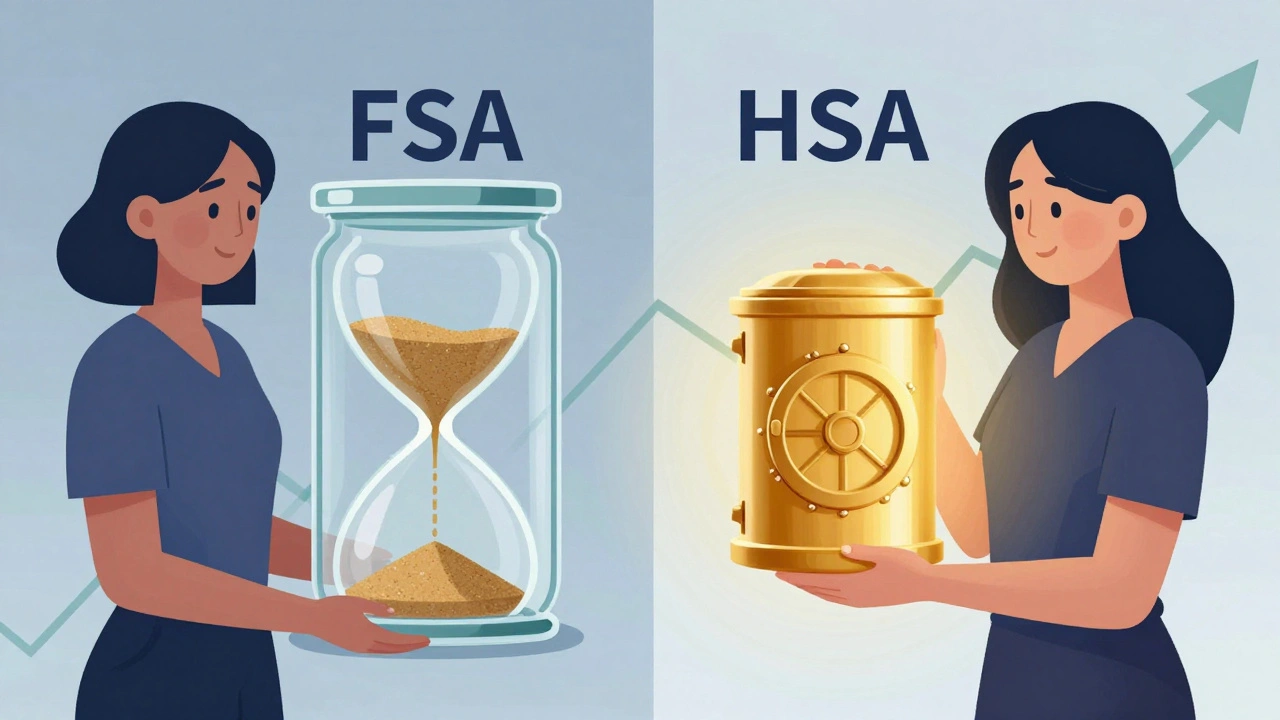
Choosing between a Health Savings Account (HSA) is a tax-advantaged account available to individuals enrolled in a High-Deductible Health Plan (HDHP) that allows pre-tax contributions for medical expenses and a Flexible Spending Account (FSA) isn't just about picking a form at work. For women, the choice often dictates how much you pay out-of-pocket for essential care, from fertility treatments to annual checkups. The wrong pick can leave hundreds of dollars on the table, while the right one acts like a secret savings vault.
You might think these accounts are identical because they both let you spend pre-tax money on doctors' bills. They aren't. One locks your money up with an "use-it-or-lose-it" rule, while the other grows with you over decades. If you're navigating complex healthcare needs-especially those specific to women-the difference between an HSA and an FSA could be the difference between stress and stability.
The Core Difference: Ownership and Flexibility
The biggest distinction lies in who owns the money. With an Flexible Spending Account (FSA), an employer-sponsored account that allows employees to set aside pre-tax dollars for qualified medical expenses, typically subject to a 'use-it-or-lose-it' provision, your employer controls the rules. Most FSAs have a strict deadline. If you don't spend the full amount by the end of the plan year (or within a short grace period), you lose it. This creates a psychological pressure to spend money you've saved, which feels counterintuitive.
In contrast, an HSA is yours. Forever. It works more like a retirement account than a spending allowance. If you don't need the funds this year, they roll over indefinitely. You can invest them in stocks or mutual funds, letting compound interest work in your favor. For women planning for long-term health goals, such as starting a family later in life or managing chronic conditions, this permanence is a game-changer.
| Feature | HSA | FSA |
|---|---|---|
| Eligibility | Must have a High-Deductible Health Plan (HDHP) | Available with most employer plans |
| Rollover | Funds roll over indefinitely | Use-it-or-lose-it (with minor exceptions) |
| Contribution Limit (2026) | $4,350 individual / $8,750 family | $3,350 |
| Tax Benefits | Triple tax advantage (pre-tax contribution, tax-free growth, tax-free withdrawal) | Single tax advantage (pre-tax contribution only) |
| Portability | You keep it if you change jobs | Tied to your employer; lost if you quit |
Women’s Health Costs: Where the Money Goes
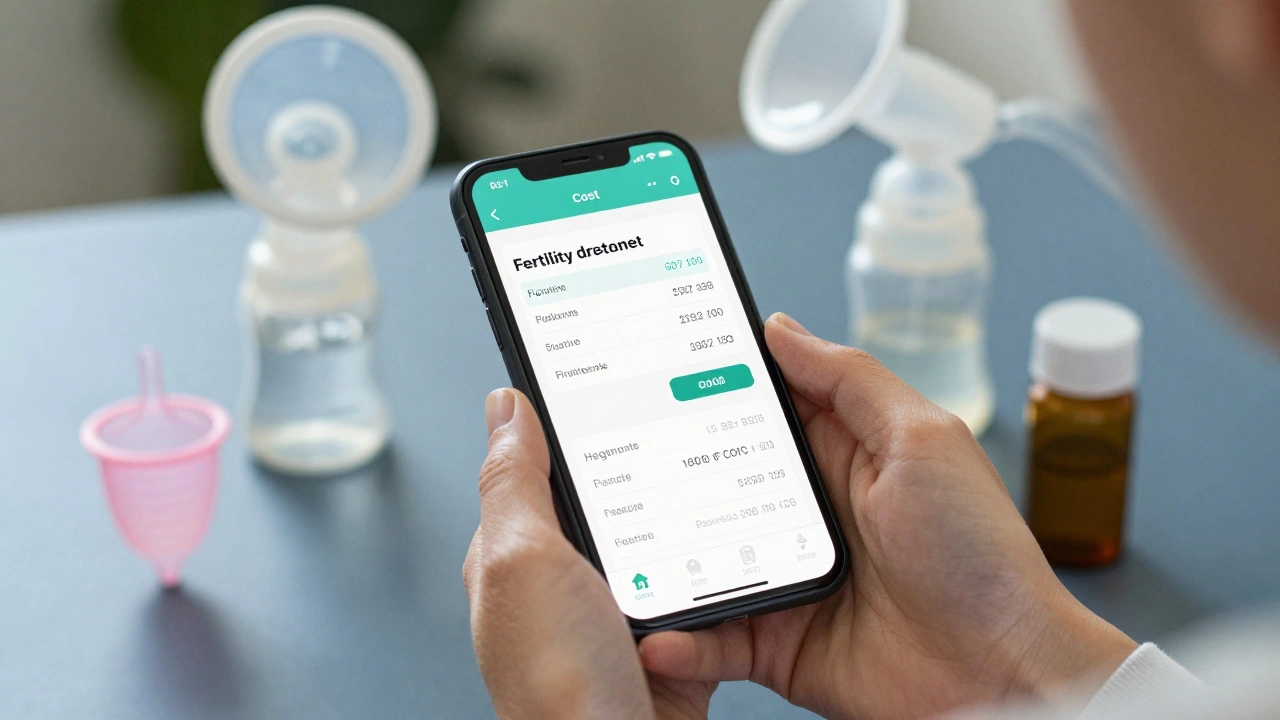
When we talk about healthcare savings, we often think of generic copays. But women’s health expenses are frequently higher and more variable. Consider the cost of fertility treatment, medical procedures including IVF, IUI, and medication aimed at assisting conception, often costing thousands per cycle. A single cycle of IVF can range from $12,000 to $20,000. Insurance rarely covers the full amount. An HSA allows you to save aggressively for this specific goal over several years without penalty. An FSA limits you to what you can predict for the current year, making large, multi-year projects nearly impossible to fund efficiently.
Other common expenses include:
- Menstrual products: Since the passage of federal legislation, tampons, pads, and menstrual cups are now qualified expenses for both HSAs and FSAs. This is a small but consistent saving.
- Pregnancy support: Maternity classes, breastfeeding pumps, and lactation consultant fees are eligible. However, since pregnancy is often planned months in advance, an HSA lets you start saving before the expense hits.
- Mental health: Therapy sessions and psychiatric care are major components of women’s wellness. Both accounts cover these, but the HSA’s investment potential helps offset rising therapy costs over time.
- Dermatology: Treatments for acne, rosacea, or skin cancer screenings are eligible. These are often out-of-pocket expenses not fully covered by insurance.
The Triple Tax Advantage of HSAs
If you qualify for an HSA, it is arguably the most powerful financial tool available to you. Here is why:
- Pre-tax contributions: You contribute money before income taxes are taken out. If you are in the 24% tax bracket, contributing $1,000 to your HSA saves you $240 immediately.
- Tax-free growth: Unlike a regular savings account, any interest or investment gains inside an HSA are never taxed. If you invest your HSA in a low-cost index fund, your money compounds faster than in a taxable brokerage account.
- Tax-free withdrawals: When you use the money for qualified medical expenses, you pay zero capital gains tax and zero income tax on the distribution.
An FSA only offers the first benefit: pre-tax contributions. Once the money is in the account, there is no growth mechanism, and unused funds disappear. For women who expect to live longer than men (statistically adding years to their healthcare needs), the compounding effect of an HSA is invaluable.
When an FSA Might Be Better
Despite the superiority of HSAs in many ways, FSAs still have a place. You should consider an FSA if:
- Your employer contributes: Some companies match FSA contributions or provide a fixed stipend. Free money is free money, even if it comes with strings attached.
- You have predictable, high immediate costs: If you know you will undergo surgery, buy expensive glasses, or get dental work done in the next six months, an FSA guarantees you can access those funds quickly without needing an HDHP.
- You cannot afford an HDHP: HSAs require you to enroll in a High-Deductible Health Plan. These plans have lower monthly premiums but higher out-of-pocket costs when you get sick. If your cash flow is tight and you can’t absorb a $2,000 deductible, an FSA paired with a traditional PPO plan might offer better peace of mind.
Also, remember the "run-out" period. Many employers allow you to submit receipts for expenses incurred during the plan year even after the new year starts, giving you an extra 90 days to spend leftover FSA funds. Just track your receipts meticulously.
Strategic Moves for Maximizing Savings
To get the most out of either account, you need to be strategic. First, understand what counts as a qualified expense. The IRS publishes a list, but it includes surprising items like over-the-counter medications (if prescribed), acupuncture, and even certain home modifications for disabilities.
For HSA users, treat the account as an investment vehicle. Do not leave the money sitting in cash earning 0.5% interest. Once you have enough liquid cash to cover expected medical bills for the year, invest the rest. Many HSA providers offer low-cost index funds. Over 20 years, investing $3,000 annually in an HSA with a 7% return could grow to over $150,000-a substantial buffer for future healthcare costs.
For FSA users, use the "spend down" strategy. At the beginning of the year, purchase durable medical equipment you’ll need eventually, such as a blood pressure monitor, glucose test strips, or ergonomic office chairs. This ensures you don’t lose the funds at year-end.

Navigating Life Changes
Women’s lives often involve significant transitions that impact healthcare needs. Marriage, divorce, having children, and aging parents all change your financial landscape.
If you get married, you may become eligible for a family HDHP, doubling your HSA contribution limit to $8,750 in 2026. This is a massive opportunity to accelerate savings. Conversely, if you switch jobs, your FSA disappears. Your HSA travels with you. This portability makes HSAs particularly resilient during career changes or periods of unemployment.
Consider also the impact of childcare. While dependent care FSAs exist for daycare costs, they are separate from medical FSAs. Don’t confuse the two. Medical FSAs/HSAs handle health; Dependent Care FSAs handle child care. You can use both, but they serve different purposes.
Common Mistakes to Avoid
One of the biggest errors people make is underestimating their healthcare costs. They contribute the minimum to their HSA or FSA and miss out on tax savings. Aim to max out your HSA if possible. Even if you don’t need the money now, the tax break is immediate.
Another mistake is forgetting to keep receipts. For HSAs, you must prove that withdrawals were for qualified medical expenses. If you withdraw money for non-medical reasons before age 65, you face a 20% penalty plus income tax. Keep digital copies of every receipt. Apps like Rocket Money or simple spreadsheet trackers can help.
Finally, don’t ignore the employer match. If your company offers an HSA match, take it. It’s essentially a 100% return on your investment. If they offer an FSA match, calculate whether the guaranteed return outweighs the loss of flexibility.
Can I have both an HSA and an FSA?
Yes, but with restrictions. You can have an HSA and a Limited Purpose FSA. A Limited Purpose FSA only covers dental and vision expenses, allowing you to keep your HSA eligibility for other medical costs. You cannot have a general-purpose FSA and an HSA simultaneously because the FSA would disqualify you from the HDHP requirement.
What happens to my HSA if I retire?
Your HSA remains yours. After age 65, you can withdraw funds for any reason without penalty, though non-medical withdrawals are taxed as ordinary income. Medical withdrawals remain tax-free. Many experts recommend treating the HSA as a second retirement account, paying for current medical bills with post-tax dollars and letting the HSA grow.
Are fertility treatments eligible for HSA/FSA reimbursement?
Yes. IVF, IUI, sperm storage, and related medications are qualified medical expenses. However, surrogacy arrangements may not be eligible unless deemed medically necessary. Always check with your provider and keep detailed documentation from your doctor.
Can I use my HSA to pay for someone else’s medical bills?
Yes. You can reimburse yourself, your spouse, or dependents for qualified medical expenses. This is useful if your spouse has a cheaper plan but higher deductibles, or if you want to help adult children with healthcare costs.
Is there a penalty for withdrawing HSA funds for non-medical expenses?
Before age 65, yes. You pay income tax on the withdrawn amount plus a 20% penalty. After age 65, the penalty disappears, but you still pay income tax on non-medical withdrawals. Medical withdrawals are always tax-free.