How to Find LGBTQ+ Affirming Therapy for Women: A Practical Guide
 Aug, 19 2026
Walking into a therapy office can feel like walking on eggshells. For LGBTQ+ women, the stakes are often higher. You aren't just looking for someone to help with anxiety or grief; you need a professional who won't accidentally invalidate your identity, pathologize your relationships, or make you explain your life story from scratch every session. Finding a therapist who truly affirms your experience is less about luck and more about strategic research.
The good news? The landscape has changed significantly over the last decade. More providers are explicitly marketing their inclusivity, and digital tools have made vetting professionals easier than ever. But "affirming" is a spectrum. Some therapists simply tolerate your identity; others actively understand the specific stressors of being a queer woman in a world that isn't always built for you. This guide breaks down exactly how to identify the difference and find the right fit for your mental health journey.
Understanding What Truly Means 'Affirming'
Before you start scrolling through directories, it helps to define what you’re actually looking for. An affirmative therapist is not just someone who uses your correct pronouns. While that is table stakes, true affirmation involves a deep understanding of minority stress theory. This concept, developed by psychologist Ilan Meyer, suggests that LGBTQ+ individuals face chronic stress due to societal stigma, which impacts mental health outcomes differently than general life stress.
A truly affirming provider recognizes that your challenges might be linked to external factors like family rejection, workplace discrimination, or healthcare bias. They don’t view these as personal failures to be fixed, but as systemic issues to be navigated together. If a therapist asks you to "just get over" past trauma without acknowledging the societal context, they likely lack this depth of training.
- Competence: They know the history of LGBTQ+ rights and the specific legal/social hurdles facing queer women today.
- Cultural Humility: They admit when they don't know something rather than guessing or imposing heteronormative views.
- Active Advocacy: They may stay updated on local policies affecting LGBTQ+ communities, such as bathroom bills or adoption laws.
Where to Start Your Search
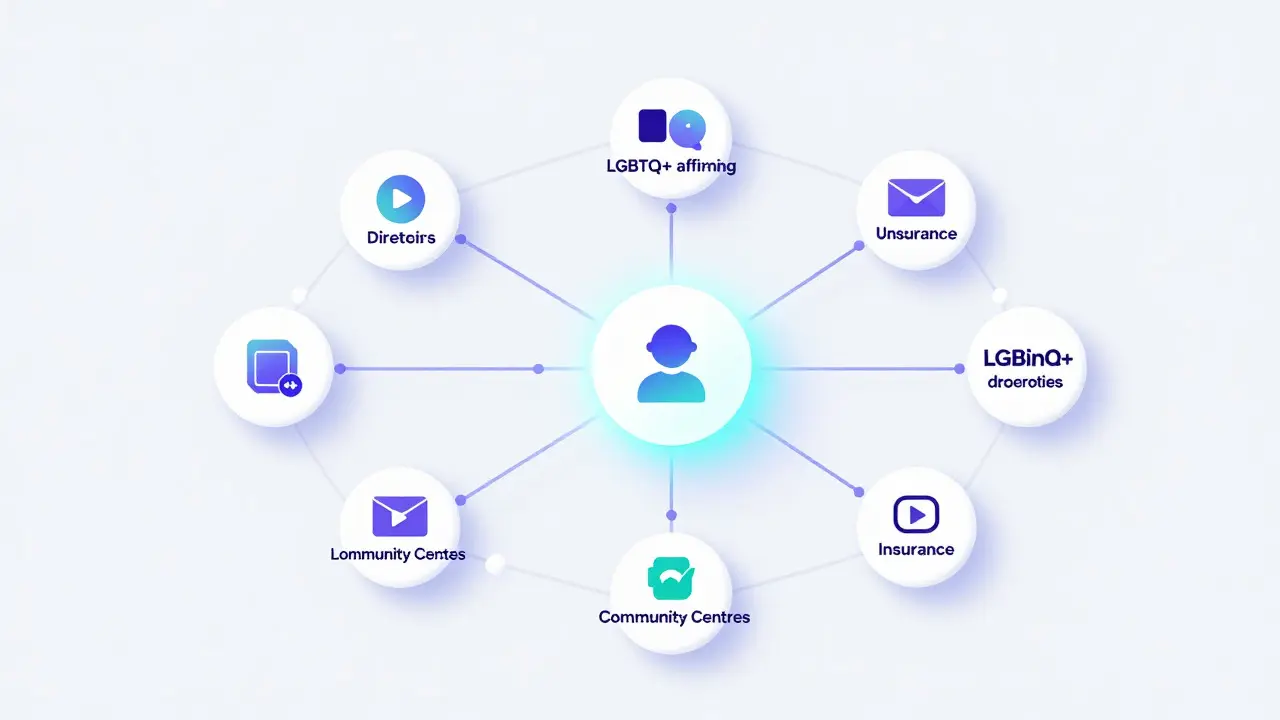
Generic search engines are okay for starting points, but specialized directories yield much better results. Here are the most reliable platforms to begin your hunt:
- Psychology Today: Use the filters for "Orientation" (select Gay/Lesbian/Bi/Trans) and "Gender" (Women). Read the bios carefully. Look for keywords like "queer-affirming," "intersectional," or "minority stress."
- TherapyDen: Similar to Psychology Today but often features more diverse practitioners. It allows you to filter by insurance acceptance, which is crucial if cost is a barrier.
- The Association for Lesbian, Gay, Bisexual, Transgender, and Queer (LGBTQ+) Mental Health: Check their directory of certified counselors. These professionals have undergone specific training in LGBTQ+ issues.
- OpenCounseling.com: Great for sliding scale options if you are currently uninsured or working with a tight budget.
Don’t ignore local community centers. Many cities have LGBTQ+ community centers that maintain lists of recommended therapists. These referrals are often based on peer reviews within the community, offering a level of trust that algorithmic search results rarely provide.
Vetting the Professional: Red Flags and Green Flags
Once you have a shortlist, it’s time to dig deeper. How do you tell if a therapist is genuinely supportive before you pay for a session? Pay attention to their website, social media presence, and bio language.
| Aspect | Green Flag (Affirming) | Red Flag (Caution Needed) |
|---|---|---|
| Bio Language | Uses terms like "queer-inclusive," "non-binary friendly," "intersectional approach." Mentions specific populations served. | Vague language like "open-minded" or "accepting." No mention of LGBTQ+ experience despite listing it as a specialty. |
| Website Content | Features blog posts or articles about LGBTQ+ mental health. Displays rainbow flags or inclusive imagery naturally. | Stock photos only. No content addressing minority stress or queer-specific issues. |
| Insurance/Cost | Transparent about sliding scales or out-of-network reimbursement. Understands the financial disparities in the community. | High fees with no flexibility. Assumes all clients have premium insurance. |
| Initial Contact | Asks about your preferred name/pronouns immediately. Uses them consistently in emails. | Struggles with pronouns or defaults to gendered language despite knowing your status. |
If a therapist’s profile looks promising but feels sterile, consider reaching out via email. Ask a direct question: "Do you have specific training in minority stress or LGBTQ+ affirmative care?" Their response speed and tone will tell you a lot. A hesitant or overly generic reply is a warning sign.
The First Session: Testing the Waters
Many people cancel after the first session because they felt "off" but couldn't pinpoint why. Treat the first appointment as a trial run. You are hiring a partner for your mental health, so interview them as much as they interview you.
Bring a list of questions to ask during this initial consultation. Here are three critical ones:
- "What does your practice look like for queer women specifically?" This forces them to move beyond general statements. Do they talk about relationship dynamics, coming out later in life, or navigating family expectations?
- "How do you handle situations where my identity conflicts with my family or cultural background?" This tests their ability to navigate intersectionality without taking sides prematurely.
- "Can we agree on a feedback loop?" Ask if you can pause the session to say, "That didn't land right." A good therapist welcomes this correction.
Pay attention to non-verbal cues. Do they lean in when you speak? Do they nod when you share vulnerable moments? Or do they seem distracted, checking their phone, or rushing through topics? Chemistry matters in therapy. If you feel judged or rushed, trust that instinct. It is perfectly acceptable to fire a therapist if the dynamic doesn't work.
Navigating Cost and Insurance Barriers
Let’s be real: therapy is expensive. For many LGBTQ+ women, particularly those of color or those without partners with benefits, cost is the biggest hurdle. However, there are ways to make it manageable.
First, check if your employer offers an Employee Assistance Program (EAP). These usually cover 3-5 free sessions per year. It’s not a long-term solution, but it can bridge the gap while you sort out insurance.
Second, ask about sliding scale fees. Most community clinics and independent practitioners offer reduced rates based on income. Don’t assume you have to qualify for "poverty" levels; many scales go up to 150% of the federal poverty line.
Finally, consider group therapy. Many LGBTQ+ centers host support groups led by licensed clinicians. These are significantly cheaper than individual sessions and provide the added benefit of community connection. Being around other queer women dealing with similar issues can be incredibly validating in itself.

Maintaining the Relationship
Finding the right therapist is step one. Keeping them engaged is step two. Communication is key. If you feel misunderstood, say so. If you want to change the focus of your sessions, bring it up. Therapy is a collaborative process, not a prescription you passively receive.
Remember that growth is messy. There will be days when you feel stuck, or when a therapist says something that triggers you. That doesn’t mean they aren’t affirming; it means you are both human. The goal is to find a professional who creates a safe container for that messiness, allowing you to explore your identity and heal at your own pace.
Frequently Asked Questions
How many sessions should I try before deciding if a therapist is right for me?
Most experts suggest giving it 3 to 4 sessions. The first session is often just rapport building. By the third or fourth session, you should have a clear sense of whether the therapeutic alliance is strong enough to do deeper work. If you still feel hesitant after four sessions, it is worth considering a switch.
Is online therapy as effective as in-person for LGBTQ+ women?
Yes, studies show that telehealth is equally effective for many issues, including anxiety, depression, and relationship counseling. For some LGBTQ+ clients, online therapy is actually preferable because it removes the anxiety of entering a physical space that might not feel safe. Plus, it expands your geographic options, allowing you to find a specialist even if they live in another city.
What if I can't afford private therapy?
Look for university psychology clinics where graduate students supervise under licensed professionals. These services are typically very low-cost. Also, check local LGBTQ+ community centers; many offer pro-bono or sliding-scale counseling. Finally, ask your primary care doctor for a referral to community mental health centers in your area.
Should I choose a therapist who identifies as LGBTQ+ themselves?
It is a personal preference. Some clients prefer a therapist who shares their lived experience, feeling understood without having to explain basics. Others prefer an ally who brings an outside perspective. What matters most is competence. A straight therapist with extensive training in minority stress can be excellent, just as a queer therapist without proper training can be problematic. Focus on their skills and approach, not just their identity.
How do I handle a therapist who makes a mistake with my pronouns?
Correct them gently but firmly. Say, "Just a quick note, I'm [Name], she/her." Observe their reaction. A good therapist will thank you, apologize briefly, and continue. A bad therapist will get defensive, over-apologize until you feel awkward, or dismiss the error. Their reaction tells you more about their character than the mistake itself.