Hiring Your First Employee: A Calm, Compliant Checklist for Women Entrepreneurs
 Jan, 12 2026
You’ve built something real. Your side hustle turned into a full-time business. Sales are steady. Customers keep coming back. But now, you’re drowning in work. You’re answering emails at midnight, skipping lunch to pack orders, and saying "yes" to every request just to keep up. It’s time to hire your first employee. And yes, it’s scary. But it doesn’t have to be overwhelming.
Hiring your first person isn’t just about finding someone to help. It’s about building a team. It’s about protecting your business. And for women entrepreneurs, it’s also about doing it right-without the noise, the jargon, or the fear of getting sued. This checklist cuts through the clutter. No fluff. Just what you need to know, step by step, in plain language.
Step 1: Ask Yourself Why You’re Hiring
Don’t hire because you’re tired. Don’t hire because your friend did. Hire because there’s a task that’s holding your business back.
What are you doing that no one else can do? Maybe it’s client calls, bookkeeping, or social media. Maybe it’s shipping orders or managing inventory. Write down every task you do in a week. Circle the ones that are repetitive, time-consuming, or outside your strengths. Those are the jobs you can delegate.
Example: Sarah ran a handmade soap business. She spent 12 hours a week packaging orders. She hired a part-time assistant for $15/hour. That freed up 8 hours for her to develop new products and pitch to local stores. Her revenue jumped 40% in three months.
Step 2: Decide What Kind of Help You Need
You have two main choices: an employee or an independent contractor.
Employee: You control when, where, and how they work. They use your tools. You set their schedule. You pay them regularly. They get benefits like workers’ comp and unemployment insurance. This is the safest, most stable option for long-term support.
Contractor: They run their own business. You pay them per project. You don’t control their hours. You don’t withhold taxes. They handle their own insurance. This works for one-off tasks like graphic design or website updates.
For your first hire, go with an employee. It’s simpler. It’s more reliable. And it builds trust. Contractors are great, but they’re not team members. You’re building a business-not outsourcing chores.
Step 3: Know the Legal Stuff (No Lawyer Needed)
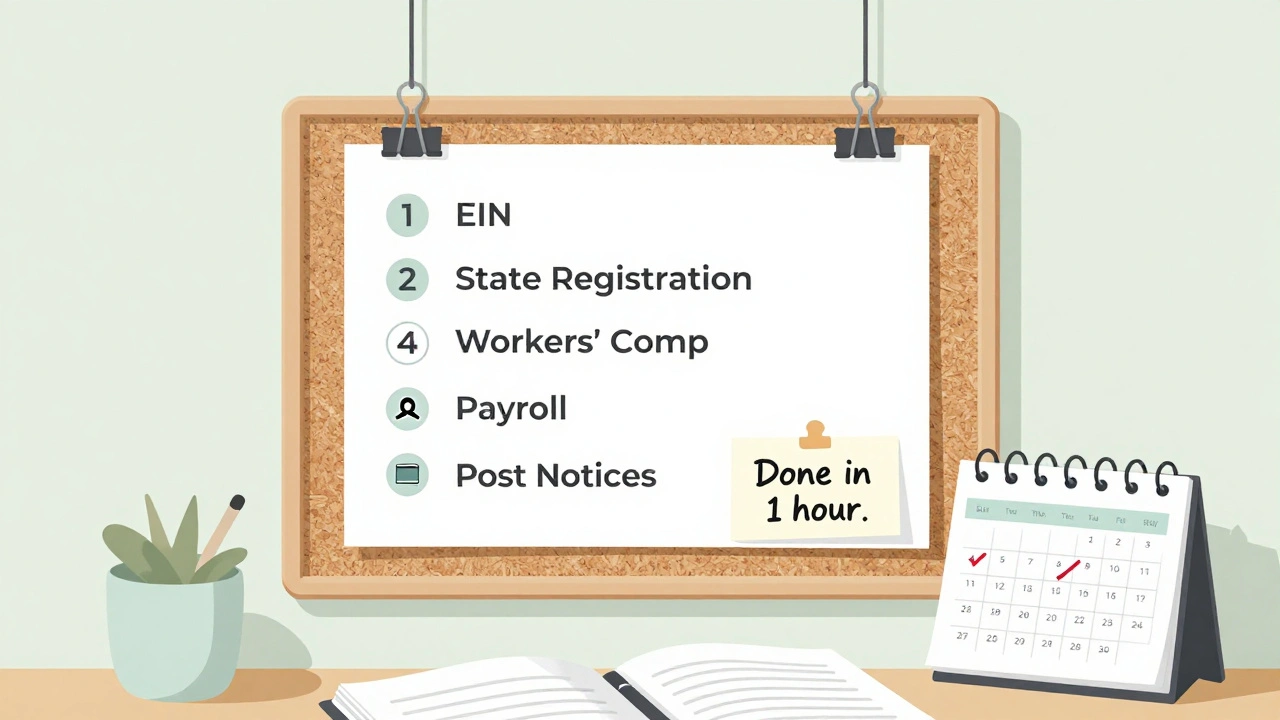
You don’t need a law degree to hire legally. But you do need to do these five things.
- Get an EIN-It’s free. Go to irs.gov and apply for an Employer Identification Number. This is your business’s Social Security number for tax purposes.
- Register with your state-Every state requires you to register as an employer. In Oregon, that’s through the Oregon Department of Labor. It takes 10 minutes online.
- Get workers’ compensation insurance-Mandatory in Oregon. Rates start at $1.50 per $100 in payroll. Shop around. Use ODL’s provider list. Don’t skip this. One injury can cost you thousands.
- Set up payroll-Use a service like Gusto, QuickBooks Payroll, or ADP. They handle taxes, direct deposits, and filings. Costs $40/month. Worth every penny.
- Post required notices-You must display posters about wage rights, workers’ comp, and unemployment. Download them for free from the U.S. Department of Labor website.
That’s it. No contracts, no attorneys, no panic. Just five clear steps.
Step 4: Write a Real Job Description
Stop writing vague postings like "Looking for a hardworking team player!"
Instead, write:
- Job title: Part-Time Order Fulfillment Assistant
- Hours: 20 hours per week, Monday-Friday, 9 AM-1 PM
- What you’ll do: Pack and ship 50+ orders weekly, label packages, update inventory in spreadsheet, answer basic customer emails
- What you need: Reliable transportation, attention to detail, basic computer skills
- What you’ll get: $17/hour, paid time off after 90 days, flexible scheduling
Be specific. People want clarity. You want the right fit. This cuts your interview time in half.
Step 5: Hire with Confidence-Not Panic
Interviews don’t need to be intimidating. Ask three questions:
- "What’s one task you’ve done that you’re proud of?"-This shows initiative and pride in work.
- "What would you do if you saw a mistake in our shipping process?"-Tests problem-solving and initiative.
- "What do you need to feel supported in this role?"-Reveals communication style and values.
Don’t ask about family, religion, or future plans. Those are illegal. Focus on the job. Trust your gut. If someone seems nervous, that’s okay. If they seem dishonest, walk away.
One woman in Portland hired her first employee after a 20-minute interview. She asked the candidate to pack a box on the spot. The person did it perfectly, double-checked the label, and asked, "Do you need me to update the spreadsheet?" That’s the kind of person you want.

Step 6: Onboard with Care
Day one shouldn’t be chaos.
- Give them a simple binder or digital folder: company values, contact list, step-by-step instructions for daily tasks.
- Walk them through the payroll system. Show them how to clock in.
- Let them shadow you for one day. Then let them try it alone with you nearby.
- Set a 30-day check-in. Ask: "What’s working? What’s confusing?"
Don’t assume they know how your business works. You’ve been doing this for years. They’re new. Be patient. Be clear. Be kind.
Step 7: Protect Your Sanity
Hiring changes everything. You’ll feel guilty. You’ll worry you’re not doing enough. You’ll second-guess every decision.
Here’s what to remember:
- Your business isn’t failing because you hired someone. It’s growing.
- They’re not here to replace you. They’re here to help you become the leader your business needs.
- You don’t have to be perfect. You just have to be consistent.
- It’s okay to make mistakes. You’ll learn. They’ll learn.
One woman in Eugene hired her first employee and cried the first week. She felt guilty for "making someone else work." Then she realized: she was finally sleeping through the night. She was designing new products. She was happy. That’s the point.
What Comes Next?
After your first hire, you’ll start thinking about the next one. Maybe a second part-timer. Maybe a virtual assistant. Maybe someone to handle marketing.
But don’t rush. Build one solid relationship first. Get the systems right. Pay on time. Communicate clearly. Treat them like the partner they are.
Your business isn’t just about money anymore. It’s about people. And that’s what makes it real.
Do I need to offer health insurance when I hire my first employee?
No. Under federal law, businesses with fewer than 50 full-time employees aren’t required to offer health insurance. But offering it-even a basic plan-can make you stand out. Many small business owners use platforms like Zenefits or SimplyInsured to offer affordable group plans starting at $50/month per person. It’s not mandatory, but it’s a powerful way to show you care.
Can I hire someone part-time and still pay them fairly?
Absolutely. In Oregon, the minimum wage is $14.20/hour (as of 2026) in most areas. Paying above minimum wage-even just $16 or $17/hour-can reduce turnover and attract better candidates. Part-time doesn’t mean cheap. It means flexible. Pay fairly, and you’ll get loyalty, not just labor.
What if I hire someone and they don’t work out?
It happens. If someone isn’t a fit, you can let them go-but you must do it legally. In Oregon, employment is "at-will," meaning you can terminate for any reason, as long as it’s not discriminatory (based on race, gender, religion, etc.). Document performance issues. Give feedback. Have a clear conversation. Don’t wait until you’re angry. Handle it with respect. It protects you and preserves your reputation.
Should I use a job board or hire someone I know?
Both work. Job boards like Indeed or LinkedIn are great for reaching strangers. But hiring someone you know-through a friend, local community group, or women’s business network-often leads to better cultural fit. Many women entrepreneurs find their first hire through local Facebook groups or chambers of commerce. Don’t overlook your network. It’s often more reliable than a resume.
How do I know if I’m ready to hire?
You’re ready if you’ve been working more than 50 hours a week for three months straight, if you’re missing deadlines because you’re overwhelmed, or if you’re turning down opportunities because you don’t have time. If your business is growing but you’re stuck in the weeds, it’s time. You don’t need to be profitable yet-you just need to be sustainable. Hiring isn’t a luxury. It’s a strategy.