Female Traveler Safety: Situational Awareness and Smart Tools
 Aug, 17 2026
Walking down a busy street in Bangkok or navigating the metro in Paris, you might feel a subtle shift in your posture. You’re not just observing the architecture; you’re scanning for exits, checking who’s behind you, and keeping your phone close. This is situational awareness, and for many women traveling alone, it’s less of a hobby and more of a survival skill. It’s the difference between feeling vulnerable and feeling in control.
Safety isn’t about paranoia. It’s about preparation. By combining sharp observational habits with the right digital and physical tools, you can significantly reduce risk without sacrificing the joy of exploration. Here’s how to build that safety net, layer by layer.
The Core of Situational Awareness: The 360-Degree Scan
Situational Awareness is the ability to perceive environmental elements, understand their meaning, and project their future status. In travel terms, this means constantly updating your mental map of where you are and who is around you. Most people operate on autopilot, focusing only on their immediate destination. A safety-conscious traveler operates on a wider bandwidth.
Think of your field of vision as a camera lens. When you’re relaxed, your lens is wide-angle. When you’re stressed or distracted, it narrows to tunnel vision. To stay safe, you need to manually keep that lens wide.
- The 10-Foot Zone: Who is within arm’s reach? Are they walking toward you or past you?
- The 50-Foot Zone: Who is watching you? Is anyone following your exact path?
- The Exit Strategy: Where is the nearest store, hotel lobby, or police station if you need to bolt?
This doesn’t mean staring at strangers. It’s about passive observation. If you notice someone walking the same direction for three blocks, don’t panic. Just change your route slightly. If you feel watched, walk into a lit shop rather than turning back immediately, which can signal vulnerability.
Digital Shields: Apps That Actually Work
Your smartphone is your most powerful safety tool, but only if you use it correctly. Many popular apps promise the world but deliver little value. Let’s look at what actually helps in a pinch.
| App Name | Primary Function | Best For | Limited Use Case |
|---|---|---|---|
| bSafe | SOS Button & Live Tracking | Immediate emergency contact | Requires pre-set contacts |
| Trail App | Route Sharing & Check-ins | Hiking & remote areas | Needs internet for full features |
| Airbnb | Verified Hosts & Reviews | Accommodation vetting | Not a real-time tracker |
bSafe is a mobile application designed for emergency response that allows users to send an SOS alert to designated contacts with one tap. Its strength lies in simplicity. You set up five trusted contacts-family, friends, or local partners-and when you hit the big red button, it sends your GPS location, battery level, and a text alert to all of them simultaneously. No typing, no fumbling. It works offline once configured, which is crucial in areas with spotty data.
For outdoor adventures, Trail App is a navigation and safety platform specifically built for hikers and outdoor enthusiasts to share live routes. Unlike standard map sharing, it tracks your movement along a specific trail. If you stop moving for 30 minutes, it alerts your group. This is vital if you’re hiking in national parks where cell service drops out entirely.
Physical Tools: Beyond the Pepper Spray Debate
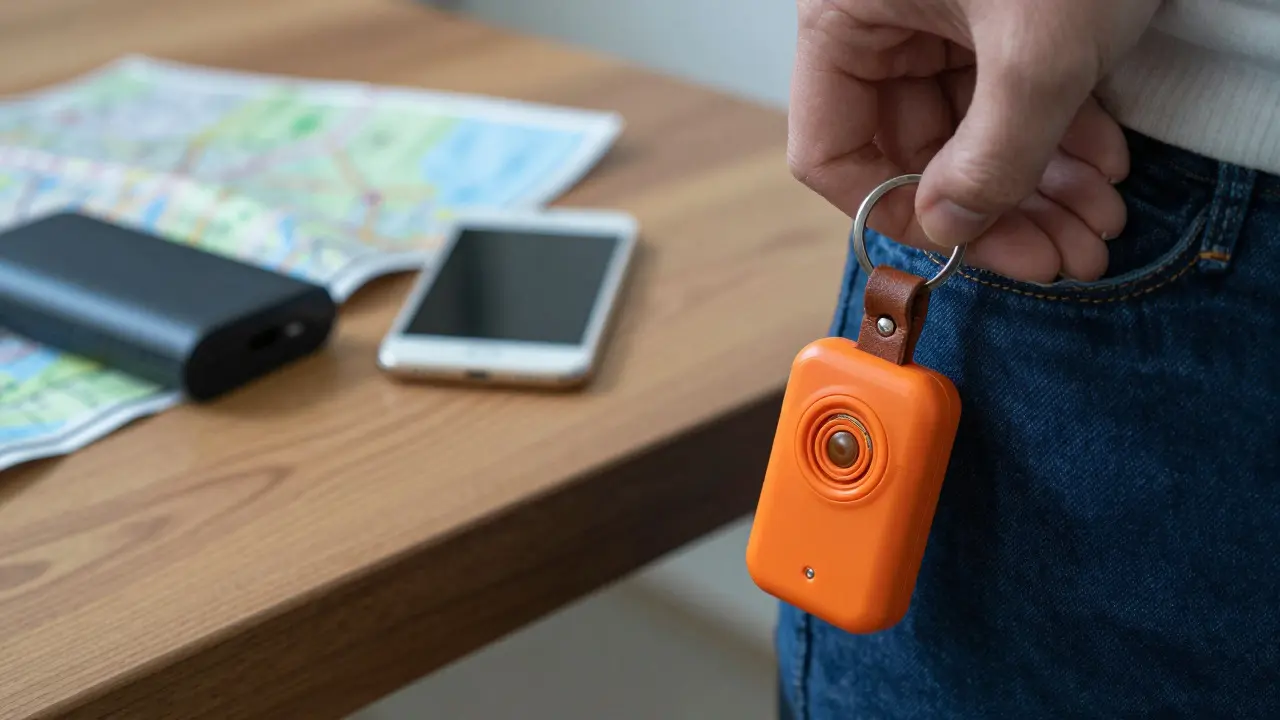
There’s a lot of noise about pepper spray versus personal alarms. The truth? Context matters. Pepper spray is effective, but it requires you to be close enough to aim. A personal alarm, on the other hand, creates distance through sound.
A high-decibel personal alarm (140dB+) draws attention. Predators usually want anonymity. When a loud shriek cuts through the air, neighbors, passersby, or shopkeepers will look. That social pressure is often enough to deter an attack. Keep the alarm attached to your keychain or bag strap, not buried in a pocket.
Don’t forget the low-tech tools:
- Portable Power Bank: A dead phone is a useless safety device. Carry a small, high-capacity power bank.
- Cash in Small Denominations: ATMs are hotspots for robbery. Having cash reduces the time you spend standing still at a machine.
- Local SIM Card: Prepaid local SIMs often have better coverage than international roaming plans and cost a fraction of the price.
Accommodation Safety: Vetting Your Stay
Where you sleep is half the battle. Hotels offer security, but hostels and short-term rentals require extra diligence. Before booking, check the last 10 reviews specifically for mentions of "safety," "locks," or "noise." One bad review about a broken lock is a red flag; ten positive ones about friendly staff are a green light.
If staying in a hostel, choose a private room if your budget allows. If you must take a dorm, pick a bunk near the door but not directly under the window. Store valuables in a money belt or hidden pouch, not just in the provided locker. Lockers can be picked easily by those who know how.

Cultural Nuances: Reading the Room
Safety looks different in every country. In Japan, getting lost is rare because signs are clear and locals are helpful. In parts of South America or Southeast Asia, taxi scams are more common than violent crime. Adjust your awareness accordingly.
Learn three phrases in the local language: "Help," "Police," and "How much?" Knowing these can prevent overcharging and help you navigate minor conflicts without escalating tension. Also, dress modestly if that’s the norm in the region. It’s not about erasing your identity; it’s about reducing unnecessary friction with locals who may judge you based on appearance.
Building Your Personal Safety Protocol
You don’t need to carry a tactical vest. You need a system. Start by downloading bSafe and setting your contacts. Buy a personal alarm and test its volume. Plan your first day’s route using Google Maps offline mode. These small steps create a foundation of confidence that allows you to truly enjoy your travels.
Safety is a mindset, not a product. It’s the quiet confidence that comes from knowing you’ve prepared for the worst, so you can focus on the best. So pack your bags, check your apps, and step out the door. The world is waiting, and you’re ready for it.
Is pepper spray legal everywhere I travel?
No. Laws vary significantly. It is banned in countries like Australia, New Zealand, and several European nations. Always check local regulations before packing. A personal alarm is universally legal and easier to transport.
Should I tell my family my exact location in real-time?
Yes, but selectively. Share live location with one or two trusted contacts via WhatsApp or Apple Find My Friends. This provides peace of mind without cluttering your notifications. Ensure they know when you’ll be offline so they don’t panic unnecessarily.
What if my phone dies in an emergency?
Carry a portable power bank. Additionally, write down the local emergency number and the address of your accommodation on a card in your wallet. Digital tools fail; paper does not.
Are hostels safe for solo female travelers?
Generally, yes, if vetted properly. Look for hostels with good lighting, secure locks, and female-only dorms if you prefer. Read recent reviews for specific safety comments. Avoid unlisted couch-surfing options unless referred by a trusted friend.
How do I handle a situation where someone follows me?
Do not run immediately, as this can trigger a chase. Walk confidently toward a well-lit, populated area like a convenience store or hotel lobby. Change your direction subtly. If you feel threatened, enter the building and ask staff for help. Your goal is to find witnesses, not to confront the follower.