Exercise for Health, Not Punishment: Women’s Fitness Reframe
 Mar, 24 2026
For years, women have been told that exercise is a way to shrink, burn, or fix themselves. The gym floor feels like a courtroom. The scale is the judge. The mirror is the jury. And every drop of sweat? It’s not progress-it’s penance. But what if movement didn’t have to be punishment? What if it could just be… care?
Why Exercise Became a Weapon
It started with magazines. Thin thighs. Flat abs. Six-pack abs on women who looked like they hadn’t eaten since 1997. Fitness ads didn’t sell strength. They sold shame. And women bought it-because they were told their bodies were the problem.
By 2010, the fitness industry was worth over $30 billion in the U.S. alone. But less than 12% of women said they felt confident in their own skin after working out. That’s not a coincidence. That’s a design flaw.
Workouts became rituals of self-correction. Running to lose weight. Lifting to tone. Yoga to “balance.” But balance doesn’t mean shrinking. It means showing up. Moving because it feels good-not because you owe your body something.
The Shift: From Discipline to Discovery
More women are waking up. Not because they saw a new trend. But because they got tired of feeling broken after every workout.
Take Maria, 38, from Portland. She used to do 90-minute spin classes five days a week. She thought if she pushed harder, she’d finally look like the women in the ads. Instead, she got injured, depressed, and quit. A year later, she started walking-just 20 minutes a day, no music, no tracker. She noticed the way the trees changed with the seasons. How her breath steadied. How her knees didn’t ache anymore. She didn’t lose weight. But she started feeling like herself again.
This isn’t rare. A 2024 study from the University of Oregon tracked 1,200 women who switched from high-intensity, calorie-burning routines to movement focused on joy, mobility, and rest. After six months, 76% reported lower stress. 68% said they slept better. And 81% stopped checking their reflection after workouts.
What Does Health Actually Look Like?
Health isn’t a body type. It’s a set of behaviors that help you feel steady, strong, and at peace.
That means:
- Moving because it feels good, not because you’re trying to erase parts of yourself
- Resting without guilt, even if you didn’t “earn” it
- Choosing activities that lift your spirit, not ones that drain you
- Listening to your body’s signals instead of a fitness app’s countdown
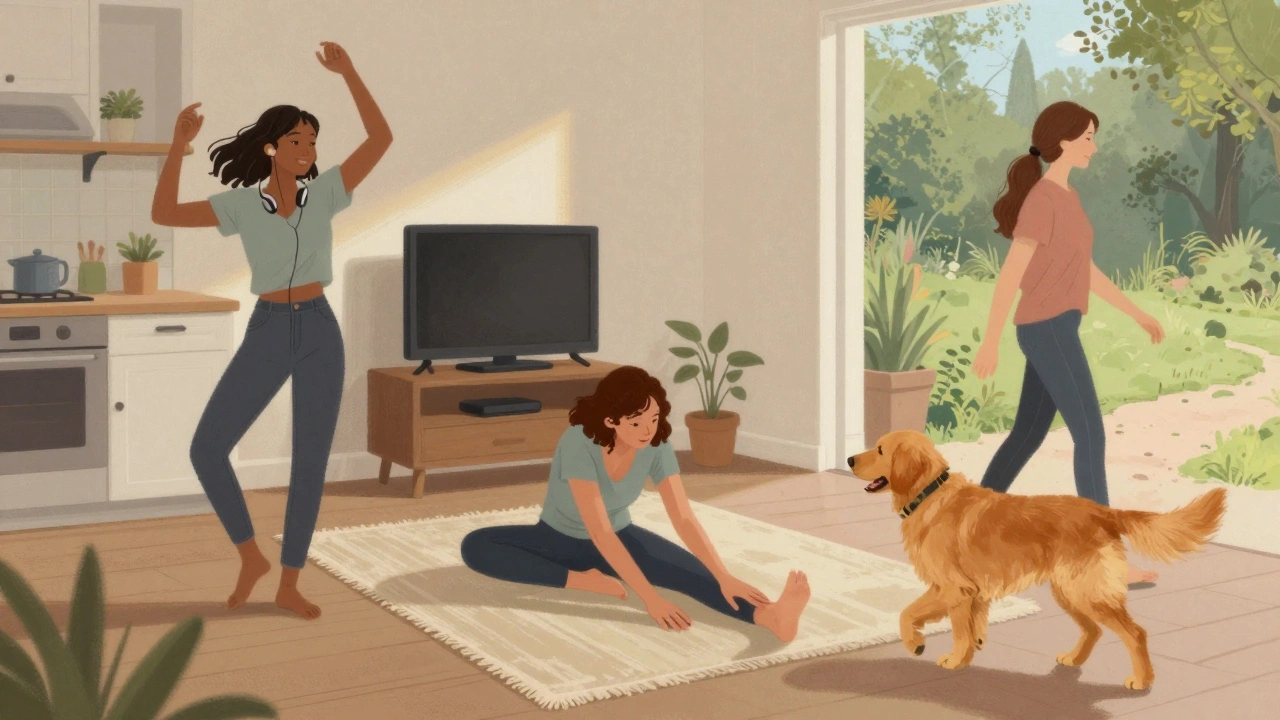
There’s no single way to be healthy. A woman who dances in her kitchen every morning is just as healthy as the one who lifts weights at the gym. The one who hikes on weekends. The one who stretches while watching TV. Movement isn’t a test. It’s a conversation.
Letting Go of the Scale
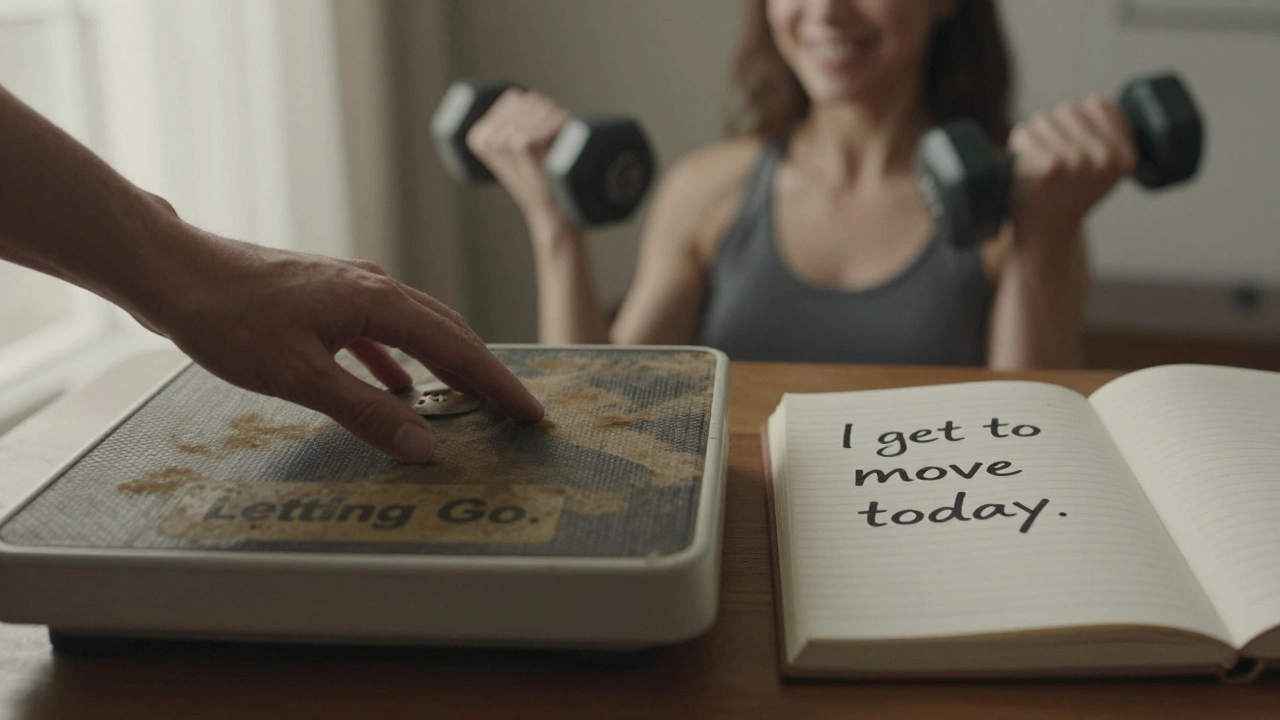
The scale doesn’t know your energy. It doesn’t know if you’re sleeping better. Or if your anxiety has dropped. Or if you finally stopped hating your arms.
One woman I know stopped weighing herself after 14 years. She didn’t change her routine. She just stopped looking. Within three months, she started eating when she was hungry. She moved when she felt like it. She stopped apologizing for taking up space. Her blood pressure improved. Her mood lifted. Her clothes fit better-not because she lost weight, but because she stopped fighting herself.
Studies show that people who stop obsessing over weight lose less-but keep off what they do lose longer. And they report higher life satisfaction. Health isn’t a number. It’s a feeling.
Rebuilding Your Relationship With Movement
Here’s how to start:
- Ask yourself: “What did I enjoy moving like when I was a kid?” Running through sprinklers? Dancing in the living room? Climbing trees? Start there.
- Try one new thing every month. Not to get better at it. Just to see how it feels. Try tai chi. Trampolining. Swimming. Walking with a friend. No goals. No metrics.
- Notice how you feel after. Not your body. Your mind. Your energy. Your mood. Did you feel lighter? Calmer? More connected? That’s the real win.
- Let go of “burning calories.” Instead, think: “What did this movement give me?” Joy? Peace? Strength? Connection?
- Replace “I have to” with “I get to.” I get to stretch. I get to walk. I get to move my body today.
It’s Not About Getting Thin. It’s About Getting Whole.
Body positivity isn’t about loving every inch of your skin. Sometimes, it’s just about not hating it while you move.
When you stop seeing exercise as punishment, you stop needing to earn your right to exist. You stop trading your energy for approval. You start showing up for yourself-not because you’re broken, but because you’re worth it.
Some women find freedom in lifting heavy. Others in yoga. Others in walking with their dog. There’s no one right way. There’s only your way.
Move because it makes you feel alive. Not because you’re trying to fix yourself. You’re not broken. You’re just tired of being told otherwise.
What Happens When You Stop Using Exercise as Punishment?
Women who make this shift don’t just move differently. They live differently.
They stop apologizing for taking up space. They say yes to parties, even if they didn’t “earn” it. They eat when they’re hungry. They rest without guilt. They stop comparing their bodies to Instagram filters.
One woman told me: “I used to think my worth was tied to how much I could sweat. Now I know my worth is tied to how well I listen to myself.”
That’s the real transformation. Not in the mirror. In the mind.
Is it possible to get fit without focusing on weight loss?
Yes. Fitness isn’t defined by weight or size. It’s defined by how well your body functions and how you feel. People can improve strength, endurance, flexibility, and mental health without losing weight. In fact, studies show that focusing on movement for joy and function leads to more sustainable health outcomes than weight-focused routines.
What if I still want to lose weight? Is that wrong?
Wanting to lose weight isn’t wrong. But it’s important to ask why. If your goal is to feel healthier, more energetic, or more confident, those are valid reasons. But if your goal is to meet someone else’s idea of beauty, that’s a recipe for burnout. The key is to separate your movement from your self-worth. Move because it serves you-not because you’re trying to escape yourself.
How do I know if my workout is punishing me?
Ask yourself: Do you dread it? Do you feel guilty for skipping it? Does it leave you exhausted instead of energized? Do you feel like you have to earn rest or food? If yes, it’s likely punishment. Healthy movement feels like a gift-not a chore. It should leave you feeling more connected to yourself, not drained or ashamed.
Can I still lift weights or run if I’m focused on health, not punishment?
Absolutely. Lifting weights, running, and high-intensity workouts aren’t bad. What matters is your mindset. If you do them because they make you feel strong, capable, and alive-you’re on the right path. If you do them to punish yourself for eating or because you think you’re not good enough-you’re still stuck in the old cycle. The exercise isn’t the problem. The story you tell yourself about it is.
What should I do if I’ve been burned out by fitness culture?
Start with rest. Not as a reward, but as a necessity. Let yourself do nothing for a week. Then, try one thing that feels playful-not productive. Dance to one song. Walk outside without headphones. Stretch while listening to your favorite podcast. Let movement return as curiosity, not obligation. Healing takes time. Be patient with yourself.