Email Marketing for Women-Owned Brands: List Growth and Funnels
 Sep, 30 2026
You built your brand with heart. You source ethically, you design with intention, and you care deeply about your community. But when it comes to email marketing, many women-owned businesses hit a wall. The inbox feels like a battlefield, and generic advice from big tech companies doesn't always fit the nuanced, relationship-driven way small female-led brands operate.
Here is the truth: your audience isn't just looking for a product; they are looking for a connection. That makes email the most powerful tool in your arsenal. It’s owned media-no algorithm changes can wipe out your list overnight. But growing that list and turning subscribers into loyal customers requires more than just hitting "send." It demands a strategy that respects your time, aligns with your values, and actually converts.
Why Email Still Wins for Female-Led Businesses
Social media is noisy. One day you’re winning on Instagram Reels, the next day TikTok changes its algorithm, and your reach drops by half. For women-owned brands, especially those in niche markets like sustainable fashion, handmade goods, or wellness, trust is the currency. Email builds trust faster than any social platform because it’s personal. It’s a one-on-one conversation.
According to recent data from Litmus, email generates $36 for every $1 spent, an ROI of 3,600%. But beyond the numbers, email allows you to control the narrative. You decide when your customers hear from you, what tone you use, and how much value you provide before asking for a sale. This autonomy is crucial for brands that prioritize transparency and community over aggressive sales tactics.
Growing Your List Without Being Spammy
The biggest mistake I see founders make is chasing vanity metrics. They want 10,000 subscribers but only sell to five people. Quality beats quantity every single time. If you have 500 engaged subscribers who open your emails and click your links, you’ll outperform a list of 5,000 ghosts.
So, how do you grow a high-quality list without annoying your visitors? Stop using generic pop-ups that say "Sign up for our newsletter." Nobody wants another newsletter. Instead, offer value. Here are three lead magnet ideas that work specifically well for women-owned brands:
- The "Behind the Scenes" Access: Offer early access to new collections or limited-edition drops. People love feeling like insiders.
- Educational Content: If you sell skincare, offer a "7-Day Skin Detox Guide." If you sell home decor, offer a "Room Refresh Checklist." Solve a problem they have right now.
- Exclusive Discounts: A simple 10% off first order works, but frame it as a welcome gift, not a transactional bribe.
Placement matters too. Don’t hide your sign-up form in the footer. Use exit-intent pop-ups that trigger only when someone moves their mouse to leave. Or better yet, embed sign-up forms directly into your blog posts where readers are already engaged with your content.
Building a Funnel That Feels Human
A funnel sounds mechanical, but for a women-owned brand, it should feel like a journey. Think of it as a series of conversations rather than a pipeline. Most small business owners try to build a complex automation immediately. Don’t. Start with a simple three-email welcome sequence.
This sequence sets the tone for your entire relationship. Here is a proven structure:
- Email 1 (Immediate): The Welcome & Value. Deliver the promise. If they signed up for a discount, give the code. If they signed up for a guide, send the link. Keep it short, warm, and human. Introduce yourself briefly-why did you start this brand?
- Email 2 (Day 2-3): The Story. Share your origin story. Why does your brand exist? What problems were you trying to solve? This builds emotional connection. People buy from people, not logos.
- Email 3 (Day 5-7): The Best Sellers. Now that they know who you are, show them what you sell. Highlight your top three products with customer testimonials. Include a clear call-to-action (CTA) like "Shop the Collection" or "See What’s Popular."
After this initial sequence, move subscribers into your regular newsletter flow. But remember, the goal isn’t to sell in every email. Follow the 80/20 rule: 80% value (education, entertainment, inspiration) and 20% promotion.
Segmentation: Talking to the Right People
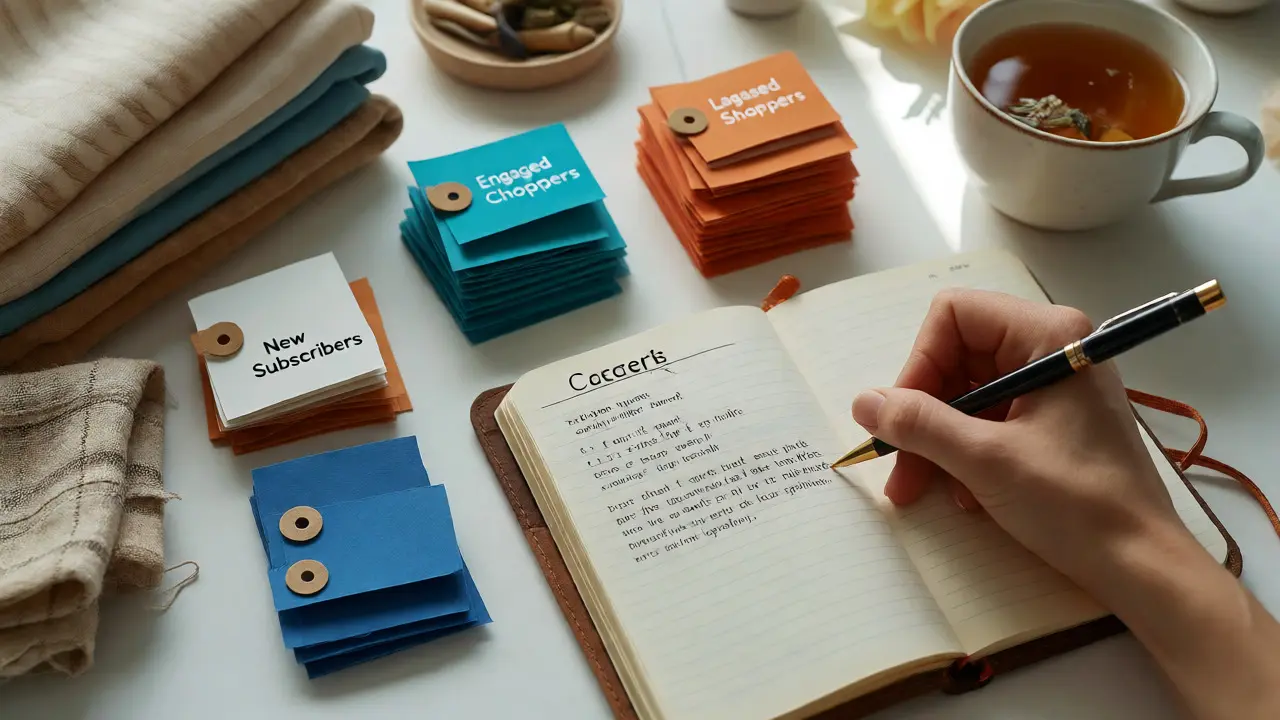
One size fits all rarely works in marketing. Sending the same email to everyone is like shouting at a party. Segmentation lets you whisper relevant messages to specific groups.
You don’t need complex software to start segmenting. Most email platforms like Klaviyo, Mailchimp, or ConvertKit allow basic tagging. Start with these two simple segments:
| Segment Name | Who Goes Here | What to Send |
|---|---|---|
| New Subscribers | People who joined in the last 30 days | Welcome sequence, brand story, best sellers |
| Engaged Shoppers | People who clicked links in the last 90 days | New arrivals, flash sales, exclusive offers |
| Lapsed Customers | People who bought once but haven’t returned in 6 months | Re-engagement campaign, "We miss you" discount |
By tailoring your message, you increase relevance. And relevance drives clicks. When a subscriber feels understood, they are far more likely to buy.
Crafting Emails That Get Opened
You could write the most beautiful email in the world, but if nobody opens it, it doesn’t matter. The subject line is your gatekeeper. Avoid clickbait. Be honest, curious, or urgent-but never misleading.
Here are some subject line formulas that consistently perform well for lifestyle and retail brands:
- Question-based: "Are you making this skincare mistake?"
- Benefit-driven: "How to style your new jeans three ways"
- FOMO (Fear Of Missing Out): "Last chance: Summer collection ends tonight"
- Personal: "Hi [Name], here’s that guide you asked for"
Preheader text is the unsung hero of email marketing. Many platforms let you customize this snippet of text that appears next to the subject line in the inbox. Use it to add context or tease the content. If your subject line is "Our New Arrivals," your preheader could be "Sustainable fabrics, ethical sourcing, and free shipping this week."
Measuring What Matters
Stop obsessing over open rates alone. Open rates are tricky because Apple’s Mail Privacy Protection inflates them artificially. Instead, focus on click-through rates (CTR) and conversion rates. CTR tells you if your content was interesting enough to prompt action. Conversion rate tells you if that action led to revenue.
If your open rates are low, test your subject lines. If your click-through rates are low, check your email design and copy. Are your buttons clear? Is your value proposition obvious? If your conversion rates are low, look at your landing page. Does it match the promise made in the email?
Consistency is key. Aim to send at least once a week, but no more than three times. Too few touches, and you’re forgotten. Too many, and you become spam. Find the rhythm that works for your audience. Check your unsubscribe rate-if it spikes after a certain type of email, adjust your frequency or content mix.
Which email platform is best for women-owned e-commerce brands?
For most small e-commerce brands, Klaviyo is the industry standard due to its deep integration with Shopify and robust segmentation features. However, if you prefer simplicity and strong design tools, Mailchimp is a solid choice. For creators who sell digital products or memberships, ConvertKit offers excellent automation and clean templates. Choose based on your primary sales channel and technical comfort level.
How often should I send emails to my list?
Start with once a week. This keeps you top-of-mind without overwhelming subscribers. As you gather data, monitor your unsubscribe rates and engagement metrics. If engagement remains high, you might experiment with twice a week during launch periods. Always prioritize quality over quantity; one valuable email is better than three mediocre ones.
Do I really need a welcome sequence?
Yes. Welcome sequences typically generate 3-5x higher open rates and significantly higher revenue per email compared to standard newsletters. It’s the moment when interest is highest. Automating this ensures every new subscriber gets a consistent, branded experience without you having to manually send each email.
How do I keep my email list clean?
Run a re-engagement campaign every six months targeting subscribers who haven’t opened an email in that time. Ask them if they still want to hear from you. If they don’t engage, remove them. A smaller, active list improves deliverability and ensures your emails land in the inbox rather than the spam folder.
Can I use AI to write my emails?
Absolutely, but use it wisely. AI can help brainstorm subject lines, draft initial copy, or summarize blog posts for your newsletter. However, always edit the output to ensure it matches your brand voice. Authenticity is critical for women-owned brands, so inject personal anecdotes and unique perspectives that AI might miss.