Daily Meditation for Women: How to Build a Consistent Habit
 Sep, 18 2026
You bought the app. You downloaded the guided tracks. Maybe you even sat on your yoga mat for three glorious days in January. Then life happened-the emails piled up, the kids got sick, or you simply forgot-and suddenly it’s been six months since you meditated. If this sounds familiar, you’re not lazy. You’re just fighting a system that wasn’t designed for how women’s brains and schedules actually work.
Building a daily meditation habit isn’t about finding an extra hour in your day (spoiler: it doesn’t exist). It’s about integrating small, manageable moments of stillness into the chaos. For women, who often carry the invisible load of household management, emotional labor, and professional ambition, meditation isn’t a luxury-it’s maintenance. But only if you can stick with it. Here is how to build a practice that survives real life.
Why Standard Advice Fails Women
Most meditation guides assume you have a quiet room, a free morning, and a mind that naturally settles when you close your eyes. That’s a fantasy for most women juggling careers, caregiving, and social obligations. The standard "sit for 20 minutes" advice ignores the biological and social realities we face. Hormonal fluctuations affect our baseline anxiety levels differently throughout the month. Our days are often fragmented by interruptions-school runs, work calls, unexpected crises.
When you try to force a rigid, male-coded model of discipline onto these fluid lives, you set yourself up for guilt. You miss a session, you feel like a failure, so you quit entirely. The fix isn’t more willpower; it’s better design. We need strategies that account for fragmentation, hormonal shifts, and the tendency toward over-responsibility.
The Power of Micro-Meditations
Forget the 30-minute sit. Start with two minutes. Seriously. Two minutes is less than the time it takes to scroll through Instagram stories. The goal right now isn’t enlightenment; it’s consistency. By lowering the barrier to entry, you remove the excuse of "I don't have time."
Try anchoring your meditation to an existing habit. This is called habit stacking. If you always make coffee at 7 AM, meditate while the water boils. If you always check your phone first thing, do a one-minute breathing exercise before you unlock the screen. These micro-moments rewire your brain to associate daily triggers with calm, rather than reaction.
Adapting to Your Cycle
Your body changes throughout the month, and so does your mental state. Ignoring this leads to frustration. During your follicular phase (post-period), you might have higher energy and focus, making it a great time for active visualization or longer sessions. In contrast, during the luteal phase (pre-menstrual) or menstruation, inflammation and hormonal dips can make sitting still feel impossible or irritating.
Don’t fight your biology. On high-anxiety days, switch from silent observation to guided movement or walking meditation. Walking outside, focusing on the sensation of your feet hitting the pavement, counts as meditation. It lowers cortisol just as effectively as sitting cross-legged but feels more natural when you’re agitated. Flexibility keeps the habit alive when rigidity would break it.

Designing Your Environment
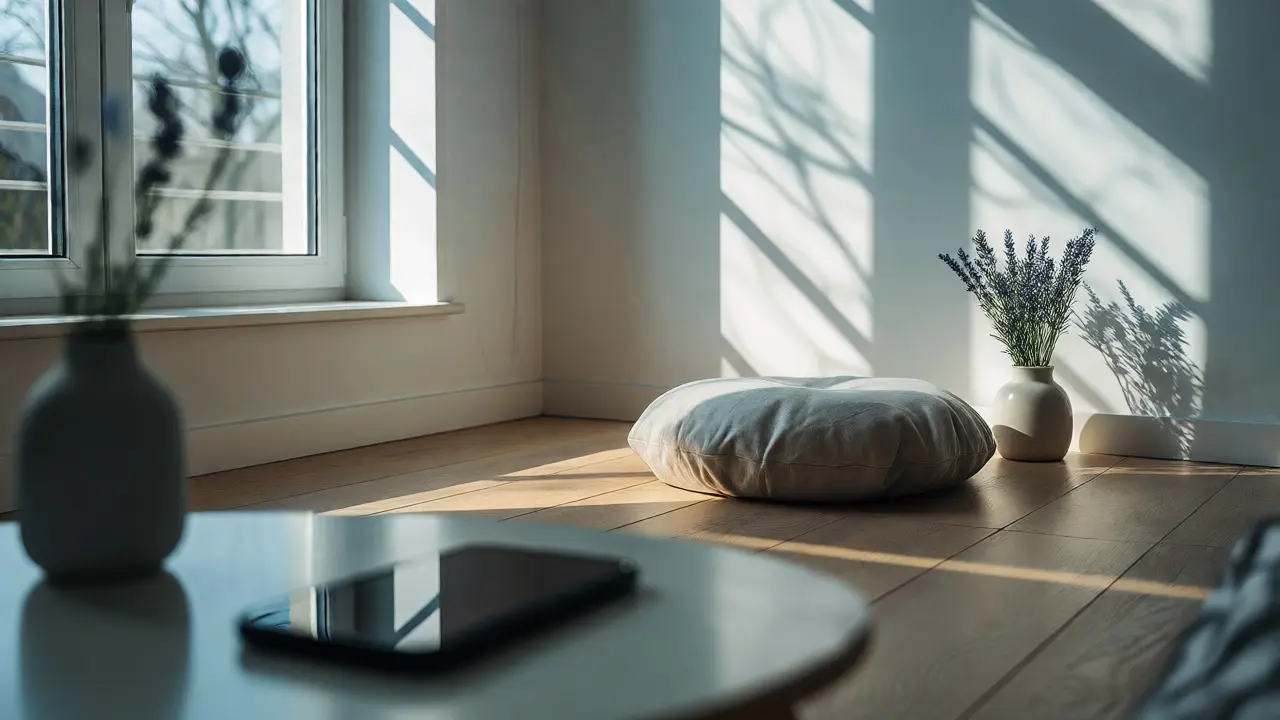
You don’t need a dedicated studio. You need a cue. Visual cues trigger action faster than internal motivation. Place a cushion in a visible spot-not hidden in a closet. Leave your headphones out. Use a specific scent, like lavender or sandalwood, only when you meditate. Over time, your brain links that smell to relaxation, allowing you to drop into a calm state faster.
Consider the digital environment too. Notifications are attention vampires. If you meditate in the evening, put your phone in another room. Not on silent-away. The mere presence of a smartphone reduces cognitive capacity, according to research from the University of Texas at Austin. Removing it frees up mental bandwidth for stillness.
Overcoming the "Should" Trap
Women are often conditioned to be productive. Sitting still feels like wasting time. We hear an internal voice saying, "I should be cleaning," or "I should be working." This productivity guilt kills meditation habits faster than lack of time.
Reframe meditation as performance enhancement, not leisure. Think of it like charging your phone. You don’t feel guilty about plugging in your device; you know it needs power to function. Meditation charges your prefrontal cortex, improving decision-making and emotional regulation. When you view it as fuel for your responsibilities, the guilt dissipates.
Troubleshooting Common Roadblocks
Even with good intentions, things go wrong. Here is how to handle the most common issues women face when trying to build this habit.
| Roadblock | Why It Happens | Solution |
|---|---|---|
| "I'm too busy" | Fragmented schedule leaves no contiguous blocks of time. | Use micro-sessions (1-3 mins) anchored to existing routines. |
| "My mind won't stop" | High cognitive load and multitasking habits create mental noise. | Switch to mantra-based or guided audio meditation to give the mind a job. |
| "I feel guilty stopping" | Internalized pressure to be constantly productive. | Reframe meditation as 'maintenance' necessary for efficiency. |
| "I forget to do it" | Lack of external visual cues in a chaotic home/work environment. | Place physical objects (cushion, journal) in high-traffic areas. |
Making It Stick: The 66-Day Rule
Research suggests it takes an average of 66 days to form a new habit, not the popularly cited 21 days. Expect resistance. Some weeks you’ll nail it; others you’ll skip three days in a row. The key is never missing twice. If you skip Monday, prioritize Tuesday. Missing once is an accident; missing twice is the start of a new pattern.
Track your streak, but keep it low-stakes. A simple calendar checkmark works. Don’t use complex apps that require logging details-that adds friction. Celebrate small wins. Did you breathe deeply for ten seconds before a difficult meeting? That’s a win. Acknowledge it. Positive reinforcement strengthens neural pathways faster than punishment.
Beyond the Cushion: Integrating Mindfulness
Formal meditation is just the gym for your attention muscle. The real workout happens in daily life. Practice mindful transitions. When you move from driving to entering your house, take three deep breaths in the car before opening the door. This creates a boundary between work mode and home mode. It prevents you from carrying residual stress into your family interactions.
Notice your body. Women often disconnect from physical sensations due to pain normalization or aesthetic pressures. Bring awareness back to your shoulders, jaw, and hands. Tension release is a form of meditation. Doing this several times a day builds resilience against chronic stress.
Frequently Asked Questions
How long should I meditate each day?
Start with just two to five minutes. Consistency matters far more than duration. Once you’ve established the habit for a few weeks, you can gradually increase the time if you want, but maintaining a short daily practice is better than sporadic long sessions.
What if my mind wanders constantly?
That’s normal. Meditation isn’t about stopping thoughts; it’s about noticing them and returning to your anchor (like your breath). Every time you catch your mind wandering and bring it back, you’re doing a "rep" for your brain. Wandering is part of the process, not a failure.
Do I need a special app or teacher?
No. While apps like Headspace or Calm can help beginners, they aren’t required. You can use free YouTube videos, podcasts, or simply focus on your breath. The best tool is the one you’ll actually use consistently.
Is meditation safe during pregnancy?
Generally, yes. Many women find meditation helpful for managing prenatal anxiety and preparing for labor. However, avoid intense breathwork techniques (like rapid hyperventilation) unless guided by a qualified instructor. Always consult your healthcare provider if you have specific medical concerns.
How do I stay motivated when I don’t see immediate results?
Focus on the process, not the outcome. Instead of waiting for "peace," notice small improvements in your reactions to stress. Did you pause before yelling at traffic? Did you sleep slightly better? These micro-wins reinforce the habit. Trust the compounding effect of daily practice.