Cycle Tracking for Women: Best Apps and Manual Methods
 Aug, 17 2026
Knowing your body’s rhythm isn’t just about avoiding surprises; it’s about reclaiming agency over your health. Whether you’re trying to conceive, manage symptoms like endometriosis, or simply want to understand why you feel tired on day 14, cycle tracking is the foundational tool. But with dozens of apps and a handful of manual methods, where do you start? This guide breaks down the most effective digital and analog approaches, helping you choose the method that fits your lifestyle, privacy needs, and goals.
Why Methodology Matters More Than the Tool
Before downloading an app or buying a notebook, you need to understand what data actually matters. The menstrual cycle consists of four distinct phases: menstruation, the follicular phase, ovulation, and the luteal phase. Each phase has specific hormonal shifts-estrogen rises before ovulation, while progesterone dominates after. Accurate tracking requires recording at least three core metrics: flow intensity, cervical mucus consistency, and basal body temperature (BBT). Without these, any prediction algorithm is just guessing based on averages, which are rarely accurate for individual women.
The primary goal of tracking is not just to predict your next period, but to identify your fertile window. For those trying to avoid pregnancy, this window is critical. For those trying to conceive, timing intercourse within 24-48 hours before ovulation significantly increases success rates. Therefore, the best method is one you will consistently use for at least three months to establish your personal baseline. Consistency beats complexity every time.
Top Digital Tools for Automated Insights
Digital apps offer convenience, reminders, and pattern recognition that manual methods struggle to provide. However, privacy concerns have made users more selective. Here is how the leading options compare in terms of data accuracy, privacy, and user experience.
| App Name | Best For | Key Feature | Privacy Model | Pricing |
|---|---|---|---|---|
| Flo | General wellness & symptom logging | Extensive symptom database and mood tracking | Data sold to third parties unless premium | Freemium ($59.99/year) |
| Clue | Scientific rigor & privacy-focused users | Research-backed algorithms and open-source transparency | No data selling; GDPR compliant | Free / Premium ($30/year) |
| Cycle Tracker | Simplicity & iOS users | Clean interface, integrates with Apple Health | Local storage option available | Free / One-time purchase ($4.99) |
| Natural Cycles | Natural family planning (NFP) | Medical-grade BBT analysis for contraception | High privacy standards | Subscription ($40/year) |
Flo is the most popular period tracker globally, known for its comprehensive symptom logging and AI-driven predictions. It excels at correlating mood swings with hormonal changes, making it ideal for women experiencing PMS or PMDD. However, its free version displays ads and shares anonymized data with partners, which may deter privacy-conscious users. If you value deep insights into how your cycle affects your mental health, Flo is a strong contender.
In contrast, Clue is a science-first app developed by researchers from the University of Oxford and Harvard Medical School. It focuses on data quality over flashy features. Clue uses validated algorithms to predict ovulation and offers a transparent privacy policy, ensuring your data isn’t sold. It’s the best choice if you want reliable predictions without the marketing noise.
For those strictly interested in natural contraception, Natural Cycles stands out. Unlike general trackers, it requires daily BBT entry and analyzes the thermal shift to confirm ovulation. This method is clinically proven to be up to 99% effective when used correctly, but it demands strict discipline. If you miss a temperature reading, the app cannot make a safe prediction.
The Power of Manual Methods
Digital tools aren’t for everyone. Some women prefer the tactile experience of writing things down, others worry about cloud storage security, and some simply find paper less intrusive. Manual methods include calendar-based tracking, the Symptothermal Method, and the Billings Ovulation Method. Each has distinct advantages and limitations.
The Calendar Method is the simplest approach. You record the first day of your period for six to twelve months, then calculate your shortest and longest cycles. Your fertile window is estimated by subtracting 18 days from your shortest cycle and 11 days from your longest. While easy, it is the least accurate method because it assumes regularity that many women don’t have. It works best for women with highly predictable cycles of 28-30 days.
The Symptothermal Method combines two signals: cervical mucus observation and basal body temperature. This is considered the gold standard for natural family planning. You check your mucus daily (looking for egg-white consistency) and take your temperature immediately upon waking. When your temperature rises and stays elevated for three consecutive days, ovulation has occurred. This dual-signal approach reduces error margins significantly compared to using either signal alone.
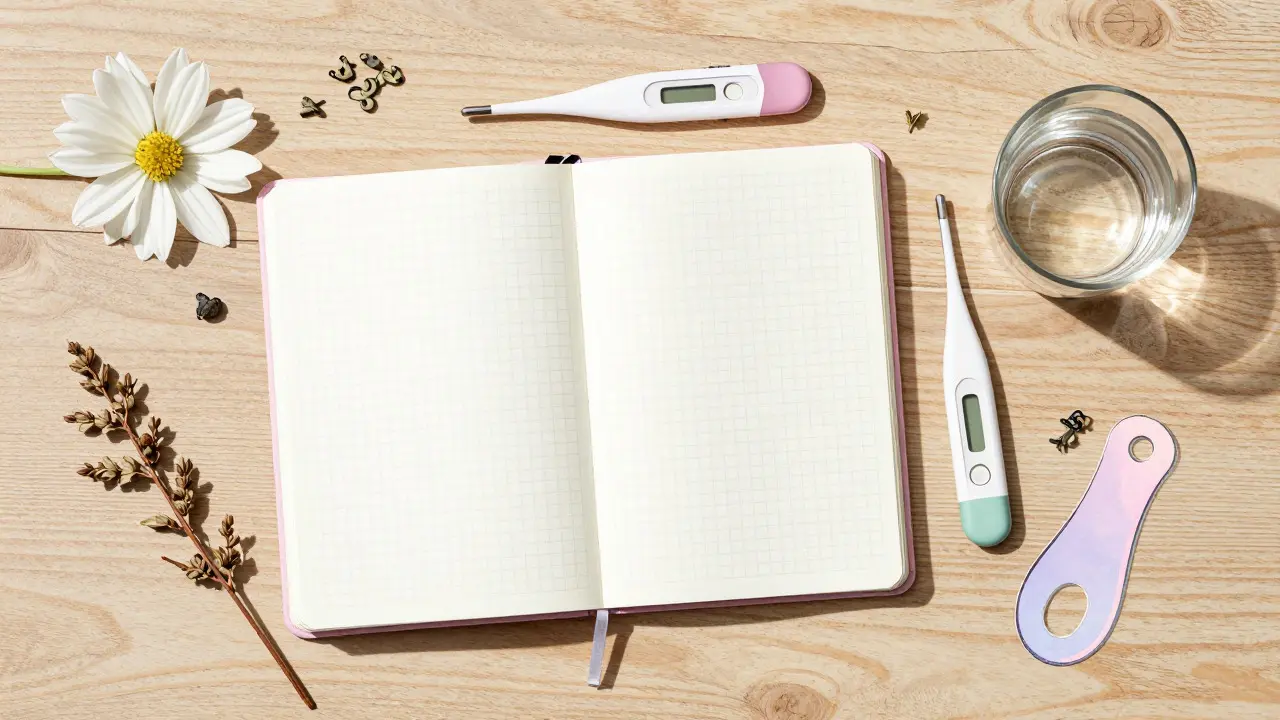
Manual tracking requires a dedicated journal or chart. Many users opt for spiral notebooks with pre-printed grids or custom spreadsheets. The key is consistency: mark your observations at the same time each day. For BBT, this means measuring before getting out of bed, ideally between 6 AM and 8 AM, after at least four hours of sleep.
Basal Body Temperature: The Critical Metric
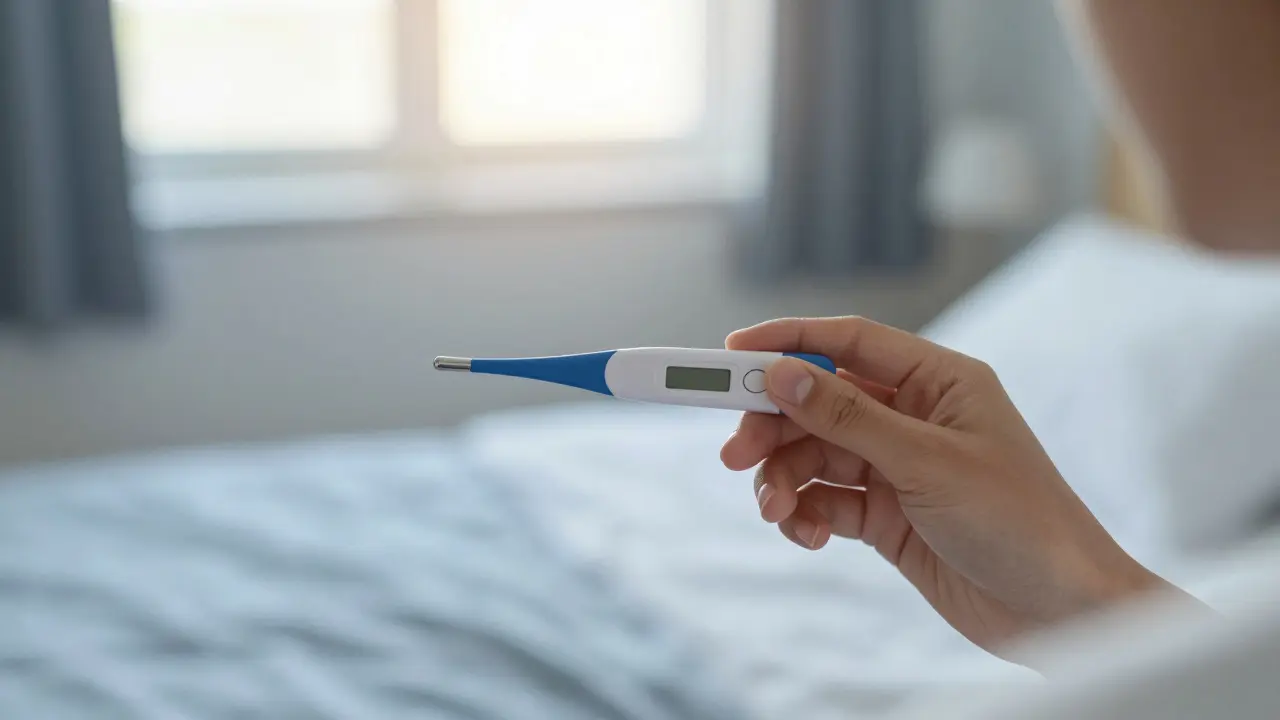
Regardless of whether you use an app or paper, understanding BBT is essential for anyone aiming to pinpoint ovulation. BBT is the lowest temperature your body reaches during rest. Before ovulation, your temperature fluctuates slightly. After ovulation, progesterone causes a sharp rise of 0.4-1.0°F (0.2-0.6°C). This rise lasts until your next period starts.
To get accurate readings, you need a specialized BBT thermometer. Standard clinical thermometers often lack the precision required to detect this subtle shift. Look for devices with a resolution of 0.01°F (0.01°C). Popular brands include Beurer and Wink. Pair the thermometer with a consistent routine: wake up at the same time, go back to bed if you wake up early, and take the temperature before sitting up. Even minor disruptions can skew your data, leading to false positives or missed ovulation signals.

Choosing Between Digital and Analog
Your choice depends on your primary goal and personality type. If you are trying to conceive, digital apps like Clue or Natural Cycles offer faster feedback loops and can alert you to your fertile window in real-time. They also integrate with partner calendars, which is helpful for coordinating efforts.
If you are managing a medical condition like PCOS or endometriosis, manual tracking might be better. Why? Because you can add detailed notes about pain levels, medication taken, and stress factors directly next to your cycle data. Apps often have rigid input fields that don’t capture the nuance of a severe migraine or a flare-up. A paper journal allows for free-form annotation, giving you and your doctor a richer picture of your health history.
Consider also the cost factor. High-quality BBT thermometers cost $15-$30. Premium app subscriptions range from $30 to $60 per year. If you combine both, you’re investing roughly $100 annually. Is it worth it? For many, yes. Early detection of irregularities can lead to earlier diagnosis and treatment, potentially saving thousands in medical bills down the line.
Common Pitfalls to Avoid
Even with the best tools, mistakes happen. Here are the most common errors that compromise tracking accuracy:
- Inconsistent BBT measurement: Taking your temperature after drinking coffee or moving around invalidates the reading. Always measure immediately upon waking.
- Ignoring context: Travel, illness, alcohol, and sleep deprivation can alter your cycle. Note these events so you don’t misinterpret a late period as pregnancy or failure of contraception.
- Over-reliance on predictions: Apps predict based on past data. If your life changes (stress, weight loss), your cycle may shift. Trust your physical signs (mucus, cramps) over the algorithm.
- Privacy negligence: Read the fine print. If an app sells your data, consider using local-storage-only modes or switching to a manual method.
Remember, cycle tracking is a long-term practice. Don’t expect perfect data in month one. Give yourself three months to learn your patterns. Keep your records safe, whether in a locked drawer or a password-protected phone. Your data belongs to you, and protecting it is part of taking care of your reproductive health.
How accurate are cycle tracking apps?
Accuracy varies widely. Apps using only calendar dates are about 70-80% accurate for predicting ovulation. Apps incorporating BBT and cervical mucus data can reach 90-95% accuracy. However, no app is 100% reliable for contraception without strict adherence to natural family planning protocols.
Do I need a special thermometer for cycle tracking?
Yes. Standard digital thermometers usually round to 0.1°F, which is too coarse to detect the 0.4°F rise associated with ovulation. You need a BBT-specific thermometer that measures to 0.01°F (or 0.01°C) precision.
Can I track my cycle if I have irregular periods?
Yes, but it takes longer to establish a pattern. Irregular cycles require tracking for at least 6-12 months to identify trends. Focus on symptoms like BBT and mucus rather than just calendar dates, as these signals remain consistent even when cycle length varies.
Is manual tracking better than apps for privacy?
Generally, yes. Paper journals keep data offline, eliminating risks of data breaches or corporate data sales. However, digital apps with robust encryption and local-storage options (like Clue or Cycle Tracker) offer near-equivalent privacy with the added benefit of automated reminders and analytics.
How long should I track my cycle before seeing results?
You need at least three consecutive cycles to identify your personal baseline. Six months is recommended for those with irregular cycles or those using the method for contraception. Consistency is key; missing entries disrupts the pattern recognition process.