Crypto for Women: Risk, Allocation, and How to Decide
 Dec, 26 2025
More women are getting into cryptocurrency than ever before. Not because it’s trendy, but because it’s starting to make sense. For many, crypto isn’t about getting rich overnight-it’s about building financial independence, having control over money, and finding alternatives to traditional systems that haven’t always worked for them. But stepping into crypto without a plan can be risky. This isn’t about hype. It’s about smart decisions. Here’s how to think about risk, how much to put in, and how to actually decide what’s right for you.
Why Crypto Feels Different for Women
Women don’t invest the same way men do-and that’s not a weakness, it’s a strength. Studies from organizations like the World Bank and Goldman Sachs show women tend to research longer before buying, hold investments longer, and trade less frequently. That’s a huge advantage in crypto, where emotional reactions to price swings cost people money. Women also tend to invest with purpose: education, home ownership, retirement, or helping family. Crypto can fit into that, but only if it’s part of a bigger picture.
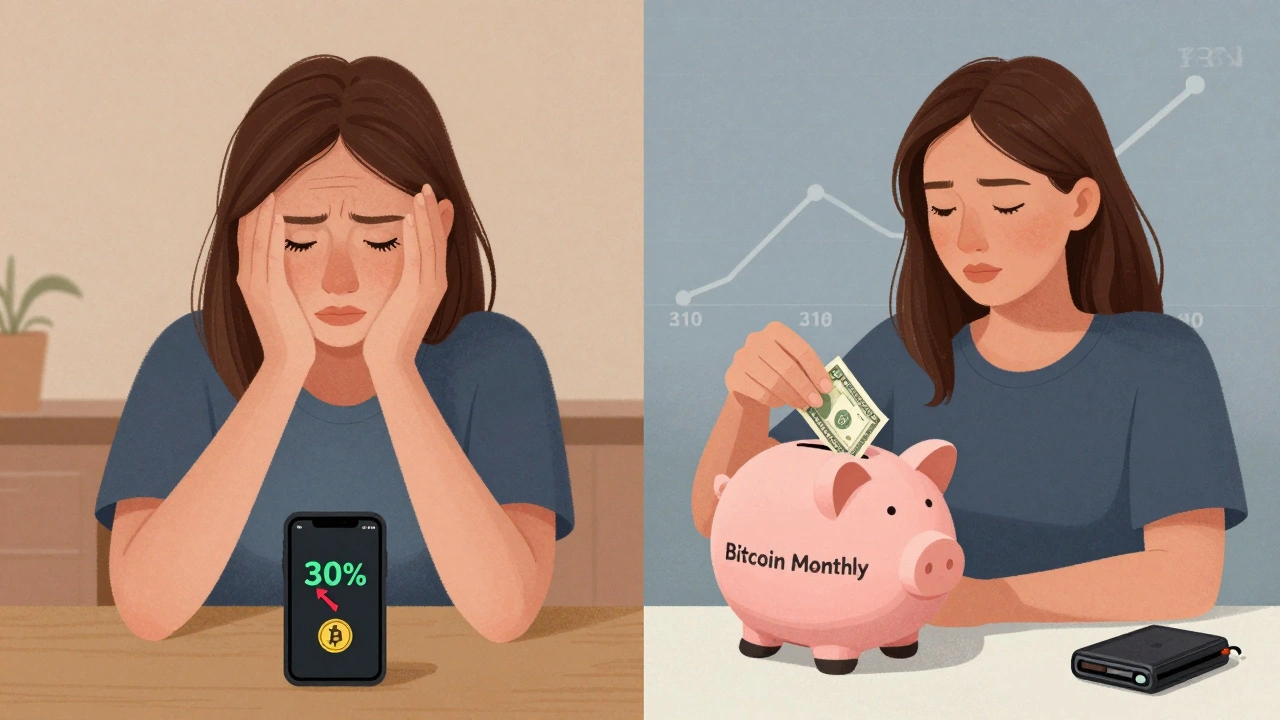
Take Sarah, a 34-year-old teacher in Portland. She started with $500 in Bitcoin after hearing a podcast. She didn’t know what blockchain meant, but she trusted the person who said it was "the future." Two months later, the price dropped 30%. She panicked and sold. She lost money, yes-but she also lost confidence. That’s the trap. Crypto isn’t a lottery ticket. It’s a tool. And tools need context.
Understanding the Real Risks
When people talk about crypto risk, they usually mean price swings. But that’s just the surface. The real risks are less obvious:
- Loss of access: If you lose your private key or forget your password, your money is gone forever. No customer service, no reset button.
- Scams: Fake apps, phishing emails, impersonators on social media-crypto attracts fraud because it’s hard to reverse transactions.
- Regulatory uncertainty: Governments are still figuring out how to treat crypto. One day, a rule changes. The next, your exchange shuts down.
- Liquidity risk: Some coins are so niche, you can’t sell them quickly-even if you want to.
These aren’t hypothetical. In 2024, over $3.2 billion was lost to crypto scams worldwide, according to Chainalysis. Women were targeted in 47% of those cases-often through relationship-based scams (fake partners, investment groups, or mentorship schemes). Awareness isn’t optional. It’s survival.
How Much Should You Put In?
There’s no magic number. But there’s a smart range: 1% to 5% of your total investable assets.
Let’s say you have $50,000 saved for investments-your emergency fund, retirement accounts, stocks, real estate. Putting $2,500 (5%) into crypto is reasonable. $500 (1%) is also fine. Anything more than 10% is gambling, not investing.
Here’s how to figure it out for yourself:
- First, make sure you have an emergency fund (3-6 months of living expenses).
- Then, max out any employer-matched retirement accounts (like a 401(k)).
- Pay off high-interest debt (credit cards, personal loans).
- Only after those steps? Then consider crypto.
Why this order? Because crypto has zero safety net. If you lose it, you can’t borrow it back. You can’t claim it on taxes. It doesn’t pay dividends. It’s pure exposure to volatility. That’s why it belongs at the end of the line-not the start.
How to Decide What to Buy
Don’t pick coins based on memes, TikTok videos, or a friend’s story. Pick based on function.
There are three real categories of crypto worth considering:
- Bitcoin (BTC): The original. Think of it as digital gold. It’s not fast, not cheap to use-but it’s the most secure and widely accepted. It’s the foundation.
- Ethereum (ETH): The platform. It runs smart contracts, DeFi apps, NFTs, and more. It’s the engine behind most innovation. If you believe in crypto’s future, ETH is where much of it lives.
- Stablecoins (USDC, DAI): These are pegged to the U.S. dollar. They’re not for getting rich. They’re for moving money without volatility. Use them to enter or exit crypto safely.
Ignore the rest. Over 20,000 cryptocurrencies exist. 98% of them have no real use. Stick to the top three. That’s enough.
How to Store It Safely
Never leave crypto on an exchange. Not even for a day. Exchanges get hacked. They freeze accounts. They go out of business.
Use a hardware wallet. Devices like Ledger or Trezor cost $50-$100. They store your private keys offline. No internet connection means no hackers. Set up a recovery phrase (12-24 words) and write it down. Store it in a fireproof safe. Not in your phone. Not in the cloud. Not in a Google Doc.
Test the recovery process. Do it once. Put a small amount in, then restore it using your phrase. Make sure you can get back in. If you can’t, you’re not ready.

When to Sell (and When Not To)
Selling crypto because the price dropped? That’s not strategy. That’s fear.
Here are three good reasons to sell:
- You need the money for a real-life goal (a down payment, medical bill, education).
- You’ve reached your target allocation (e.g., you bought 5% and now it’s 15% of your portfolio-you rebalance).
- You’ve lost confidence in the project (e.g., the team disappeared, the code stopped updating, it got hacked).
Ignore price targets like "I’ll sell when it hits $100,000." That’s fantasy. Focus on your plan. Your plan doesn’t care about headlines.
What to Avoid
Here’s what most women get tricked into-and what you should skip:
- Yield farming: "Earn 20% APY!" sounds great until the platform vanishes.
- Memecoins: Dogecoin, Shiba Inu, Pepe Coin-they have no utility. They’re social experiments with price bubbles.
- Private investment groups: If someone DMs you on Instagram with a "guaranteed return," it’s a scam.
- Buying on emotion: FOMO (fear of missing out) is the #1 reason people lose money.
There’s no shame in sitting this out. The best crypto investor I know bought $200 in Bitcoin in 2021. She didn’t touch it. She didn’t check the price. She didn’t talk about it. Today, it’s worth $600. She didn’t win big. But she didn’t lose either. And she kept her peace.
Start Small. Stay Consistent.
You don’t need to understand every technical detail. You don’t need to trade daily. You don’t need to join Discord groups or follow influencers.
Just do this:
- Put $20 a month into Bitcoin or Ethereum.
- Use a trusted platform like Coinbase or Kraken (they’re regulated in the U.S.).
- Move it to a hardware wallet after 3 months.
- Check your balance once a quarter.
That’s it. You’re building a habit. You’re learning. You’re protecting yourself. And you’re not chasing the next moon.
Crypto isn’t about becoming rich. It’s about becoming free. Free from banks that charge you fees. Free from systems that don’t serve you. Free to make your own rules. That’s worth starting with.