Cruelty-Free Beauty Brands for Women: Top Ethical Picks for 2026
 May, 27 2026
Look at the back of your favorite lipstick. Do you see a bunny logo? A leaf? Or just a list of ingredients that sounds like a chemistry experiment? For years, "cruelty-free" was a nice-to-have bonus in the beauty aisle. Today, it is a non-negotiable standard for millions of women who refuse to let animal suffering be the price of vanity. But here is the catch: the term "cruelty-free" is not legally defined in many major markets, including the United States. This loophole allows some brands to slap a cute rabbit on their packaging while still selling products in countries where animal testing is mandatory by law.
If you are serious about ethics without compromise, you need more than good intentions. You need to know how to spot greenwashing, understand the certifications that actually matter, and find brands that deliver high-performance formulas without cutting corners. This guide cuts through the marketing noise to help you build a routine that aligns with your values and protects your skin.
What Does Cruelty-Free Actually Mean?
Let’s clear up the confusion right away. Cruelty-free means no animal testing was conducted at any stage of product development, from raw ingredients to the final formula, by the brand, its suppliers, or third parties. It does not automatically mean the product is vegan. A cruelty-free product can still contain honey, beeswax, or carmine (crushed beetles). If you want to avoid all animal-derived ingredients, you need to look for both "cruelty-free" and "vegan" labels.
The biggest pitfall consumers fall into is trusting self-declared claims. A brand might say "we don't test on animals" but fail to mention they sell in mainland China, where certain cosmetics must undergo mandatory animal testing before hitting shelves. In this scenario, the brand is complicit in animal testing, even if they didn't hold the needle themselves. True cruelty-free status requires a supply chain audit. It demands transparency from every supplier involved in creating the product.
The Gold Standard: Certifications That Matter
Not all logos are created equal. Some are paid-for stickers with no rigorous auditing process. Others require annual inspections and strict adherence to global standards. To ensure you are supporting genuine ethical practices, look for these two primary certifications:
- Leaping Bunny: The most rigorous and internationally recognized cruelty-free certification, requiring a supplier monitoring system and independent audits. Brands must sign a commitment to never test on animals and agree to regular checks.
- PETA’s Beauty Without Bunnies: A widely recognized program that verifies brands do not conduct or commission animal testing, though its auditing process is less intensive than Leaping Bunny.
Avoid relying solely on generic terms like "not tested on animals" unless backed by one of these organizations. The Leaping Bunny logo, specifically, is the industry benchmark because it enforces a cutoff date for animal testing and monitors the entire supply chain. If a brand has this logo, you can trust them. If they only have a custom-designed bunny graphic, dig deeper.
Top Cruelty-Free Beauty Brands for Every Budget
Finding ethical beauty doesn’t mean sacrificing quality or breaking the bank. Here is a curated list of brands that lead the pack in 2026, categorized by what they do best. These companies have been vetted for their commitment to ethics, ingredient safety, and product efficacy.
| Brand Name | Price Point | Key Strength | Certification |
|---|---|---|---|
| e.l.f. Cosmetics | Budget-Friendly ($3-$15) | Inclusive shade ranges and viral makeup trends | Leaping Bunny & PETA |
| Milk Makeup | Mid-Range ($20-$40) | Clean, minimalist formulas with natural ingredients | Leaping Bunny |
| Tatcha | Luxury ($50-$100+) | Japanese-inspired skincare rituals and potent actives | Leaping Bunny |
| Drunk Elephant | Premium ($30-$70) | Biocompatible ingredients and "Suspicious 6" free formulas | Leaping Bunny |
| Herbivore Botanicals | Premium ($40-$80) | Transparency and plant-based potency | Leaping Bunny & B Corp |
e.l.f. Cosmetics proves you don’t need to spend a fortune to be ethical. Their eyeshadow palettes and primers compete directly with high-end counterparts in texture and longevity. On the luxury end, Tatcha combines ancient Japanese botanicals with modern science, offering serums and creams that feel indulgent yet effective. For those focused on skin health, Drunk Elephant avoids what they call the "Suspicious 6"-essential oils, drying alcohols, silicones, chemical sunscreens, fragrances/dyes, and SLS-which makes their products ideal for sensitive skin types.
Navigating the China Loophole
This is the most critical part of being an informed consumer. As of 2026, China has relaxed some animal testing laws for "ordinary" cosmetics manufactured domestically, but imported "special use" cosmetics (like sunscreens and anti-aging products) may still face post-market animal testing. Many large multinational brands choose to keep selling in China to access the massive market, which often disqualifies them from true cruelty-free status.
Brands like L'Oréal, Estée Lauder, and Shiseido have invested heavily in alternative testing methods, such as organ-on-a-chip technology, but because they sell in markets where animal testing can be mandated by regulators, they cannot claim to be cruelty-free. If you see a brand stating they are "cruelty-free except where required by law," they are not cruelty-free. They are choosing profit over principle. Stick to brands that explicitly state they do not sell in physical stores in mainland China or other regions with mandatory testing requirements.
Clean Beauty vs. Cruelty-Free: Don't Confuse Them
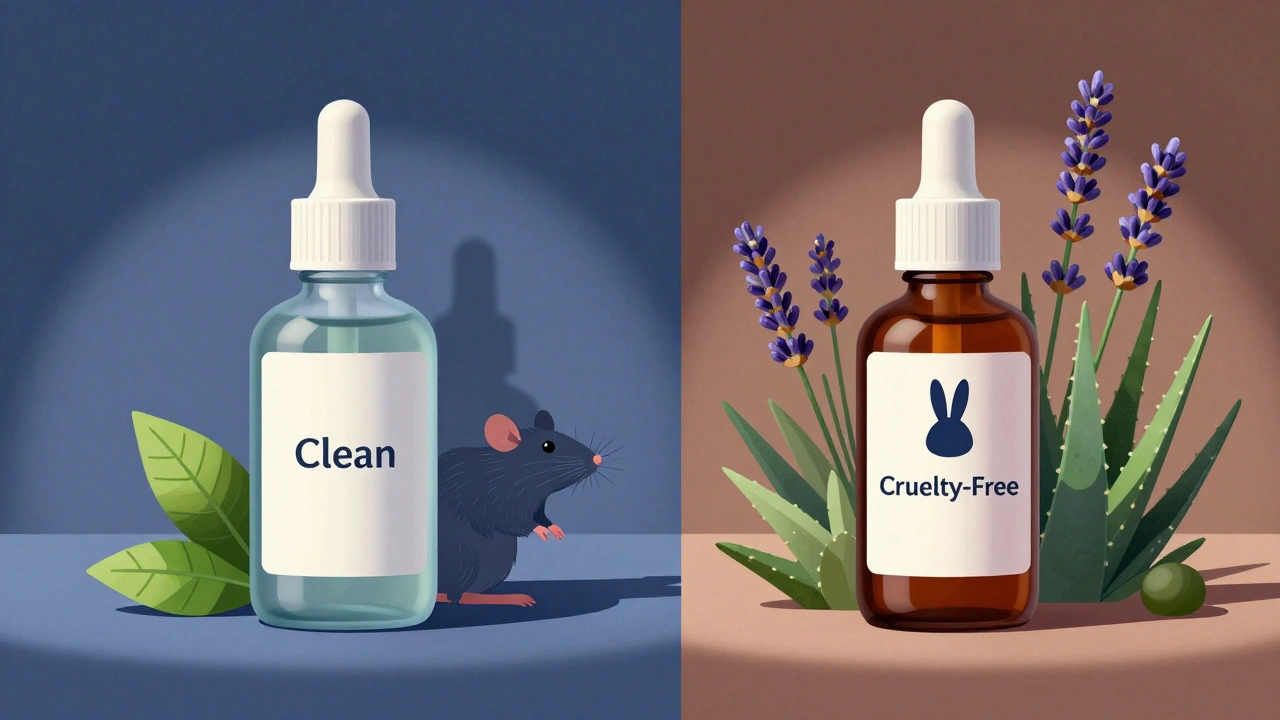
You will often see "clean beauty" and "cruelty-free" used interchangeably in marketing campaigns. They are not the same thing. Clean beauty focuses on ingredient safety and the exclusion of potentially toxic chemicals like parabens, sulfates, and phthalates. A product can be clean but tested on animals. Conversely, a product can be cruelty-free but contain synthetic preservatives that some clean beauty advocates avoid.
The sweet spot is finding brands that are both. Herbivore Botanicals and Youth to the People excel here. They use high-quality, recognizable plant extracts while maintaining strict no-animal-testing policies. However, remember that "natural" isn't always safer. Poison ivy is natural, but you wouldn't put it on your face. Focus on evidence-backed ingredients like niacinamide, hyaluronic acid, and retinol alternatives like bakuchiol, regardless of whether they are derived from plants or synthesized in a lab.
How to Verify a Brand's Claims
Don't take a brand's word for it. Here is a quick checklist to verify if a brand is truly cruelty-free before you buy:
- Check the Certification: Look for the Leaping Bunny or PETA logo on the packaging or website.
- Visit the Official Website: Go to the Leaping Bunny website and search the brand name. If they aren't listed, they haven't undergone the rigorous audit process.
- Read the Fine Print: Look for statements about selling in China. If they sell in physical stores there, they are likely not cruelty-free.
- Contact Customer Service: Ask direct questions: "Do you allow third-party testing on animals?" and "Do you sell in markets where animal testing is required by law?" Save their response as proof.
- Use Apps: Tools like the BUAV Cruelty-Free International app or PETA’s searchable database can quickly scan barcodes to verify status.
This diligence takes five minutes but ensures your money supports companies that align with your ethics. It also puts pressure on larger corporations to adopt better practices.
The Future of Ethical Beauty
The beauty industry is shifting rapidly toward alternatives to animal testing. Technologies like reconstructed human skin models (such as EpiSkin and MatTek) provide accurate data on irritation and toxicity without using live animals. These methods are faster, cheaper, and more relevant to human biology than traditional animal tests. As regulatory bodies in the EU, UK, and increasingly Asia ban animal testing for cosmetics, the old methods are becoming obsolete.
Consumers play a huge role in this transition. Every time you choose a certified cruelty-free brand, you vote for a future where innovation replaces exploitation. You support R&D in alternative testing methods and encourage transparency in supply chains. It is not just about feeling good; it is about driving systemic change in a $500 billion global industry.
Building Your Ethical Routine
Switching to cruelty-free products doesn't have to happen overnight. Start with your staples. If your current moisturizer works well but isn't cruelty-free, finish the bottle, then replace it with a verified alternative. Gradually swap out mascaras, lipsticks, and cleansers. Pay attention to how your skin reacts to new formulations. Clean and ethical brands often use fewer harsh preservatives, which can be gentler on sensitive skin but may require a short adjustment period.
Remember, ethics without compromise means holding brands accountable. If a beloved brand loses its certification or starts selling in restricted markets, speak up. Social media is a powerful tool for consumer advocacy. Share your findings, review products honestly, and demand transparency. The goal is a beauty routine that looks good, feels good, and does good.
Is Sephora cruelty-free?
Sephora itself is not a brand, so it doesn't have a single cruelty-free status. However, Sephora sells many cruelty-free brands alongside those that test on animals. They have a "Clean at Sephora" label, but this refers to ingredient exclusions, not animal testing. You must check each individual brand sold at Sephora to see if it is certified cruelty-free by Leaping Bunny or PETA.
Are drugstore brands cruelty-free?
Many popular drugstore brands are cruelty-free, such as e.l.f., Wet n Wild, and NYX Professional Makeup. However, others like Maybelline and L'Oréal are owned by parent companies that test on animals where required by law. Always verify the specific brand's policy rather than assuming based on price point or retail location.
What is the difference between vegan and cruelty-free?
Cruelty-free means no animal testing was involved in the product's creation. Vegan means the product contains no animal-derived ingredients like honey, lanolin, or collagen. A product can be cruelty-free but not vegan (if it contains beeswax), and it can be vegan but not cruelty-free (if it was tested on rabbits). Look for both labels if you want to avoid all animal involvement.
Why is Leaping Bunny considered better than PETA?
Leaping Bunny requires brands to implement a Supplier Monitoring System and undergo independent audits to verify compliance. PETA’s certification primarily relies on a signed affidavit from the company owner. While both are valuable, Leaping Bunny’s multi-step verification process provides a higher level of assurance regarding supply chain integrity.
Can I trust a brand that says "We don't test on animals"?
Not necessarily. Without a third-party certification, this claim is self-declared and unverified. The brand might not test on animals directly, but their suppliers might, or they might sell in countries where government officials conduct tests on their products. Always look for the Leaping Bunny logo or check official databases for confirmation.