Credit Scores for Women: How to Build, Fix, and Protect Yours
 Mar, 6 2026
Women still face unique challenges when it comes to credit scores. Even though they’re just as likely to pay bills on time as men, they often end up with lower scores. Why? It’s not about spending habits or income-it’s about history. Many women have gaps in their credit reports from taking time off to care for kids or aging parents. Others were added as authorized users on a spouse’s account and never built their own. And let’s not forget: divorce, widowhood, or even just being denied credit in the past can leave lasting damage.
Why Women’s Credit Scores Are Different
It’s not a myth. A 2023 study by the National Foundation for Credit Counseling found that women under 40 have an average credit score of 672, while men in the same age group average 694. For women over 50, the gap widens-median score is 701 versus 728 for men. The reason? Credit history length matters. Women are more likely to have shorter credit histories because they’ve been excluded from joint accounts or didn’t apply for credit independently.
Also, lenders sometimes still use outdated assumptions. A woman applying for a car loan might be asked about her husband’s income-even if she’s the sole earner. Or, if she’s divorced, her credit history might be treated as "new" even if she’s been paying bills for 15 years. These aren’t just annoyances-they’re barriers to lower interest rates, better housing, and financial independence.
How to Build Credit from Scratch
If you’ve never had credit-or haven’t used it in years-you’re not starting from zero. You’re starting from zero history. Here’s how to rebuild it the right way:
- Apply for a secured credit card. Put down $200-$500 as collateral, and you’ll get a line of credit equal to that amount. Use it for one small purchase each month-like groceries-and pay it off in full. This shows lenders you can handle credit responsibly.
- Ask your phone or utility provider to report your payments. Companies like Verizon, T-Mobile, and even some local electric companies now report on-time payments to credit bureaus. It won’t give you a huge boost overnight, but it adds consistent positive history.
- Become an authorized user on someone else’s account. Not just any account-choose someone with a long history of on-time payments and low balances. Their good habits will rub off on your report. Just make sure they’re not maxing out the card or missing payments.
- Consider a credit-builder loan. These are offered by credit unions and community banks. You borrow $500-$1,000, but the money is held in a savings account. You make monthly payments, and once you pay it off, you get the cash back. It’s a forced savings plan with credit-building perks.
Don’t rush. Building credit takes time. Aim for six months of consistent activity before checking your score again. And never open multiple accounts at once. Each application creates a hard inquiry, and too many can hurt your score.
Fixing a Damaged Credit Score
Maybe you missed a payment during a tough year. Or you were a victim of identity theft. Maybe you co-signed a loan that went bad. Whatever the reason, your score isn’t stuck forever.
Start by getting your free credit reports from AnnualCreditReport.com. You’re entitled to one from each of the three bureaus-Experian, Equifax, and TransUnion-every 12 months. Look for errors:
- Accounts you didn’t open
- Late payments that were actually on time
- Outdated negative items (anything older than seven years should be gone)
- Duplicate entries
If you find mistakes, dispute them. Each bureau has an online portal. Be specific. Include your name, account number, and proof like bank statements or canceled checks. You don’t need a lawyer-just persistence.
For legitimate negative marks, like a collections account, try negotiating a "pay-for-delete." Offer to pay the full amount in exchange for the creditor removing the item from your report. Get it in writing before you send any money. Some creditors agree-especially if the debt is old.
And here’s something most people don’t know: the FICO Score 9 and VantageScore 4.0 models ignore paid collections. So if you’ve paid off old debts, your score might already be improving without you realizing it.
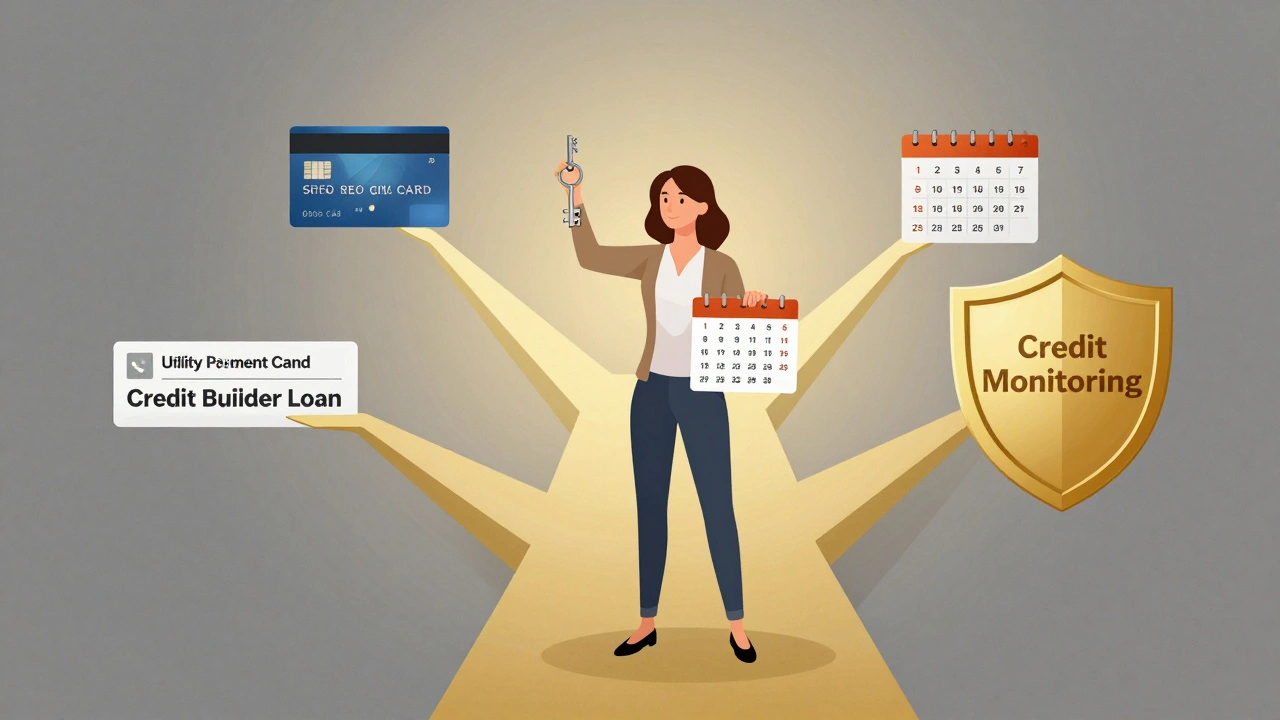
Protecting Your Credit After Major Life Events
Divorce, widowhood, job loss, or even a move to a new city can shake your credit foundation. Here’s how to stay protected:
- After divorce: Close joint accounts immediately. Transfer debts to individual accounts. Request a new card in your name only. Update your Social Security records if you changed your last name.
- After widowhood: Notify creditors, credit bureaus, and the Social Security Administration. Avoid using the deceased spouse’s cards. Check for fraudulent activity-scammers often target widows.
- After job loss: Don’t stop paying bills. Call lenders and ask for hardship programs. Many will offer temporary deferments or reduced payments. Just don’t skip payments without a plan.
- After moving: Update your address with all creditors. A change of address can trigger fraud alerts. Also, keep old accounts open-even if you don’t use them. Closing them shortens your credit history and raises your utilization rate.
Set up credit monitoring. Services like Credit Karma or Experian offer free alerts for new accounts, inquiries, or changes in your score. You’ll know instantly if something’s wrong.
What to Avoid at All Costs
Some "credit hacks" sound helpful but actually hurt women more than they help.
- Don’t cosign for someone unless you’re prepared to pay. If they default, it shows up on your report-and your score takes the hit.
- Avoid using credit cards as cash advances. Those come with high fees and interest that starts immediately.
- Don’t close old accounts just because they have no balance. They’re proof of your credit history. Even a $0 balance on a 10-year-old card helps.
- Don’t fall for "credit repair" companies that promise quick fixes. They charge hundreds for things you can do yourself for free.
Also, watch out for "credit invisibility." If you’ve never used credit, you might not have a score at all. That’s not a good thing. Landlords, employers, and insurers might see you as risky-even if you pay every bill on time.
Real-Life Example: Maria’s Story
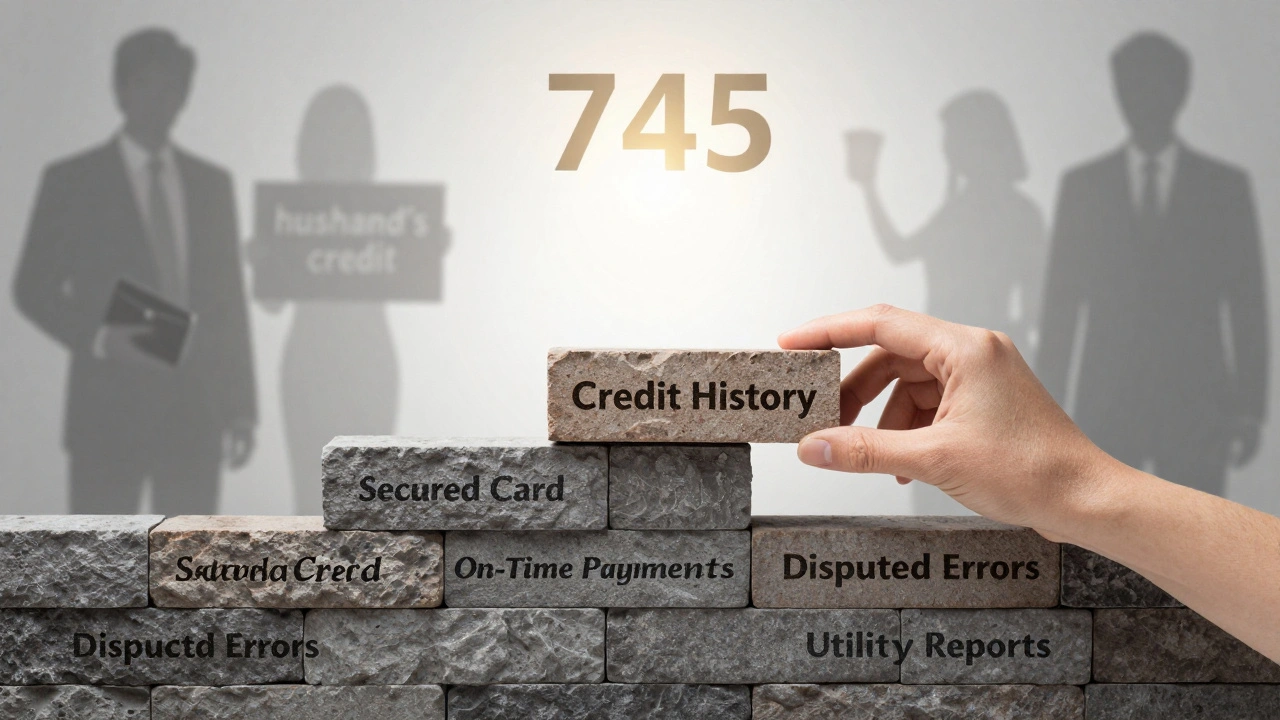
Maria, 48, from Portland, was a stay-at-home mom for 12 years. When she divorced, she had no credit in her name. She applied for a credit card and got denied. She was told she didn’t have enough income. But she had been paying rent, utilities, and daycare for years-just under her husband’s name.
She started with a secured card. Used it for gas and groceries. Paid it off every month. Six months later, she got an unsecured card. A year after that, she applied for a car loan and got approved at 4.8% interest-better than her ex-husband’s rate. Today, she has a 745 score. She’s saving for a home. And she teaches other women how to do the same.
Her secret? Consistency. Not luck. Not a miracle. Just showing up, month after month.
Final Checklist: Your Credit Action Plan
- Get your free credit reports from AnnualCreditReport.com
- Check for errors and dispute anything wrong
- Open one secured credit card or apply for a credit-builder loan
- Set up automatic payments for at least one bill
- Ask utility providers to report your payments
- Monitor your score monthly using a free tool
- Never close old accounts unless they charge fees
- Keep your credit utilization below 30%-ideally under 10%
Building credit isn’t about being rich. It’s about being reliable. And women have always been reliable. You just need the right tools-and the confidence to use them.
Why do women often have lower credit scores than men?
Women often have lower credit scores due to gaps in credit history caused by caregiving roles, being excluded from joint accounts, or relying on a spouse’s credit. Even if they pay bills on time, lenders don’t always see that history unless it’s reported under their name. Studies show women under 40 average 672 on their FICO score, compared to 694 for men in the same age group.
Can I build credit without a credit card?
Yes. You can build credit by becoming an authorized user on someone else’s account, getting a credit-builder loan from a credit union, or asking your phone, internet, or utility provider to report your on-time payments. Some services like Experian Boost and UltraFICO also let you add bank account history to your credit file.
What should I do after a divorce to protect my credit?
Close joint accounts immediately, transfer debts to individual accounts, and apply for credit in your own name. Update your name on all accounts if you changed it. Request a copy of your credit report to ensure no debts are wrongly assigned to you. Monitor for fraud-ex-spouses sometimes misuse shared accounts after separation.
Is it true that paid collections don’t hurt my credit anymore?
For newer scoring models like FICO 9 and VantageScore 4.0, yes. Paid collections no longer impact your score. But older models used by some lenders still count them. That’s why it’s still smart to pay off old debts-it improves your chances with most lenders and removes the risk of being contacted by collectors.
How long does it take to build a good credit score?
You can start seeing improvements in as little as three to six months if you’re consistent. A secured card used responsibly, on-time utility payments, and avoiding new debt can raise your score by 50-100 points in that time. But reaching a score above 700 typically takes 12-24 months of steady behavior.