Childcare Policy for Women: Solving the Affordability and Availability Crisis in 2026
 May, 3 2026
Imagine waking up at 5:30 AM, rushing to get your toddler dressed, and realizing you have exactly twelve minutes to find a babysitter who shows up before your 8:00 AM Zoom call. You check three apps. All are full. You text a friend who cancels because she’s sick. Suddenly, the career you spent years building feels like it’s hanging by a thread-not because of your skills, but because society hasn’t figured out how to keep children safe while parents work.
This isn’t just a bad day; it is the daily reality for millions of women across the United States in 2026. The intersection of childcare policy and women’s economic stability is no longer a niche debate. It is the defining structural issue of our current labor market. When we talk about affordability and availability, we aren't just discussing convenience. We are discussing whether women can remain in the workforce, grow their careers, and maintain financial independence.
The Two Pillars: Why Affordability and Availability Matter
To understand why so many women are leaving their jobs or scaling back to part-time hours, we need to look at the two main barriers: cost and access. These are not separate issues. They feed into each other to create a trap that keeps families stuck.
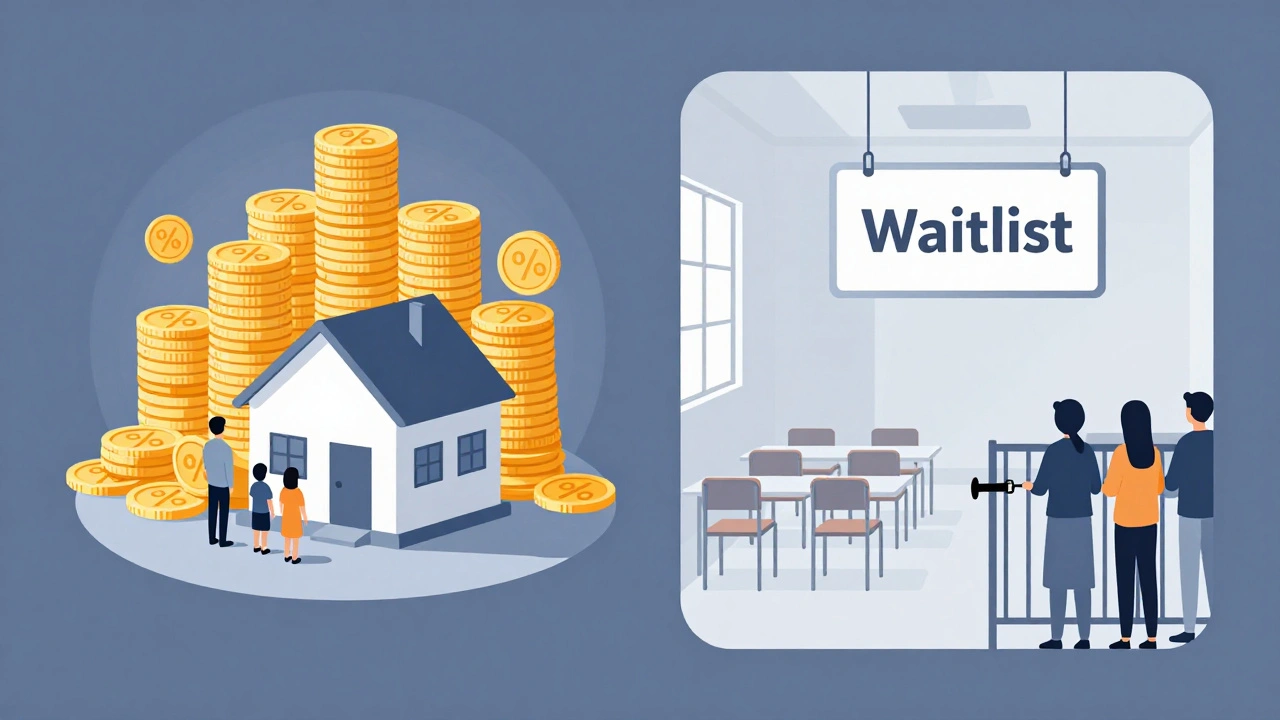
Affordability refers to the direct financial burden placed on families to secure care for their children. In most major U.S. cities, infant care costs more than college tuition. For a dual-income household making $100,000 a year, paying $2,000 a month for daycare eats up nearly 24% of their gross income. That is well above the federal guideline suggesting families should spend no more than 7% of their income on child care. For single mothers, this percentage often skyrockets to 50% or more, forcing impossible choices between paying rent and feeding their kids.
Availability refers to the physical existence of slots in licensed facilities. Even if you can afford the bill, there might not be a seat. In 2025 and early 2026, thousands of small, family-run childcare centers closed down due to low margins and staffing shortages. This left larger corporate centers overwhelmed with waitlists that stretch back six months or more. If you don’t have a spot secured before your baby is born, you effectively cannot work.
The Economic Impact on Women's Careers
When childcare fails, women pay the price. The data from the Bureau of Labor Statistics shows a clear correlation between the lack of accessible care and female labor force withdrawal. But the impact goes deeper than just quitting a job.
- The "Motherhood Penalty": Employers often view mothers as less committed. When a woman has to leave work early because her daycare closes at 5:30 PM, or when she misses meetings due to a child’s illness because there is no backup care, her professional reputation suffers.
- Career Stagnation: Many women turn down promotions or high-stress roles because they know the schedule will be unpredictable without reliable support. This leads to lower lifetime earnings and smaller retirement funds.
- Entrepreneurship Barriers: Starting a business requires long, irregular hours. Without affordable childcare, the risk becomes too high for most mothers to take the leap.
We see this play out in real time. A software engineer in Seattle might have to pause her career for two years because she couldn’t find a slot at a local center. When she returns, her technical skills are outdated, and her network has moved on. She doesn’t just lose income; she loses momentum.
Current Policy Landscape in 2026
So, what is being done? The political conversation around early childhood education has shifted significantly since the passage of various state-level initiatives in the late 2020s. However, a unified national strategy remains fragmented.
Some states have implemented subsidies that cap childcare costs at 7% of income for low-earning families. While this helps those at the bottom, it leaves middle-class families-who earn too much for subsidies but too little to easily absorb rising costs-in the cold. Other states have invested heavily in building new centers, aiming to increase capacity by 20% over the next five years. Yet, construction takes time, and hiring qualified staff takes even longer.
Federal efforts have focused on expanding tax credits. The Child and Dependent Care Tax Credit (CDCTC) was made permanent and expanded in recent legislation, allowing families to claim up to $1,600 per child. This is a helpful boost during tax season, but it does nothing to help a mother who needs cash flow *now* to pay her weekly daycare invoice.
| Policy Type | Primary Benefit | Major Limitation | Target Audience |
|---|---|---|---|
| State Subsidies | Lowers monthly bills directly | Long waitlists; strict income caps | Low-income families |
| Tax Credits (CDCTC) | Reduces annual tax liability | Reimbursement comes months later | Middle to upper-middle class |
| Employer-Sponsored Care | Convenient and sometimes subsidized | Only available at large companies | Corporate employees |
| Head Start Programs | Free comprehensive early education | Does not cover infants/toddlers | Pregnant women and preschoolers |
The Workforce Crisis: It’s Not Just About Parents
You cannot fix childcare policy without addressing the people who provide the care. The industry is facing a severe staffing shortage. Childcare workers are among the lowest-paid professionals in the economy, despite holding degrees in early childhood education.
In 2026, the average hourly wage for a lead teacher in a center-based setting hovers around $15-$18 in many regions. Compare this to fast-food wages, which often exceed $16. Why would someone study developmental psychology just to earn less than a cashier? This wage gap forces experienced teachers to leave the field, leading to higher turnover rates. High turnover means instability for children and chaos for parents.
Policy solutions must include wage supports for providers. If we want affordable care for parents, we must ensure fair pay for workers. Some pilot programs in cities like Portland and Chicago have experimented with public funding models that treat childcare as essential infrastructure, similar to schools. These models show promise in stabilizing both costs and quality.

What Families Can Do Right Now
While we wait for broader legislative changes, families are finding creative ways to navigate the system. Here are practical steps to improve your situation:
- Start Early: Do not wait until after the baby is born. Join waitlists for top-rated centers immediately upon pregnancy confirmation. Many centers prioritize families who applied pre-birth.
- Explore Non-Traditional Options: Look into cooperative childcare arrangements with neighbors or colleagues. Sharing a nanny or rotating care duties can split costs and build community.
- Negotiate with Employers: Ask HR about flexible benefits. Some companies offer stipends for backup care services or allow flexible start/end times to accommodate drop-offs and pick-ups.
- Utilize Local Resources: Contact your local Parent Information Resource Center (PIRC). They can provide lists of licensed home-based providers who may have shorter waitlists than large centers.
Looking Ahead: A Path to Equity
The goal of effective childcare policy is not just to keep women employed. It is to recognize that caring for children is shared societal responsibility. When we invest in affordable, high-quality care, we unlock the potential of half the population. Women stay in the workforce, businesses retain talent, and children receive the early stimulation they need to thrive.
We need policies that treat childcare as a public good, not a luxury commodity. This means sustained public funding, wage increases for educators, and regulations that ensure safety without crushing small providers. Until then, the burden remains disproportionately on women, limiting their freedom and economic power.
The question is no longer whether we can afford to change the system. The question is whether we can afford not to.
How much does childcare cost on average in 2026?
In 2026, the average annual cost for infant care in a center-based setting ranges from $12,000 to $25,000 depending on the location. In high-cost areas like New York or California, this can exceed $30,000 per year. Toddler care is slightly cheaper, averaging $9,000 to $18,000 annually.
Are there federal subsidies for childcare in 2026?
Yes, but they are primarily administered through states. The Child Care and Development Fund (CCDF) provides grants to states, which then distribute subsidies to eligible low-income families. Eligibility varies by state, but generally covers families earning below 85% of the state median income. Additionally, the federal Child and Dependent Care Tax Credit offers a refundable credit of up to $1,600 per child.
Why is there a shortage of childcare spots?
The shortage stems from three main factors: low profit margins for providers, a lack of qualified staff due to low wages, and increased demand post-pandemic as parents returned to the workforce. Many small, family-run centers closed permanently, reducing overall capacity.
How does childcare policy affect women's retirement savings?
When women leave the workforce or reduce hours due to childcare gaps, they miss out on employer-matched 401(k) contributions and compound interest. Over a career, this can result in hundreds of thousands of dollars in lost retirement wealth, exacerbating the gender wealth gap in older age.
What is the difference between Head Start and private daycare?
Head Start is a federally funded program providing free early education, health, and nutrition services to low-income families, typically for children aged 3 to 5. Private daycare operates on a fee-for-service model, serves all ages including infants, and varies widely in cost and quality based on the provider.