Burnout in Women: How to Recognize It and Start Recovery
 Feb, 15 2026
Women are burning out - and it’s not because they’re not trying hard enough. It’s because the expectations placed on them don’t match reality. You’re supposed to excel at work, be the emotional backbone of your family, look good, stay organized, remember everyone’s birthdays, and still have time to breathe. When you can’t do it all, guilt sets in. Then exhaustion. Then numbness. That’s burnout. And it doesn’t look like laziness. It looks like you’ve just lost your spark.
What Burnout Really Feels Like for Women
Burnout isn’t just being tired. It’s a deep, persistent drain that doesn’t go away with a good night’s sleep. For women, it often shows up differently than the classic signs you see in men. You might not be crying at your desk. You might not be yelling at coworkers. Instead, you’re quietly checking out.
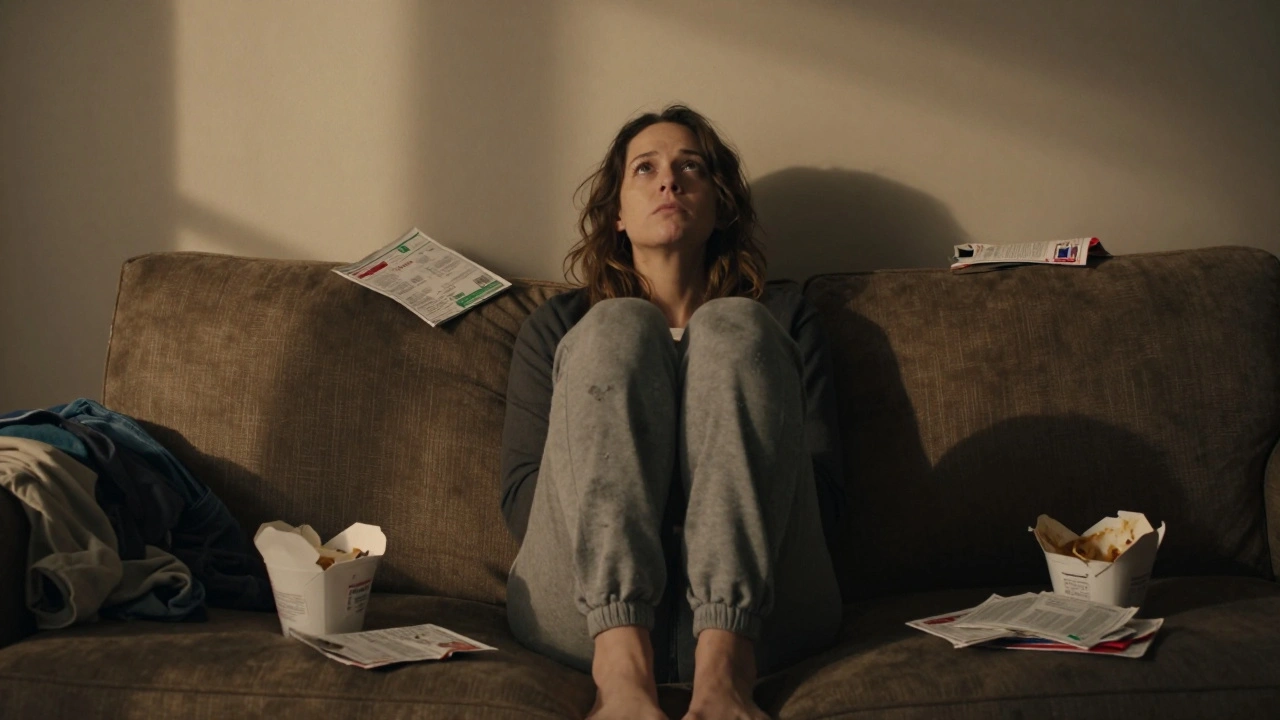
You used to love cooking for your family. Now, you order takeout three nights a week and feel guilty about it. You used to text friends just to say hi. Now, you read their messages and leave them unread for days. You used to look forward to weekends. Now, you just want to lie on the couch and stare at the ceiling. Your body says it’s okay to rest. Your mind says you should be doing more. That tension? That’s burnout.
A 2024 study from the American Psychological Association found that 68% of working women reported feeling emotionally drained at least three times a week - compared to 51% of men. The gap isn’t because women are weaker. It’s because they’re still carrying the invisible load: managing household logistics, soothing partner stress, monitoring kids’ emotional states, and often doing all of it while working full-time or running side businesses.
Signs You’re Burned Out (It’s Not Just Stress)
Stress is temporary. Burnout is chronic. Here’s how to tell the difference:
- You feel detached from people you used to care about - even your kids or partner.
- Small tasks feel overwhelming. Making a grocery list takes two hours.
- You’re irritable, but you don’t know why. You snap at your partner over spilled milk - again.
- You used to get excited about new ideas. Now, even scrolling through Instagram feels exhausting.
- You’ve stopped caring about your appearance. Hair hasn’t been washed in three days. You wear the same sweatpants for a week.
- You’re physically tired, but you can’t sleep. Or you sleep 10 hours and still feel drained.
- You catch yourself thinking: “I used to be someone who…” - and you don’t know who that person is anymore.
If three or more of these sound familiar, you’re not failing. You’re signaling that your system is overloaded. This isn’t weakness. It’s a biological warning.
Why Women Get Burnout Faster - And Why It’s Harder to Notice
Women are socialized to be caretakers. We’re praised for putting others first. We’re told to “just push through.” But pushing through when your tank is empty doesn’t build resilience - it breaks you down.
There’s also a cultural blind spot. When a man says he’s overwhelmed, people ask: “What can we do?” When a woman says the same thing, she’s often met with: “You’re just tired. Try yoga.” Or worse - silence.
And then there’s the shame. You feel guilty for not being able to do it all. You compare yourself to women on Instagram who “have it all.” But those posts aren’t real. They’re curated highlights. The real story? The woman who posted that photo of her perfect breakfast? She cried in the bathroom after taking it.
Recovery Starts With One Simple Step: Stop Trying to Fix Everything
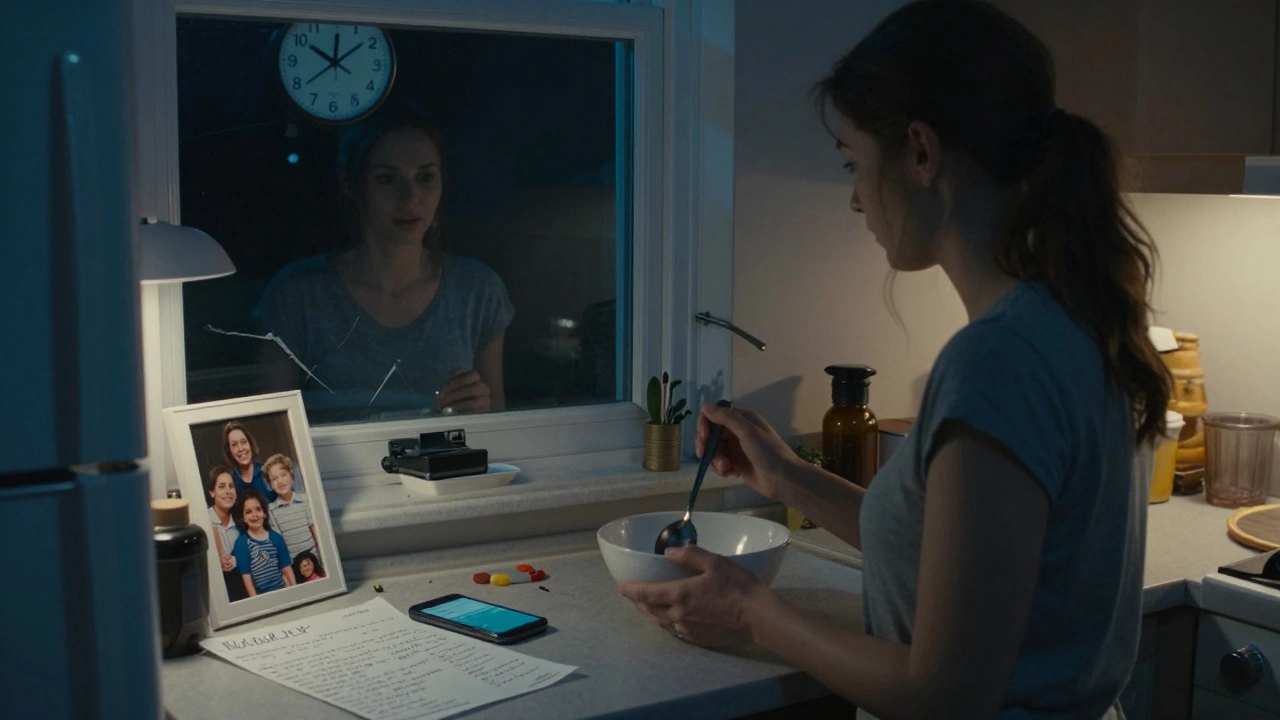
You can’t recover from burnout by doing more self-care. You can’t journal your way out of it. You can’t meditate your way through 14-hour days. Recovery starts with reduction.
Here’s how to begin:
- Identify one thing you can drop. Not “cut back.” Not “delegate.” Drop. Maybe it’s hosting weekly dinner parties. Maybe it’s checking work email after 7 p.m. Maybe it’s being the one who remembers every relative’s doctor appointment. Pick one. Let it go. No explanations needed.
- Protect your sleep like it’s a legal right. You don’t need more time. You need better rest. Set a hard bedtime. No screens. No “just one more thing.” Your brain needs 7-8 hours to reset. Anything less is a slow form of self-harm.
- Find one person you can be real with. Not your therapist. Not your mom. Someone who won’t fix it. Someone who’ll say: “Yeah, that sucks. Want tea?” That connection is your lifeline.
- Move your body - but not to burn calories. Walk. Stretch. Dance in your kitchen. The goal isn’t fitness. It’s to remind your body it’s still alive. Movement without pressure is medicine.
- Stop apologizing for needing space. Saying “I need a day off” isn’t selfish. It’s survival.
Rebuilding After Burnout: It’s Not About Getting Back to Normal
You won’t go back to who you were before. And you shouldn’t. Burnout doesn’t break you - it reveals what you’ve been pretending to be okay with.
Recovery means building a new rhythm. One that doesn’t ask you to be everything to everyone. One that lets you say no. One where rest isn’t a reward - it’s the foundation.
Start small. Ask yourself: “What’s one thing I’d do if I didn’t have to be perfect?” Maybe it’s taking a nap. Maybe it’s quitting a volunteer role. Maybe it’s telling your boss you can’t take on another project. Do it. Then do it again. And again.
Recovery isn’t linear. Some days you’ll feel like yourself again. Other days, you’ll cry over a spilled glass of water. That’s okay. Healing isn’t about fixing. It’s about forgiving yourself for not being able to do it all.

When to Get Professional Help
Some burnout turns into depression. Some turns into anxiety. Some turns into chronic physical pain - headaches, digestive issues, heart palpitations. If you’ve tried the steps above and still feel numb, hopeless, or physically unwell after 6-8 weeks, it’s time to talk to a therapist who specializes in women’s mental health.
You don’t need a crisis to deserve help. You don’t need a diagnosis. You just need to be tired enough to know you can’t keep going like this.
Final Thought: You’re Not Broken. You’re Overloaded.
Burnout in women isn’t a personal failure. It’s a systemic one. The systems we live in - at work, at home, in society - were never designed for human sustainability, especially not for women. You didn’t break because you weren’t strong enough. You broke because you kept giving when you had nothing left.
Recovery isn’t about becoming more productive. It’s about becoming more human. And that starts with letting go of the myth that you have to do it all. You don’t. You never did.
Can burnout in women be mistaken for depression?
Yes, they often overlap. Burnout is tied to work or caregiving stress and usually improves when the source is removed. Depression is deeper, more persistent, and affects mood even when life circumstances change. But the line blurs - especially when burnout lasts months. If you’re unsure, a mental health professional can help distinguish between them. You don’t need to have it all figured out to ask for help.
Is burnout only a problem for working women?
No. Stay-at-home moms, caregivers for aging parents, students, single mothers, and women running side businesses all experience burnout. The common thread isn’t employment - it’s emotional labor. The invisible work of managing feelings, schedules, and expectations without recognition or rest. It doesn’t matter if you’re paid or not - if you’re carrying the load, you’re at risk.
How long does recovery from burnout take?
There’s no set timeline. For some, it takes 3-6 months of consistent rest and boundary-setting. For others, it takes over a year - especially if they’re still in the same stressful environment. The key isn’t speed. It’s consistency. Small, daily choices to protect your energy add up. Rushing back into old patterns will just lead to another breakdown.
What if my family doesn’t understand my burnout?
It’s common. Many people think burnout is just being “lazy” or “overdramatic.” You don’t need them to understand. You need them to respect your limits. Say: “I’m not okay, and I need space to heal. I’m not asking you to fix it - just don’t make it worse.” If they can’t do that, it’s not your fault. Your healing comes first.
Can burnout lead to long-term health problems?
Yes. Chronic stress from untreated burnout increases the risk of heart disease, autoimmune disorders, digestive issues, and hormonal imbalances. Women are especially vulnerable because stress hormones like cortisol disrupt estrogen and progesterone balance. Ignoring burnout isn’t just emotional - it’s physical. Treating it early protects your long-term health.