Budget Templates for Women: Simple Formats You’ll Actually Use
 Aug, 17 2026
Most budget templates are built for a generic user who tracks every penny in a spreadsheet and enjoys complex formulas. But if you’re like most people, you just want to know where your money went last month and how much you can spend on coffee this week without breaking the bank.
The problem isn’t that you don’t know how to budget. It’s that the tools feel rigid, time-consuming, or designed for someone else’s life. That’s why we’re focusing on simple formats that fit real routines, not idealized ones. Whether you use a notebook, a phone app, or a single sheet of paper, the goal is the same: clarity without chaos.
Why Most Budget Systems Fail (And How to Fix It)
Let’s be honest: if a system takes more than ten minutes a day to maintain, it won’t last. The biggest reason budgets fail isn’t math-it’s friction. If you have to log every transaction immediately after buying groceries, you’ll skip it by Friday. By the end of the month, you’re guessing, not tracking.
The fix? Design your template around your actual behavior. Do you check your phone constantly? Use an app with quick-entry buttons. Do you prefer writing things down to feel in control? A physical planner works better than any digital tool. The best personal finance tool is the one you actually open.
Also, stop trying to track everything. Not every dollar needs a category. Group similar expenses together. “Dining out” covers lunch, dinner, and takeout. “Transportation” covers gas, transit, and rideshares. Simplicity beats precision when it comes to consistency.
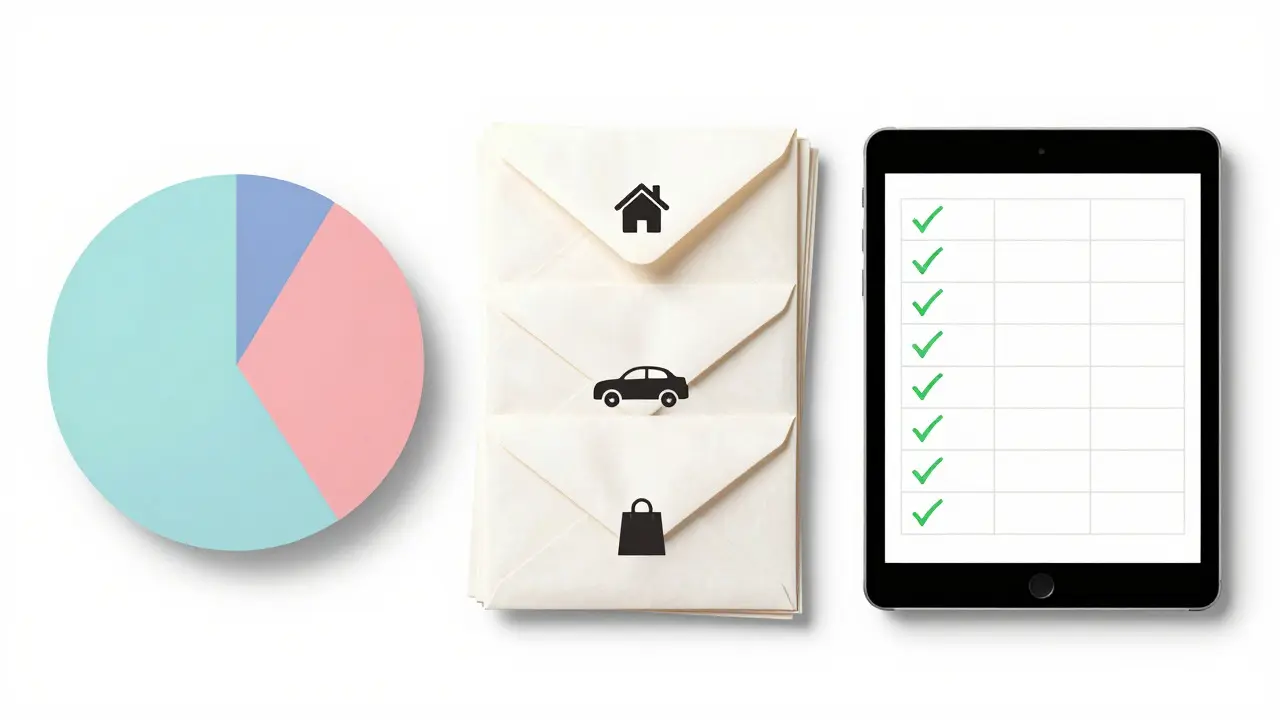
The Three Core Budget Formats That Work Best
You don’t need five different systems. You need one that matches your income pattern and spending habits. Here are the three formats that consistently stick for women juggling careers, family, and personal goals:
- The 50/30/20 Rule Template: This is the classic. 50% of your income goes to needs (rent, utilities, groceries), 30% to wants (dining out, hobbies, subscriptions), and 20% to savings or debt repayment. It’s flexible, easy to calculate, and doesn’t require daily logging. Just check your categories at the end of each month.
- The Zero-Based Monthly Sheet: Every dollar gets assigned a job before the month starts. If you make $3,000, you allocate all $3,000 across categories until you hit zero. This format works well if you tend to overspend because it forces intentional decisions upfront. No leftover funds means no impulse buys.
- The Envelope Method (Digital or Physical): Assign cash or digital limits to specific categories. When the envelope is empty, you stop spending in that area. It’s tactile, visual, and great for curbing overspending on things like shopping or entertainment.
Which one should you pick? If your income is steady and you want low effort, go with 50/30/20. If you struggle with overspending, try zero-based. If you love seeing progress visually, envelopes win.
Customizing Your Template for Real Life
Here’s where most people get it wrong: they copy a template straight from the internet without adjusting it. But your life isn’t standard. Maybe you work freelance and your income fluctuates. Maybe you share expenses with a partner. Maybe you have kids, pets, or student loans.
Tailor your categories to reflect your reality. Instead of “Housing,” maybe you need “Rent + Utilities + Internet.” Instead of “Savings,” break it into “Emergency Fund,” “Vacation Fund,” and “Retirement.” Specificity helps you see exactly where your money is going and where it’s leaking.
Also, build in buffer lines. Add a “Miscellaneous” or “Unexpected” category with a small amount set aside each month. Life happens-car repairs, medical bills, gift emergencies. Having a pre-allocated line prevents these costs from derailing your entire budget.
Tools and Apps That Keep It Simple
You don’t need expensive software. Free or low-cost options work perfectly fine. Here’s what actually saves time:
- Spreadsheet Apps: Google Sheets or Excel are free and customizable. Create a tab for each month, with columns for Income, Expenses, Savings, and Notes. Use conditional formatting to highlight categories that exceed their limit.
- Budgeting Apps: YNAB (You Need A Budget) is popular for its zero-based approach. Mint or Personal Capital are good for automatic bank syncing. Choose one based on whether you prefer manual entry or automated tracking.
- Notebooks and Planners: If you’re a visual learner or hate screens, a dedicated finance journal works wonders. Write down your plan on the first of the month, then update it weekly. The act of writing increases accountability.
The key is consistency, not complexity. Pick one tool and stick with it for at least three months before judging if it works.

Common Pitfalls to Avoid
Even with the right template, mistakes can creep in. Watch out for these:
- Over-categorizing: More than 10-12 categories makes tracking painful. Stick to broad groups.
- Ignoring recurring charges: Subscriptions sneak up. Review them quarterly. Cancel what you don’t use.
- Not reviewing monthly: A budget isn’t set-and-forget. Spend 15 minutes at the end of each month comparing actuals to planned amounts. Adjust next month accordingly.
- Perfectionism: If you missed a few days of tracking, don’t quit. Just resume. Progress matters more than perfection.
How to Start Today (In Under 15 Minutes)
You don’t need to overhaul your finances overnight. Here’s a quick start plan:
- Choose your format: 50/30/20, zero-based, or envelopes.
- List your fixed expenses: rent, insurance, loan payments.
- Estimate variable expenses: groceries, dining, transport.
- Set your savings target: even 5% is a start.
- Pick your tool: app, spreadsheet, or notebook.
- Log your first week’s spending honestly, without judgment.
That’s it. You now have a working budget. Refine it over time, but don’t wait for the perfect system. Action beats analysis every time.
| Format | Best For | Time Commitment | Flexibility |
|---|---|---|---|
| 50/30/20 Rule | Steady income, low-effort tracking | Low (monthly review) | High |
| Zero-Based Budget | Overspenders, detailed planners | Medium (weekly updates) | Low |
| Envelope Method | Visual learners, impulsive buyers | Medium (cash handling) | Medium |
Do I need to track every single expense?
No. Focus on major categories and large purchases. Small, frequent expenses like coffee or snacks can be grouped under “Miscellaneous” or estimated weekly. The goal is awareness, not accounting.
What if my income changes every month?
Use your lowest recent income as your baseline for essential expenses. Allocate extra income toward savings or debt repayment. This prevents lifestyle inflation during high-earning months.
Is a budget the same as a financial plan?
A budget is a short-term tool for managing monthly cash flow. A financial plan includes long-term goals like retirement, investing, and estate planning. Start with a budget; expand into a full plan once you’re consistent.
How often should I update my budget template?
Review it monthly. Make minor adjustments as needed, but avoid overhauling the structure unless your life circumstances change significantly (e.g., new job, moving, having a child).
Can I use a budget template if I’m self-employed?
Yes, but add a “Business Expenses” category and separate personal vs. business accounts. Set aside taxes monthly to avoid surprises. Consider using a dual-account setup for clarity.