Body Image Support Resources for Women: A Practical Guide to Finding Help
 Aug, 17 2026
Standing in front of the mirror and feeling like you don't fit the mold is a common experience, but it doesn't have to be your permanent state. If you are searching for body image support, you are likely looking for more than just affirmations; you need actionable paths to healing, professional guidance, and a community that gets it. Whether you are dealing with postpartum changes, the aftermath of diet culture, or chronic self-criticism, finding the right help is the first step toward reclaiming your relationship with yourself.
This guide cuts through the noise to show you exactly where to look for help. We will break down the different types of resources available, from clinical therapy to peer-led communities, so you can choose what fits your specific situation and budget.
Key Takeaways
- Cognitive Behavioral Therapy (CBT) is the gold standard for treating negative body image, focusing on changing thought patterns rather than just physical appearance.
- Online communities offer immediate validation but require careful curation to avoid toxic comparisons or unverified medical advice.
- Specialized therapists who focus on eating disorders or trauma-informed care provide deeper support than general practitioners.
- Local workshops and group sessions reduce isolation and provide real-time social feedback, which is crucial for long-term change.
- Combining professional help with daily micro-habits creates a sustainable framework for improving body neutrality.
Understanding the Landscape of Body Image Struggles
Before diving into resources, it helps to understand why body image issues persist. It is rarely just about weight. Often, it is tied to societal pressures, past experiences, or mental health conditions like anxiety or depression. The goal of support isn't necessarily to love every inch of your body every single day-that’s an unrealistic expectation. Instead, the aim is often body neutrality: reaching a point where your body is seen as a functional vehicle rather than a project to be fixed.
When you seek help, you are essentially building a toolkit. This toolkit might include a therapist who helps you reframe negative thoughts, a friend group that celebrates diverse bodies, or digital tools that track progress without triggering obsession. Identifying which piece of the puzzle is missing for you is the most critical part of this process.
Professional Therapeutic Options
If your negative body image is interfering with your daily life, professional help is the most effective route. Not all therapists specialize in this area, so knowing what to look for matters.
- Cognitive Behavioral Therapy (CBT): This approach identifies the automatic negative thoughts you have about your body and challenges their validity. For example, if you think "I look terrible," CBT helps you examine the evidence for and against that belief. It is highly structured and proven to work for body dysmorphia and general dissatisfaction.
- Acceptance and Commitment Therapy (ACT): Unlike CBT, which tries to change thoughts, ACT focuses on accepting difficult feelings while committing to actions aligned with your values. It’s useful if you find that fighting your thoughts only makes them stronger.
- Eating Disorder Specialists: If your body image struggles are linked to disordered eating behaviors, you need a clinician who understands the intersection of nutrition, psychology, and physical health. These professionals often work in multidisciplinary teams.
When searching for a therapist, look for keywords like "body image specialist," "trauma-informed care," or "eating disorder recovery." Many directories allow you to filter by these specializations. Initial consultations are usually free or low-cost, giving you a chance to assess if the therapist feels safe and knowledgeable.
Digital Communities and Online Platforms
The internet is a double-edged sword for body image. On one hand, it connects you with millions of people who share your experience. On the other, algorithms often feed you content that triggers insecurity. Curating your online space is a form of self-care.
| Resource Type | Best For | Potential Risks | Cost |
|---|---|---|---|
| Support Forums | Anonymous sharing, specific condition queries | Unverified advice, outdated information | Free |
| Social Media Groups | Peer validation, daily inspiration | Comparison culture, algorithmic bias | Free |
| Video Conferencing Apps | Remote therapy, virtual support circles | Technical issues, lack of non-verbal cues | Variable ($50-$150/session) |
Look for moderated groups where rules explicitly ban diet talk or weight-watching updates. These spaces tend to foster genuine connection. Additionally, many therapists now offer telehealth services, making specialized care accessible even if you live in a rural area or have mobility issues.
Local Workshops and Peer-Led Programs
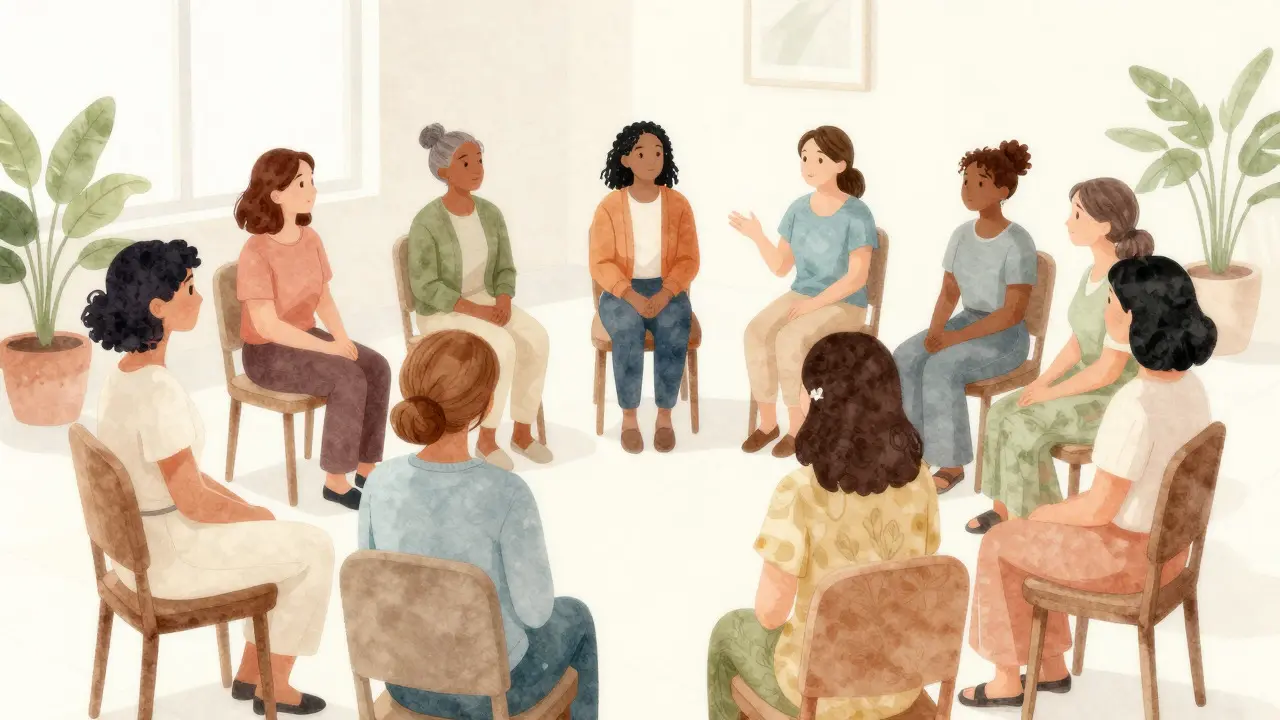
Sometimes, talking to a stranger in a small room works better than a one-on-one session. Local organizations often host workshops focused on mindfulness, movement without judgment, and art therapy. These events are typically led by certified facilitators who create a safe container for sharing.
In cities like Portland, Oregon, you might find community centers offering "body liberation" yoga classes or writing workshops dedicated to self-compassion. Check local community boards, university extension programs, or wellness centers. These programs are often lower cost than private therapy and provide a sense of belonging that is hard to replicate online.

Building a Daily Practice for Body Neutrality
Resources are only half the battle. The other half is what you do with that knowledge every day. Here are practical steps to integrate support into your routine:
- Audit Your Inputs: Unfollow accounts that make you feel bad about your size, shape, or features. Follow creators who represent diversity in age, ability, and body type.
- Practice Functional Gratitude: Instead of complimenting how you *look*, notice how your body *feels* or what it *does*. "My legs carried me up those stairs" is a powerful shift from "I wish my legs were thinner."
- Limit Mirror Time: If checking yourself in the mirror triggers anxiety, set a time limit or use mirrors strategically (e.g., only when getting dressed, not for constant monitoring).
- Join a Movement Class: Choose activities based on enjoyment, not calorie burn. Dance, swimming, or hiking allow you to connect with your body’s capabilities without the pressure of performance.
Consistency matters more than intensity. Small, repeated actions build new neural pathways that challenge old, critical habits.
How to Choose the Right Resource for You
Selecting the right help depends on your current needs. Ask yourself these questions: 1. Is this acute or chronic? If you are in crisis, prioritize emergency services or intensive outpatient programs. If it’s a long-standing struggle, therapy and community support are more appropriate. 2. Do I prefer structure or flexibility? CBT provides clear homework and goals. Mindfulness-based approaches offer more fluidity. 3. What is my budget? Sliding scale therapy, community workshops, and free online groups make support accessible regardless of income. 4. Am I comfortable with anonymity? Online forums allow you to share without revealing your identity, which can be helpful in early stages of recovery.
There is no one-size-fits-all solution. Many people combine several resources, such as weekly therapy with daily participation in an online support group. The key is to remain open to adjusting your plan as you heal.
Frequently Asked Questions
How long does it take to see improvement in body image?
Improvement varies significantly. Some people notice shifts in mindset within a few weeks of starting therapy or changing their media consumption. However, deep-seated beliefs formed over years may take six months to a year to fully rewire. Consistency is the biggest predictor of success.
Is body image support only for people with eating disorders?
No. While eating disorder specialists handle severe cases, body image struggles affect a wide range of people. Many individuals without clinical diagnoses benefit from therapy, coaching, or community support to improve their self-esteem and reduce daily stress related to appearance.
What should I avoid when seeking online help?
Avoid unmoderated forums where users give unsolicited medical advice or promote extreme diets. Steer clear of social media accounts that rely on before-and-after photos for engagement, as these often trigger comparison. Look for spaces with clear guidelines and active moderation.
Can friends and family replace professional help?
Friends and family provide essential emotional support, but they may lack the training to address cognitive distortions or trauma. They can be allies, but they are not substitutes for professional guidance, especially if your struggles are persistent or severe.
How do I find a therapist who specializes in body image?
Use directory websites that allow filtering by specialization. Search for terms like "body image," "eating disorder," or "trauma-informed." Read their bios to see if they mention specific populations or issues you relate to. Don’t hesitate to ask during a consultation if they have experience with your specific concerns.