Beyond the 'Ideal' Body: How to Challenge Unrealistic Beauty Standards
 Apr, 8 2026
The Machinery of the 'Ideal'
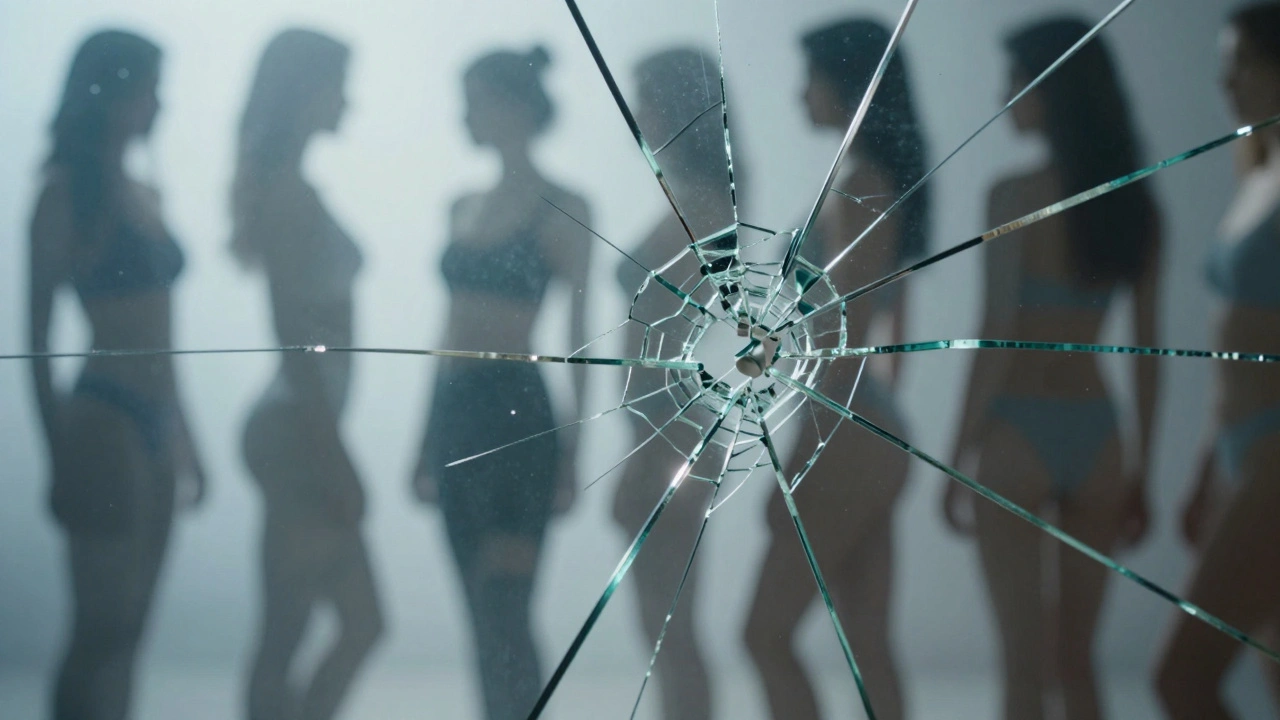
To stop feeling inadequate, we first need to understand where these standards come from. The 'ideal body' isn't a biological fact; it's a social construct. Body Positivity is a social movement asserting that all bodies are beautiful regardless of size, shape, or perceived flaws. It emerged as a direct response to a culture that profits from our insecurities.
Think about the Beauty Industry. If you woke up tomorrow and loved every single inch of your skin, hair, and waistline, entire corporate empires would collapse. They don't sell creams or gym memberships to people who feel complete; they sell them to people who feel broken. When we see a curated image on a screen, our brains often mistake it for the average, even though it's usually the result of professional lighting and digital manipulation.
Digital altering has reached a point where we are comparing our real-life, 3D bodies to 2D images that don't even exist in reality. Photoshop and AI-driven filters have created a 'hyper-real' standard. We aren't just competing with celebrities; we're competing with algorithms designed to erase pores and warp proportions. This constant exposure leads to a psychological phenomenon where we internalize these standards, making us feel that our natural bodies are 'wrong' or 'unfinished'.
Unlearning the Shame Cycle
Most of us learned how to judge our bodies before we even hit puberty. Maybe it was a comment from a relative about 'baby weight' or a gym teacher focusing on weight instead of movement. This creates a cycle: we see a standard, we feel a gap between ourselves and that standard, and we experience shame. To challenge this, we need to move from a place of judgment to a place of neutrality.
This is where Body Neutrality comes in. While body positivity asks us to love our looks, body neutrality suggests that our looks are the least interesting thing about us. It's the idea that your body is a vessel for your life, not a decorative object for others to critique. Instead of forcing yourself to love a part of your body you hate, you can simply acknowledge: 'This is my arm. It helps me hug my friends and carry my groceries.'
Shifting your mindset requires active effort. It's like training a muscle. When you catch yourself criticizing your reflection, ask yourself: 'Who told me this was a problem?' Often, the voice in your head isn't yours-it's an echo of a magazine ad or a critical comment from ten years ago. By identifying the source of the shame, you can start to detach your value from your appearance.
Curating Your Digital Environment
You can't expect to feel good about your body if your social media feed is a non-stop parade of 'perfect' bodies. The algorithm doesn't know you're feeling insecure; it just knows you're engaging with content. If you spend an hour scrolling through fitness influencers who promote restrictive diets, your brain starts to accept those outliers as the norm.
| Consumption Style | Typical Content | Emotional Outcome | Impact on Body Image |
|---|---|---|---|
| Comparison-Based | Highly edited, 'ideal' bodies, diet tips | Anxiety, inadequacy | Negative (increases shame) |
| Diverse-Based | Various sizes, skin textures, abilities | Relief, normalization | Positive (reduces stigma) |
| Function-Based | Athletes, artists, people moving their bodies | Inspiration, gratitude | Neutral/Positive (focuses on capability) |
Start a 'digital detox' of your following list. Unfollow anyone who makes you feel like you need to shrink, change, or hide yourself to be valuable. Instead, seek out creators who share unedited photos, talk about Health at Every Size (HAES), and showcase the reality of human skin-stretch marks, cellulite, and bloating included. When you fill your feed with diverse bodies, the 'ideal' starts to look boring and fake, and the real world starts to look beautiful.

The Link Between Body Image and Mental Health
Challenging the body myth isn't just about vanity; it's a critical part of Mental Health. When we tie our self-worth to a physical standard, we are building our identity on shifting sand. This often leads to a state of chronic stress, where we are constantly monitoring our appearance instead of engaging with our lives.
Research into Cognitive Behavioral Therapy (CBT) shows that challenging the 'automatic thoughts' we have about our bodies can significantly lower rates of depression and anxiety. For example, instead of thinking, 'I can't wear that dress because my stomach is too big,' a CBT approach would be to ask, 'Why does the size of my stomach determine whether I can enjoy this fabric and this event?'
Moreover, the obsession with the ideal body often masks deeper emotional needs. We might try to control our weight because we feel a lack of control in other areas of our lives-like a stressful job or a rocky relationship. Recognizing that the 'body project' is often a distraction allows us to address the actual sources of our unhappiness.
Practical Steps to Challenge the Myth
Changing a lifelong habit of self-criticism doesn't happen overnight. It requires small, consistent actions that prove to your brain that you are more than your measurements. Here are a few ways to start:
- Dress for the body you have today. Stop buying 'goal clothes'-those jeans two sizes too small that sit in the back of your closet as a reminder of failure. Wear clothes that feel comfortable and flattering right now. This is an act of self-respect.
- Change your internal dialogue. When you start a negative spiral, speak to yourself as you would a best friend. You'd never tell your friend their thighs are 'too much' or their skin is 'too imperfect.' Apply that same grace to yourself.
- Focus on capability over appearance. Shift your fitness goals from 'losing X pounds' to 'being able to carry all my groceries in one trip' or 'hiking for an hour without feeling winded.' When you value what your body can do, you stop worrying so much about how it looks.
- Audit your environment. Look at the art on your walls and the media you consume. If everything you see represents a narrow slice of humanity, consciously introduce diversity into your visual world.
The Ripple Effect of Acceptance
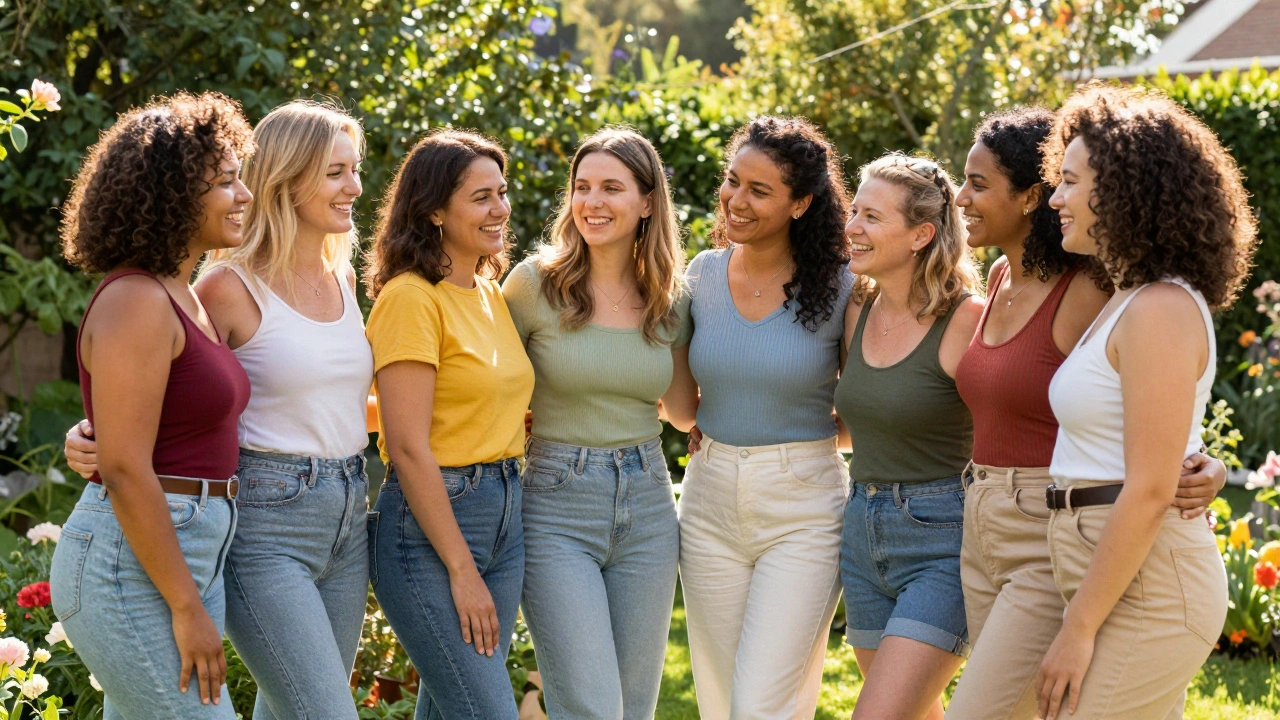
When you stop policing your own body, you stop policing others. The myth of the ideal woman's body relies on a collective agreement to judge one another. By breaking that agreement, you give the people around you permission to stop judging themselves too.
Imagine a world where we don't compliment women primarily on their weight loss or their 'perfect' skin, but on their curiosity, their kindness, or their skill. We move from a culture of surveillance to a culture of connection. This transition is difficult because it requires us to face the void where our vanity used to be, but it's where genuine confidence is born.
True confidence isn't the belief that you are the most beautiful person in the room; it's the realization that your beauty is not the point of your existence. You are a human being with a complex inner world, a history, and a future. Your body is simply the home that allows you to experience all of it.
What is the difference between body positivity and body neutrality?
Body positivity focuses on loving your body and seeing beauty in all shapes and sizes. Body neutrality, on the other hand, takes the focus off appearance entirely. It encourages you to appreciate your body for its functions-like breathing, walking, and thinking-rather than its aesthetic value. Many find neutrality more sustainable because it doesn't require a constant state of 'loving' something you might struggle with.
How can I stop comparing myself to people on Instagram?
The first step is a ruthless audit of your following list. Unfollow accounts that trigger feelings of inadequacy. Then, intentionally follow a diverse range of bodies, including people of different ages, sizes, and abilities. When you see a 'perfect' photo, remind yourself that you are seeing a highly curated, likely edited, split-second moment, not a real human life.
Does challenging beauty standards mean I shouldn't care about health?
Not at all. The goal is to decouple health from a specific look. You can prioritize nutrition and movement because it makes you feel energetic and strong, rather than doing it to hit a specific number on a scale or fit into a certain clothing size. Health is a feeling and a function, not a visual aesthetic.
What do I do when others comment on my body?
You can set firm boundaries. A simple, 'I'm focusing on how I feel rather than how I look right now, so I'd prefer we talk about something else,' is effective. By refusing to engage in body-talk, you signal that physical appearance is not a valid metric for judging a person's value.
Can I really change how I feel about my body after years of insecurity?
Yes, but it is a process, not a switch. It involves consistently challenging negative thoughts and replacing them with neutral or positive ones. Over time, these new neural pathways become stronger. Seeking help from a therapist specializing in body dysmorphia or self-esteem can also accelerate this healing process.
Next Steps for Your Journey
If you're feeling overwhelmed, start small. Pick one thing this week: maybe it's unfollowing three accounts that make you feel bad, or maybe it's wearing that 'risky' outfit you've been saving for a 'better' version of yourself. The goal isn't perfection-because perfection is the very myth we're dismantling. The goal is freedom.
For those who find that body image issues are severely impacting their daily life, consider looking into practitioners who use Health at Every Size (HAES) principles. They focus on sustainable health behaviors without the harmful obsession with weight loss, providing a safer space to rebuild your relationship with yourself.