Bedroom Design for Better Sleep: A Woman’s Checklist
 Feb, 6 2026
Most women don’t realize their bedroom is sabotaging their sleep-not because of stress or caffeine, but because of what’s actually in the room. A 2024 sleep study from the National Sleep Foundation found that 68% of women who reported poor sleep had at least three design flaws in their bedroom. It’s not about luxury. It’s about biology. Your body doesn’t care if your sheets are 1000-thread-count Egyptian cotton. It cares about darkness, temperature, and quiet. Here’s how to fix it.
Darkness Isn’t Optional-It’s Essential
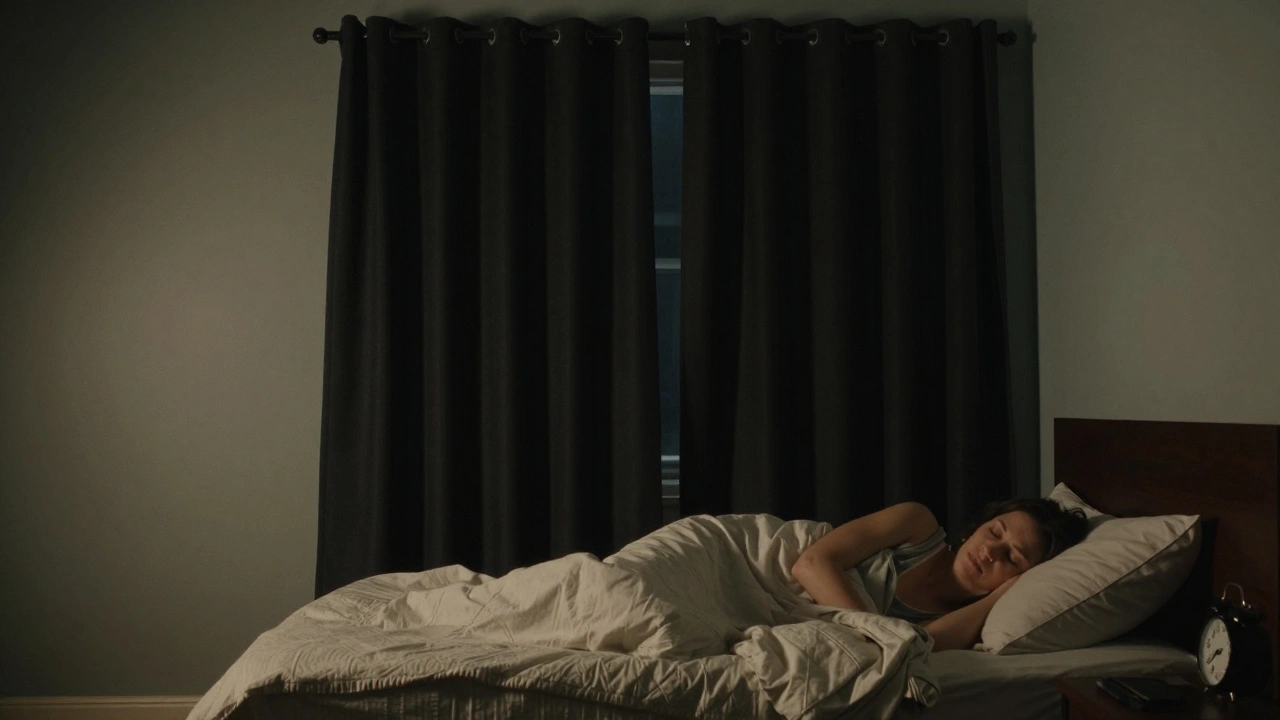
Your brain needs total darkness to produce melatonin, the hormone that tells your body it’s time to sleep. Even a sliver of light from a streetlamp, a charging phone, or a digital alarm clock can disrupt your sleep cycle. Many women think blackout curtains are overkill. They’re not.
Install blackout curtains that extend beyond the window frame on all sides. Don’t settle for semi-blackout. Look for ones rated at 99% light blockage. If you still see light around the edges, add adhesive foam strips to seal gaps. Your phone? Put it in another room. If you must keep it nearby, turn it face down and enable grayscale mode so it doesn’t glow. Blue light from screens suppresses melatonin for hours-even after you’ve turned them off.
Temperature Is the Silent Sleep Killer
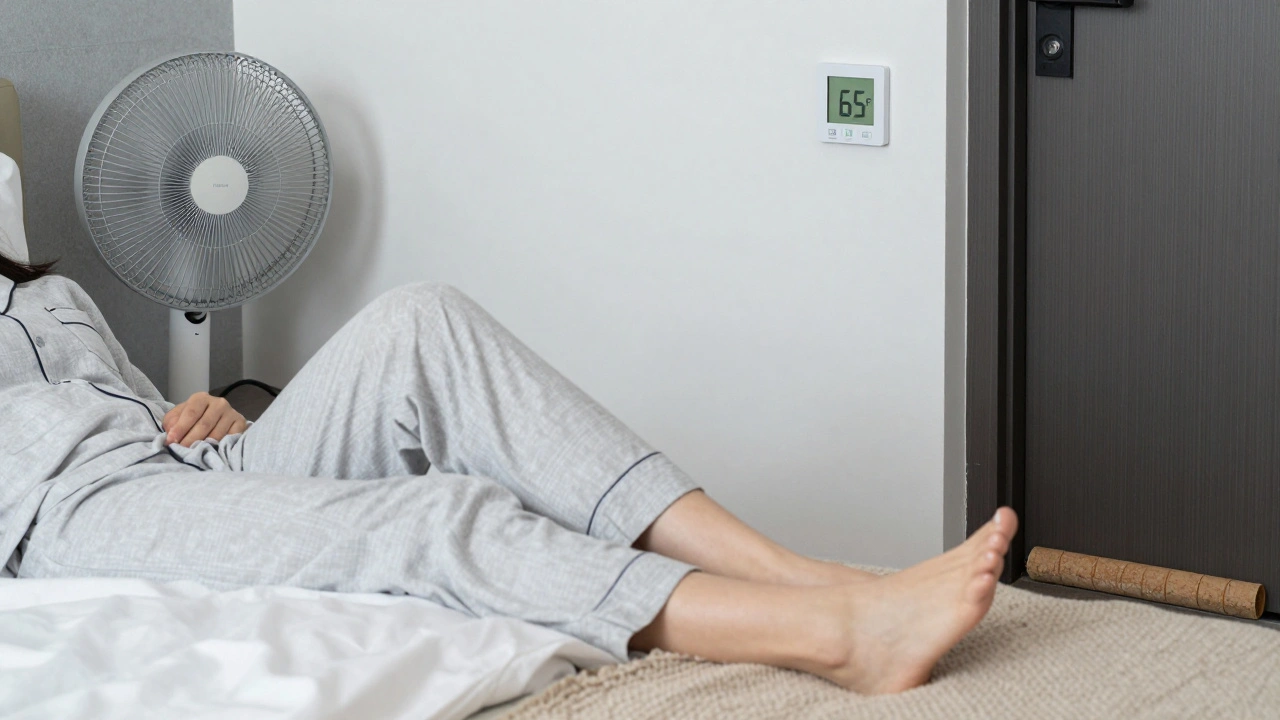
The ideal bedroom temperature for sleep is between 60 and 67 degrees Fahrenheit. That’s colder than most people think. Women, especially those over 40, are more sensitive to temperature shifts due to hormonal changes. A room that feels cozy at 72 degrees is actually keeping you awake in cycles of micro-awakenings.
Use a smart thermostat to automatically drop the temperature 2 degrees after bedtime. If you can’t install one, try this: sleep with one leg uncovered. It sounds weird, but it works. Your body cools down naturally during sleep, and having one limb exposed helps regulate core temperature. Also, ditch heavy down comforters. Switch to a breathable, moisture-wicking duvet made of cotton or TENCEL™. Wool blankets layered underneath can help too-they naturally wick sweat and adjust to your body heat.
Noise Doesn’t Have to Be Loud to Ruin Sleep
You might think you sleep through your partner’s snoring or the hum of the refrigerator. But your brain doesn’t. Even low-level noise triggers micro-arousals-brief moments when your brain shifts from deep sleep to light sleep. These add up. You don’t remember them. But you wake up tired.
White noise machines are outdated. Try a fan instead. It’s cheaper, quieter, and produces a steady, natural airflow that masks sudden noises. If you live in a noisy neighborhood, seal windows with weatherstripping and add a door draft stopper. Rattling blinds? Replace them with solid shutters or roll-down shades. Even the sound of your own breathing can be distracting if the room is too quiet. A low, consistent sound barrier is your friend.
Furniture Layout That Actually Helps You Sleep
The bed shouldn’t face the door. That’s not a Feng Shui myth-it’s a primal response. Humans evolved to sleep with their backs to walls, not open space. If your bed is positioned so you can see the door from your pillow, you’re subconsciously staying alert. Move it so the headboard is against a solid wall, and the door is out of direct line of sight.
Also, get rid of clutter under the bed. Boxes, suitcases, and old laundry create visual noise. Your brain doesn’t shut off just because you close your eyes. Keep the space under the bed clear or use low-profile storage bins with smooth lids. And no TVs or work desks in the bedroom. That room should only have one purpose: sleep. If you read in bed, use a small, focused reading lamp-not overhead lighting.
Color and Texture Matter More Than You Think
Wall color isn’t just about aesthetics. Cool tones like soft blues, muted greens, and warm grays lower heart rate and reduce stress hormones. A 2023 study from the University of Oregon found that women sleeping in rooms painted in these colors reported 30% fewer nighttime awakenings than those in white or yellow rooms.
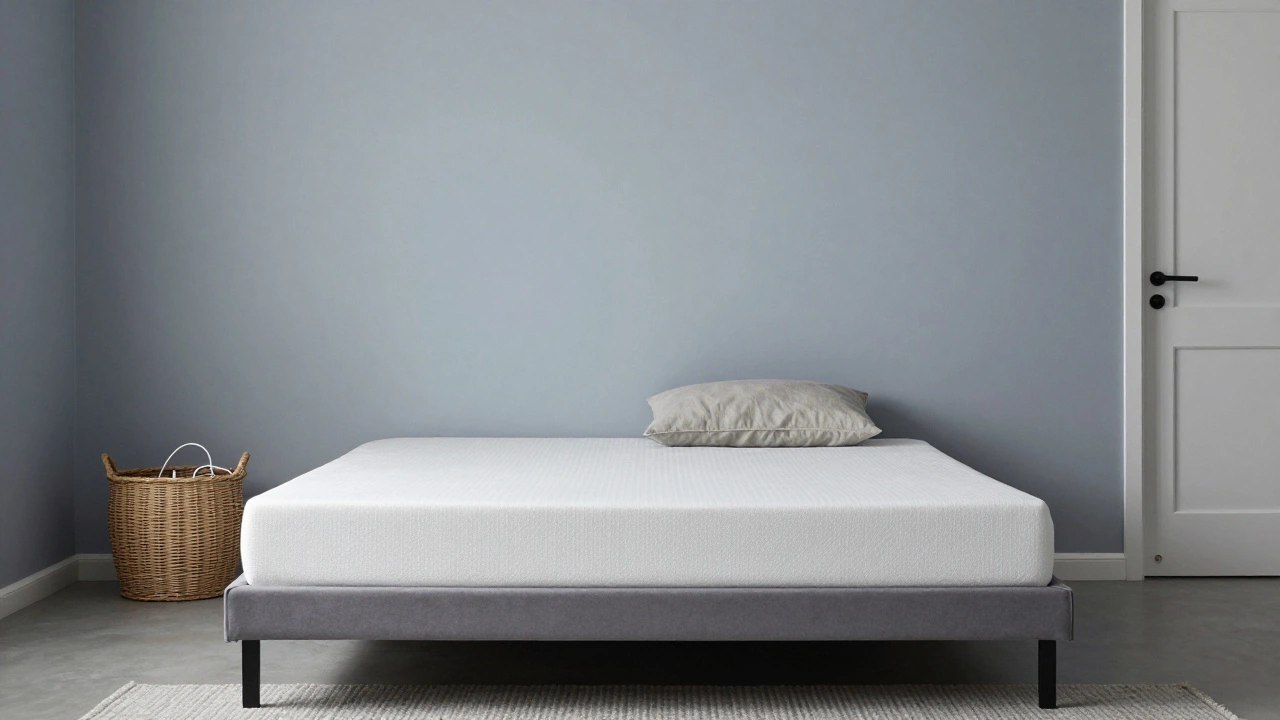
Texture matters too. Avoid shiny, reflective surfaces. Glossy paint, glass lamps, and metallic frames bounce light and create visual tension. Stick to matte finishes on walls and furniture. Choose bedding made from natural fibers-cotton, linen, or bamboo. Synthetic fabrics trap heat and create static, which can make you feel restless. Your pillow should be firm enough to support your neck but soft enough to sink into slightly. Memory foam with a cooling gel layer works best for most women.
The Little Things That Break Your Sleep Routine
Here’s what most women overlook:
- Charging cords draped across the nightstand-tangle them in a basket or hide them behind the bed.
- A mirror facing the bed-your subconscious picks up on movement in reflections, even in low light. Cover it with a scarf or move it.
- Scented candles or air fresheners-fragrances can be calming, but many contain chemicals that irritate airways. Use only 100% essential oil diffusers, and turn them off before bed.
- Wearing socks to bed-this sounds helpful, but it can raise core temperature. If your feet are cold, use a heated blanket for 10 minutes before sleep, then turn it off.
- Having your phone on the nightstand-yes, again. It’s the #1 reason women check notifications in the middle of the night. Put it in a drawer across the room.
Your 7-Day Bedroom Reset Plan
You don’t need to overhaul everything at once. Here’s a simple plan:
- Day 1: Install blackout curtains and seal light gaps.
- Day 2: Move your phone to another room. Use an analog alarm clock.
- Day 3: Lower the thermostat by 2 degrees. Test with one uncovered leg.
- Day 4: Replace one synthetic pillow with a cooling memory foam one.
- Day 5: Clear everything from under the bed. Only keep storage bins.
- Day 6: Paint one wall in a calming color (like sage or soft slate). Use matte finish.
- Day 7: Turn off all screens one hour before bed. Read a physical book instead.
After seven days, most women report falling asleep 20-30 minutes faster and waking up less often. It’s not magic. It’s biology.
What to Avoid at All Costs
These are common mistakes that make sleep worse:
- Using a dimmer switch for bedroom lights-flickering even slightly can disrupt sleep cycles.
- Having pets sleep on the bed-they move, snore, and take up space. Let them sleep on the floor nearby.
- Keeping work-related items in the room-even a laptop charger. Your brain associates that space with productivity, not rest.
- Using lavender oil in a diffuser all night-while it’s calming, continuous exposure can dull its effect and irritate sensitive airways.
Can I still use my smart speaker in the bedroom?
Yes, but only if it’s set to voice-activated mode and turned off at night. Don’t leave it on standby. Even idle smart speakers emit low-level radio waves that can interfere with melatonin production. If you use it for sleep sounds, set a timer to shut it off after 30 minutes. Better yet, use a dedicated white noise machine that doesn’t connect to Wi-Fi.
What if I can’t change the room layout?
You don’t need to move the bed. Focus on what you can control: darkness, temperature, and noise. Use a bed canopy with blackout fabric to create a visual barrier between you and the door. Add a small rug to absorb sound. Place a towel under the door to block drafts and noise. Small changes still add up.
Are expensive mattresses worth it?
Not necessarily. A 2025 Consumer Reports study found that mid-range memory foam mattresses ($800-$1,200) performed just as well as luxury ones over a 12-month period. What matters is support and cooling. Look for a mattress with a 100-night trial. If you wake up sore or too hot, it’s not right-no matter the price tag.
How long before I notice a difference?
Most women feel better within 3-5 days. Deeper, uninterrupted sleep takes 2-3 weeks because your body needs time to reset its circadian rhythm. Stick with the changes even if you don’t notice immediate results. Your sleep quality will improve steadily.
Should I use sleep trackers?
Only if they help you relax. Many trackers create anxiety by overanalyzing sleep stages. If checking your sleep score makes you stress about being "awake too long," stop using them. Your body knows when you’re rested. Trust how you feel in the morning more than a number on a screen.