AI Gender Bias in Tech: How to Spot and Fix Algorithmic Discrimination
 Apr, 30 2026
The Hidden Machinery of Algorithmic Bias
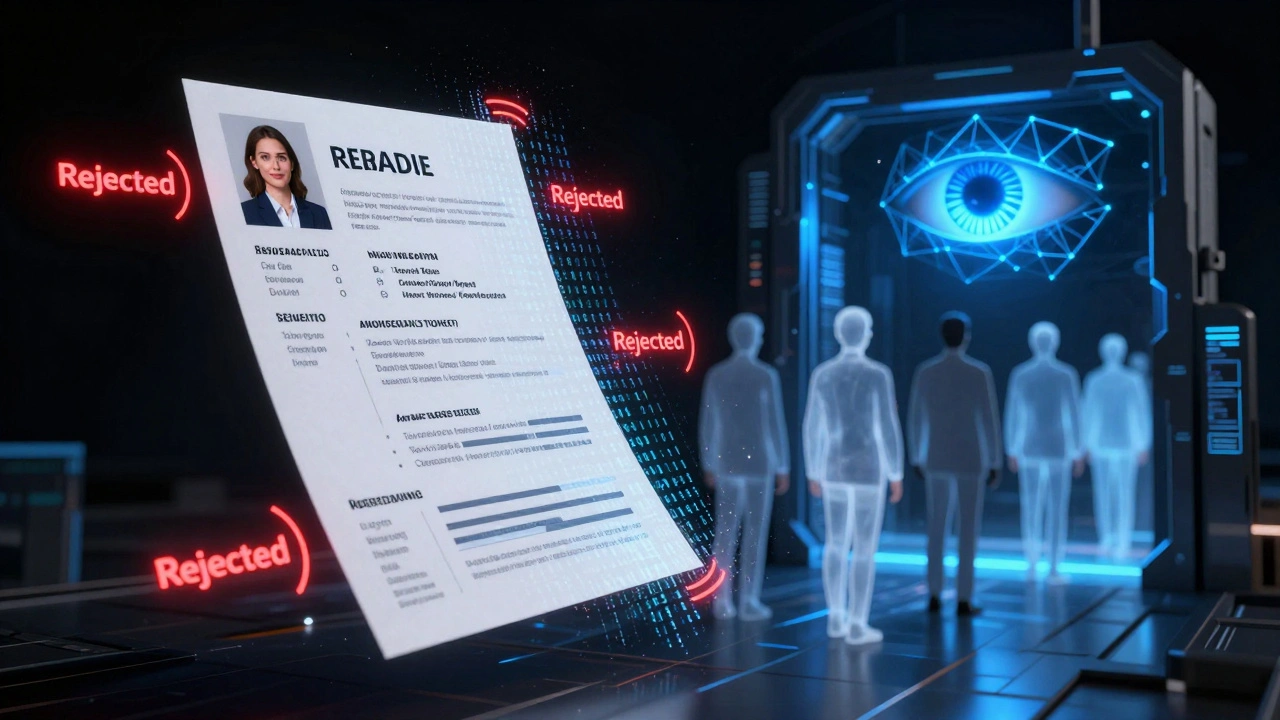
To fix the problem, we have to understand where the glitch actually is. Bias doesn't happen because the computer is "sexist" in the human sense. It happens because Machine Learning is essentially a pattern-recognition engine. If you feed it data from a biased world, it will automate and accelerate that bias. Take Training Data as an example. This is the raw information-resumes, historical performance reviews, or user behavior-used to teach the AI. If a company's historical data shows that men were promoted more often, the AI assumes gender is a predictor of success. It starts penalizing words like "Women's College" or hobbies like "softball" while rewarding "lacrosse" or "competitive gaming." Then there's the issue of Proxy Variables. Even if you remove the "gender" column from a dataset, the AI can find proxies. It might look at gaps in employment (common for maternity leave) or specific language patterns in a cover letter to guess the candidate's gender. This creates a loop where the AI reinforces the glass ceiling without ever explicitly mentioning gender.Where Bias Hits Hardest for Women
Gender bias in AI isn't just about hiring. It bleeds into every part of the tech ecosystem, from the tools we use to the products we build.- Recruitment and HR Tech: Automated sourcing tools often prioritize candidates based on "culture fit," which is often a coded term for "people who look and act like the current majority."
- Performance Management: AI-driven sentiment analysis tools used in annual reviews have been shown to flag women's leadership styles as "aggressive" while labeling identical behavior in men as "decisive."
- Voice and Virtual Assistants: For years, Natural Language Processing (NLP) models struggled with female voices more than male ones, simply because the developers used predominantly male voice samples for training.
- Credit and Financial Tools: Algorithmic credit scoring has historically underestimated the creditworthiness of women, even when they have higher income levels than their male counterparts.
Measuring the Damage: Real-World Examples
We can't manage what we don't measure. When we look at the data, the impact is concrete. A famous case involved a major tech giant that had to scrap an AI recruiting tool because it explicitly penalized resumes that included the word "women's," such as "women's chess club captain." The model had learned from a decade of male-dominated applications and concluded that being a woman was a negative attribute for a technical role. Another critical area is facial recognition. Research from the Gender Shades project showed that commercial AI systems had a much higher error rate for women of color compared to lighter-skinned men. In some cases, the error rate for dark-skinned women was nearly 35%, while it was nearly 0% for light-skinned men. This creates a dangerous environment where women-especially women of color-are more likely to be misidentified or ignored by security and authentication systems.| AI Application | Bias Trigger | Direct Impact on Women |
|---|---|---|
| Resume Screening | Historical Hiring Patterns | Lower interview rates for qualified female candidates |
| Credit Scoring | Income Gap Data | Higher interest rates or loan denials |
| Facial Recognition | Under-representation in Dataset | Higher failure rates in biometric security |
| Performance Reviews | Linguistic Stereotypes | Lower ratings for leadership traits |
How to Fight Back: Strategies for Women and Engineers
If you're a woman navigating the tech world or an engineer building these systems, you have a role in breaking this cycle. The fix isn't just "better data," but a fundamental shift in how we approach Algorithmic Fairness.For the developers, the first step is Diverse Data Sourcing. You cannot build a fair system with a skewed dataset. This means actively hunting for under-represented data and using techniques like oversampling to ensure the AI sees enough examples of successful women in leadership roles. If your training set is 80% men, the AI will always be biased toward men.
Then comes Algorithmic Auditing. Companies should employ third-party auditors to test their models for "disparate impact." This involves running a set of identical profiles through the system, changing only the gender markers, and seeing if the outcome changes. If a man gets a "hire" recommendation and a woman with the exact same credentials gets a "reject," the model is broken.
Finally, we need Human-in-the-Loop (HITL) systems. AI should be a co-pilot, not the captain. When an AI makes a high-stakes decision-like who gets an interview or a loan-a human should review the reasoning. We need to move away from "black box" AI, where the decision is a mystery, and move toward Explainable AI, where the system can tell us exactly why it chose a specific candidate.
Practical Steps for Women in Tech
If you feel like you're hitting an invisible wall, there are ways to navigate these biased systems while fighting for structural change.- Optimize for the Bot: While it's unfair, knowing that some AI tools struggle with certain phrasing can help. Use industry-standard keywords that the AI recognizes as "high value," and try to mirror the language used in the job description.
- Demand Transparency: When applying for roles or using tools, ask if the company uses AI for screening and how they mitigate bias. Companies that can't answer this usually aren't thinking about it.
- Build Diverse Networks: Since AI often rewards "referral patterns," having a diverse network of mentors who can push your resume past the AI and directly to a human recruiter is the most effective workaround.
- Advocate for Ethics: If you're in a position to influence product development, push for the inclusion of Ethical AI frameworks. Demand that your team defines "fairness" before they start coding.

The Path Toward Equitable Tech
Fixing gender bias in AI isn't a one-time patch; it's a continuous process of maintenance. As we move toward more autonomous systems, the risk of scaling prejudice increases. However, the same technology that creates these biases can also be used to detect them. We are seeing the rise of fairness-aware machine learning libraries that automatically detect and neutralize bias during the training phase. The goal isn't to make the AI "blind" to gender-because ignoring the problem doesn't make it go away. Instead, the goal is to create systems that are aware of the historical imbalances and actively work to counteract them. When we prioritize equity in the code, we create a tech industry where talent is the only metric that matters.Can AI actually be completely unbiased?
Realistically, no. Because AI is trained on human-generated data, and humans are biased, there will always be some level of skew. However, we can minimize it through diverse data collection, rigorous auditing, and using fairness-aware algorithms that actively penalize biased outcomes.
How can I tell if a company's AI is biased against women?
Look for patterns in their hiring. If a company claims to use "AI-driven recruiting" but their leadership team remains overwhelmingly male despite a large pool of female applicants, it's a red flag. You can also ask if they perform regular bias audits on their HR tools.
What is 'Proxy Bias' in AI?
Proxy bias happens when an AI uses a variable that isn't gender but is highly correlated with it to make a decision. For example, an AI might not know a candidate is a woman, but it might notice a gap in employment for childbirth or a degree from a women-only college and use those as signals to downgrade the application.
Do voice assistants have gender bias?
Yes. Many voice AI systems were historically trained on male-dominated datasets, meaning they often struggle more with female pitches and accents. Additionally, the decision to make most virtual assistants female by default reinforces the stereotype that women are "assistants" or "subservient."
What should I do if I suspect an AI tool is discriminating against me?
Document your experience. If possible, compare your results with a colleague who has similar credentials but a different gender. Reach out to the company's HR or ethics board and ask for the criteria the AI used. While many companies keep their algorithms secret, bringing the issue to light often forces a manual review of your application.
Next Steps and Troubleshooting
Depending on your role in the tech world, your approach to this issue will differ:- For Job Seekers: If you're getting immediate automated rejections, try tweaking your resume to remove gender-specific markers (like "Women in Tech" groups) just to see if the bot is the problem. If your success rate increases, you've found a bias issue.
- For Product Managers: Implement a "Bias Impact Assessment" as part of your product requirements document (PRD). Ask: "Who might this exclude?" and "What data are we missing?" before the first line of code is written.
- For Data Scientists: Use tools like AIF360 (AI Fairness 360) to check your models for bias. Don't just optimize for accuracy; optimize for fairness across different demographic groups.