Accountability Groups for Women: Structures That Work
 Jan, 8 2026
Women are more likely to stick to their goals when they have someone beside them who shows up, asks hard questions, and doesn’t let them off the hook. It’s not about being pushed-it’s about being held. That’s the quiet power behind accountability groups for women. These aren’t therapy circles or social clubs. They’re structured, consistent, and purpose-driven spaces where women track progress, share real struggles, and celebrate wins-big and small.
What Makes an Accountability Group Different
An accountability group isn’t just a weekly coffee chat. It’s a system. It has rules. It has rhythm. It has consequences-not punishments, but natural outcomes tied to commitment. Think of it like a fitness buddy who shows up even when you’re tired, but for everything that matters: career growth, health, finances, creative projects, or personal boundaries.
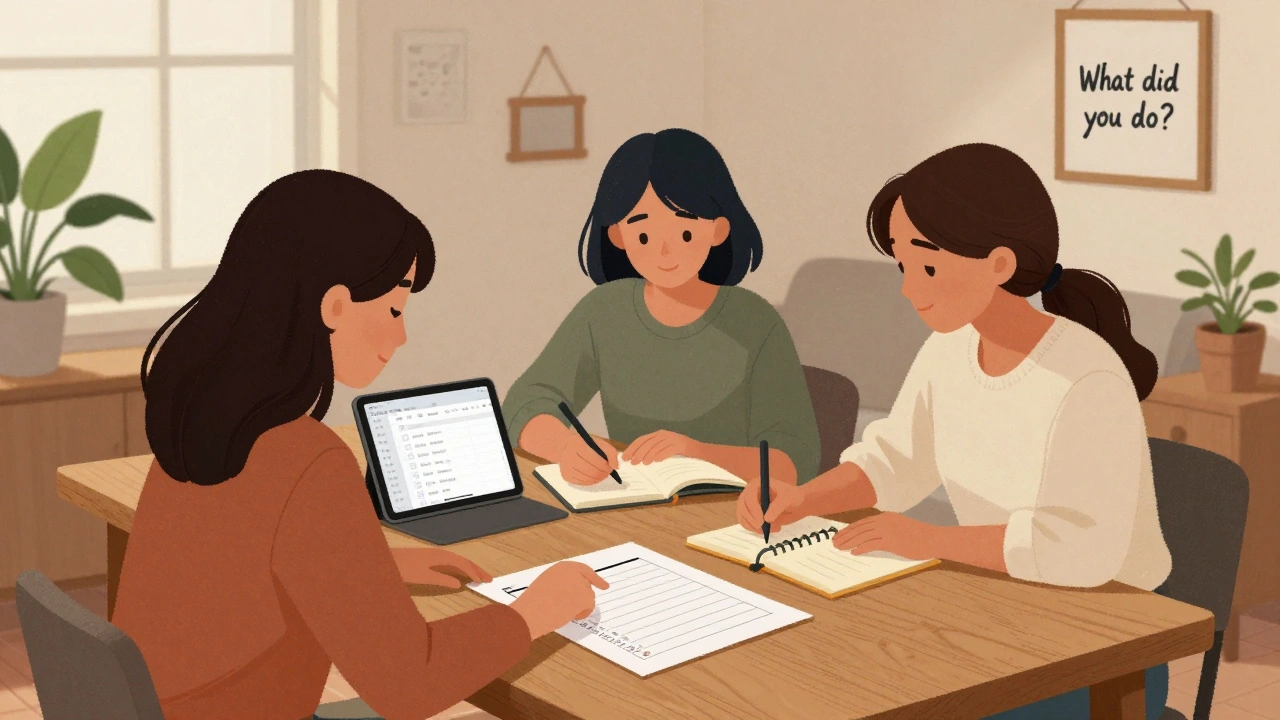
Unlike vague support systems-like posting on Instagram or venting to a friend-an accountability group holds you to measurable actions. Did you send that proposal? Did you pay yourself first this month? Did you say no to the meeting that drained you? These groups don’t ask, "How are you feeling?" They ask, "What did you do?" And then they listen.
How These Groups Are Structured
The most effective accountability groups for women follow a simple but powerful template:
- Size: 3 to 5 women. Any bigger, and focus gets lost. Any smaller, and the dynamic lacks depth.
- Meeting frequency: Weekly, 45 to 60 minutes. Consistency matters more than duration.
- Format: Each woman gets 10-12 minutes to report on three things: what she committed to last week, what she actually did, and what she’s committing to next week.
- Ground rules: No advice unless asked. No judgment. No fixing. Just listening, reflecting, and holding space.
- Tools: A shared document or app where goals are written down and checked off. No guesswork.
One group in Portland meets every Tuesday at 7 a.m. over Zoom. They don’t talk about feelings unless someone says, "I’m stuck." Then they ask, "What’s the next tiny step?" That’s it. No grand speeches. No motivational quotes. Just clarity.
Why Women Thrive in These Groups
Women are often socialized to be people-pleasers, to apologize for taking up space, to downplay their ambitions. Accountability groups flip that script. They create a safe container where ambition isn’t seen as "too much."
Take Maria, a single mom who started a side business selling handmade candles. She tried doing it alone for six months. Progress? Slow. Motivation? Gone. Then she joined a group of three other women-all working moms, all building businesses. Within three weeks, she had her first five sales. Why? Because she had to say out loud, "I’m going to post three product photos this week." And they asked: "Did you?" When she didn’t, they didn’t scold her. They said, "What got in the way?" That question changed everything. She realized she was waiting for "perfect" lighting. So she bought a $20 ring light. Next week, she posted.
This isn’t about willpower. It’s about structure. Women in these groups aren’t relying on motivation. They’re relying on a system.
Common Pitfalls (And How to Avoid Them)
Not every group works. Here’s what usually goes wrong-and how to fix it:
- Pitfall: People don’t show up. Solution: Require a $5 no-show fee that goes into a group fund for a group dinner or gift. It sounds harsh, but it works. People show up when there’s a small cost to skipping.
- Pitfall: The group turns into advice-giving. Solution: Use a "no advice unless asked" rule. If someone says, "I need help figuring out my pricing," that’s fair. But if someone says, "I’m overwhelmed," don’t solve it. Ask: "What’s one thing you can do today?"
- Pitfall: Goals are too vague. Solution: No "I want to be healthier." Say: "I will walk 20 minutes, three days this week, before work." Be specific. Write it down.
- Pitfall: No tracking. Solution: Use a shared Google Doc or Notion page. Each woman has a row. Each week, she updates: Committed | Done | Next.
One group in Austin tried skipping the tracking sheet. Within two months, no one remembered what they’d promised. They went back to the doc. Progress doubled.
What Success Looks Like
Success isn’t about hitting 100% of your goals. It’s about showing up even when you miss. It’s about saying, "I didn’t finish the course, but I watched one video a day for a week." That’s progress. That’s growth.
Here’s what real success looks like in these groups:
- A woman who hadn’t spoken up in meetings for 12 years started saying her ideas out loud-and got promoted.
- A mother of three launched a podcast after her group asked, "What’s stopping you?" She realized she was waiting for permission. She didn’t need it.
- A woman paid off $18,000 in credit card debt by tracking every dollar for six months. Her group didn’t cheer her on-they just asked, "What’s next?"
These aren’t miracles. They’re results of structure, consistency, and the quiet courage that comes from knowing someone is watching-and believes in you.

How to Start Your Own Group
If you’re reading this and thinking, "I need this," here’s how to start:
- Find three women you respect. Not your best friends. Not your coworkers. Women you admire but don’t know deeply. Ask: "Would you be open to a small group that meets weekly to talk about goals and hold each other accountable?"
- Set the structure: weekly, 60 minutes, same time, same format. Use a shared document. No exceptions.
- Start with a simple rule: "We don’t give advice unless asked. We ask: What did you do? What will you do next?"
- Meet for six weeks. No more, no less. Then decide: Keep going? Adjust? Stop?
You don’t need a leader. You don’t need a coach. You just need four women who are tired of waiting for motivation and ready to build something real.
Why This Matters Now
In 2026, women are juggling more than ever: careers, caregiving, mental load, societal pressure. The old model of "suck it up and push through" is broken. So is the idea that self-care means bubble baths and affirmations.
Real support? It’s someone who texts you on Wednesday: "Did you send the email?" And doesn’t let you off the hook when you say, "Not yet."
Accountability groups for women aren’t trendy. They’re necessary. They’re not about fixing what’s broken. They’re about building something that’s been missing: a space where women don’t have to perform, explain, or apologize for wanting more.